How to Get to Nakasendo Trail: Route Guide
Key takeaways
- Magome and Tsumago are the most popular trail sections, reached via Nakatsugawa Station or Nagiso Station.
- From Tokyo, take the Tokaido Shinkansen to Nagoya, then transfer to the JR Shinano limited express train.
- From Kyoto or Osaka, ride the Shinkansen to Nagoya and connect to the JR Shinano line in roughly two hours total.
To get to the most famous walking section of the Nakasendo trail (中山道)—the stretch between Magome-juku (馬籠宿) and Tsumago-juku (妻籠宿)—take the train to either Nakatsugawa Station (中津川駅) or Nagiso Station (南木曽駅) via Nagoya. From either station, short local buses run directly to the trailheads, making the route straightforward for independent travelers starting in Tokyo, Kyoto, or Osaka.
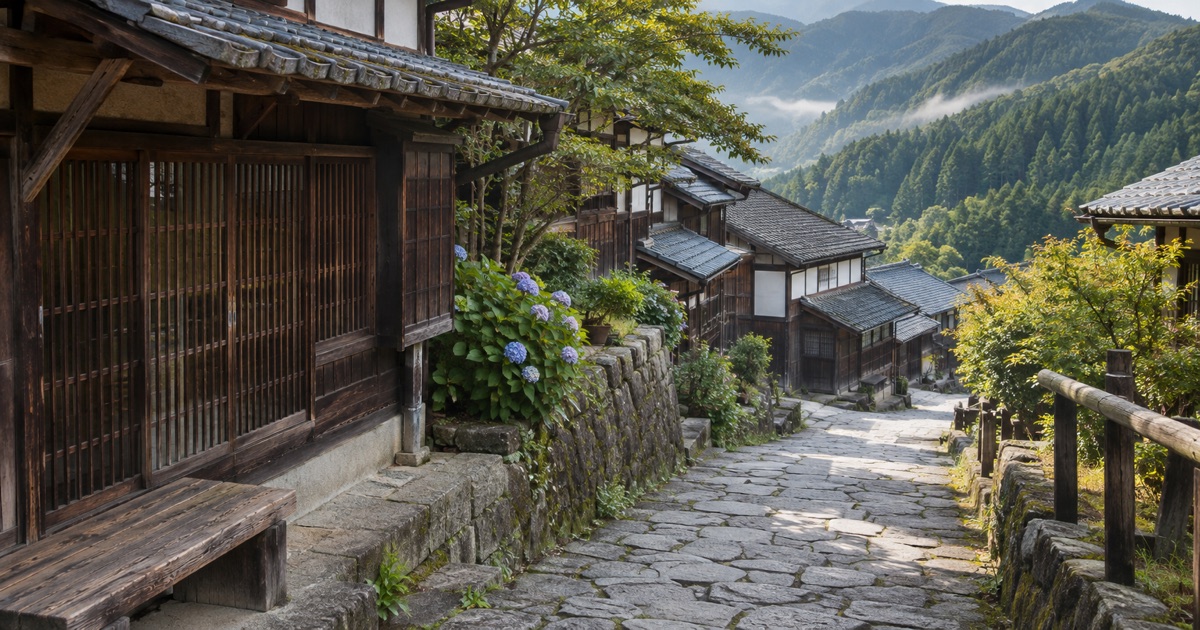
The Nakasendo was one of five major highway networks maintained during the Edo Period (1603–1867), connecting Kyoto and Edo (modern-day Tokyo) through the rugged interior mountains. Today, the Kiso Valley (木曽谷) section in Nagano and Gifu prefectures preserves several historic post towns, stone-paved paths, and lush forest walking trails.
Deciding Your Trail Direction: Magome or Tsumago
Before booking trains, choose the direction of your walk. The classic, well-maintained trail between Magome and Tsumago measures roughly 8 kilometers (about 5 miles) and takes two to three hours at an easy pace.
- Walking from Magome to Tsumago: This is the most common route. Starting at Magome involves a modest uphill walk to Magome Pass (馬籠峠), followed by a long, gentle downhill slope through cedar forests toward Tsumago. Magome sits on a steep slope with stone pathways and restored wooden inns.
- Walking from Tsumago to Magome: Walking this direction means a longer, gradual uphill climb toward Magome Pass before descending steeply into Magome. Tsumago has strict preservation rules that hide modern power cables, offering an exceptionally authentic atmosphere.
If starting in Magome, your rail gateway is Nakatsugawa Station. If starting in Tsumago, your rail gateway is Nagiso Station.
How to Get to the Nakasendo Trail from Nagoya
Nagoya Station (名古屋駅) is the mandatory transit hub for visiting the Kiso Valley from eastern or western Japan. All rail routes pass through Nagoya before heading into the mountains.
Nagoya to Nakatsugawa (for Magome)
- At Nagoya Station, board the JR Shinano Limited Express (特急しなの) bound for Nagano.
- Ride roughly 50 minutes to Nakatsugawa Station. Alternatively, local JR Chuo Line rapid trains make the run in roughly 75 to 85 minutes for a lower fare.
- Exit Nakatsugawa Station and locate bus stop #3 outside the station entrance.
- Board the Kita-Ena Bus (北恵那バス) bound for Magome. The bus takes roughly 25 to 30 minutes.
Nagoya to Nagiso (for Tsumago)
- At Nagoya Station, board the JR Shinano Limited Express.
- Ride roughly 60 to 75 minutes directly to Nagiso Station. Note that not every Shinano limited express stops at Nagiso; check departures carefully or take a train to Nakatsugawa and transfer to a local JR Chuo Line train to Nagiso.
- Outside Nagiso Station, take the local Ontake Kotsu or Nagiso town bus to Tsumago (roughly 10 minutes). Tsumago is also reachable on foot from Nagiso Station in about 45 to 60 minutes along marked quiet paths.
To review train routes and schedules, consult JR Central.

We are working to carry Japanese craft and everyday culture beyond Japan, by building Japan Towns with local partners.
Read the Japan Town plan →How to Get to the Nakasendo Trail from Tokyo
Traveling from Tokyo requires riding the Tokaido Shinkansen west to Nagoya, then transferring to the JR Shinano Limited Express. Total travel time is generally between 2.5 and 3.5 hours one-way.
Step-by-Step Route from Tokyo Station
- Tokyo Station (東京駅) to Nagoya Station: Board the Tokaido Shinkansen (Hikari or Nozomi service). The Hikari takes roughly 1 hour and 40 minutes, while the Nozomi takes roughly 1 hour and 35 minutes.
- Transfer at Nagoya Station: Follow overhead English signage from the Shinkansen gates to JR conventional lines (specifically Platforms 10 or 11 for the Chuo Line limited express trains). Allow roughly 10 to 15 minutes for the transfer.
- Nagoya to the Trailhead: Ride the JR Shinano Limited Express to Nakatsugawa (for Magome) or Nagiso (for Tsumago).
- Local Bus: Board the connecting local bus to reach your starting village.
If starting early in the morning, a day trip from Tokyo is entirely feasible. However, an overnight stay in the Kiso Valley, Nagoya, or Matsumoto allows for a more relaxed itinerary.
How to Get to the Nakasendo Trail from Kyoto and Osaka
Travelers starting in the Kansai region have a quick and straightforward journey into the Kiso Valley.
Step-by-Step Route from Kyoto Station
- Kyoto Station (京都駅) to Nagoya Station: Board the Tokaido Shinkansen (Nozomi, Hikari, or Kodama). The ride takes roughly 35 to 50 minutes depending on train type.
- Transfer at Nagoya Station: Head to the JR conventional line platforms for the JR Shinano.
- Nagoya to Nakatsugawa or Nagiso: Ride the JR Shinano Limited Express into the Kiso Valley (roughly 50 to 70 minutes).
Step-by-Step Route from Shin-Osaka Station
- Shin-Osaka Station (新大阪駅) to Nagoya Station: Ride the Tokaido Shinkansen for roughly 50 to 70 minutes.
- Transfer at Nagoya Station: Transfer to the JR Shinano Limited Express.
- Nagoya to Trailhead Stations: Follow the same route onward to Nakatsugawa or Nagiso.
Total transit time from Kyoto or Osaka to the Nakasendo trailheads is roughly two to two-and-a-half hours each way.
Narai-juku: An Alternative Nakasendo Trail Destination
While Magome and Tsumago receive the most attention, Narai-juku (奈良井宿) sits further north along the JR Chuo Main Line in Nagano Prefecture. Known historically as "Narai of a Thousand Houses," it was the wealthiest post town in the valley.
Narai is exceptionally easy to reach because Narai Station (奈良井駅) is located directly at the edge of the historic town:
- From Nagoya: Take the JR Shinano Limited Express to Kiso-Fukushima Station (木曽福島駅), then transfer to a local JR Chuo Line train bound for Matsumoto, getting off at Narai (roughly 2 hours total).
- From Tokyo (Shinjuku): Take the JR Chuo Line Azusa Limited Express from Shinjuku Station (新宿駅) to Shiojiri Station (塩尻駅), then transfer to the local JR Chuo Line heading south to Narai (roughly 3 hours total). More details on eastern routes can be found via JR East.
Luggage Forwarding on the Trail
Walking the trail between Magome and Tsumago with heavy luggage or large rolling suitcases is not practical. The trail includes uneven cobblestones, dirt forest paths, and staircases.
- Same-Day Trail Luggage Forwarding: Between late March and late November, local tourist information centers operate a same-day baggage delivery service between Magome Information Center and Tsumago Information Center. You can drop off bags in the morning (typically before around 11:30 AM) and collect them at the destination village tourist center in the afternoon. Fees are around 1,000 yen per bag. Times and operating seasons change; verify availability at the information office when you arrive.
- Coin Lockers at Train Stations: Nakatsugawa Station, Nagiso Station, and Nagoya Station all have coin lockers for day-trippers returning to their starting city.
- Nationwide Luggage Delivery (Takuhaibin): If traveling between Tokyo and Kyoto with an overnight stop on the trail, forward your primary suitcases ahead between your city hotels, carrying only a small daypack onto the Nakasendo.
Practical Tips for First-Time Visitors
- Carry Japanese Yen Cash: Local buses between train stations and post towns do not consistently accept IC transit cards (like Suica or Pasmo). Prepare small coins and 1,000-yen notes before leaving the train station. Small eateries and village stalls also prefer cash.
- Watch Bus Timetables Carefully: Buses between Nagiso Station, Tsumago, Magome, and Nakatsugawa run only a few times per day, especially during off-peak seasons. Grab a paper timetable from the station tourist window or photograph the bus stop sign before beginning your walk.
- Footwear and Weather: Wear sturdy walking or trail running shoes. The trail is well-graded, but rain can make the stone paths slippery. Bring a light rain jacket.
- Bear Bells: Black bears inhabit the Kiso mountains. Metal bells on posts are installed along the trail; ring them as you pass to notify wildlife of your presence.
FAQ
- Q. Which train station is closest to the Nakasendo trail hike?
- A. The two main gateway stations for the famous Magome-Tsumago section are Nakatsugawa Station (中津川駅) for Magome and Nagiso Station (南木曽駅) for Tsumago. Both sit along the JR Chuo Main Line.
- Q. Can you do the Nakasendo trail as a day trip from Tokyo?
- A. Yes, it is possible as a full-day trip from Tokyo, though it requires an early start. Total one-way travel time is roughly three hours by Tokaido Shinkansen and JR Shinano limited express via Nagoya.
- Q. Is the train journey to the Nakasendo covered by the Japan Rail Pass?
- A. Yes, the standard JR rail routes from Tokyo, Kyoto, or Osaka to Nakatsugawa and Nagiso via Nagoya are covered by the Japan Rail Pass, except for Nozomi and Mizuho Shinkansen trains without an additional surcharge. Local buses from stations to trailheads require separate cash fares.
Cite or share this article
Copy the link below. If you quote this article, please link to this page as the source.