How to Get to the Nakasendo Trail from Tokyo or Kyoto
Key takeaways
- Nagiso and Nakatsugawa stations are the main rail gateways to the Magome-Tsumago section of the Nakasendo Trail.
- From Tokyo or Osaka, the journey takes roughly 3 to 4 hours one way including a local bus connection.
- A local bus links Nakatsugawa and Nagiso stations to the trailheads at Magome and Tsumago; no rental car is required.
How to Get to the Nakasendo Trail
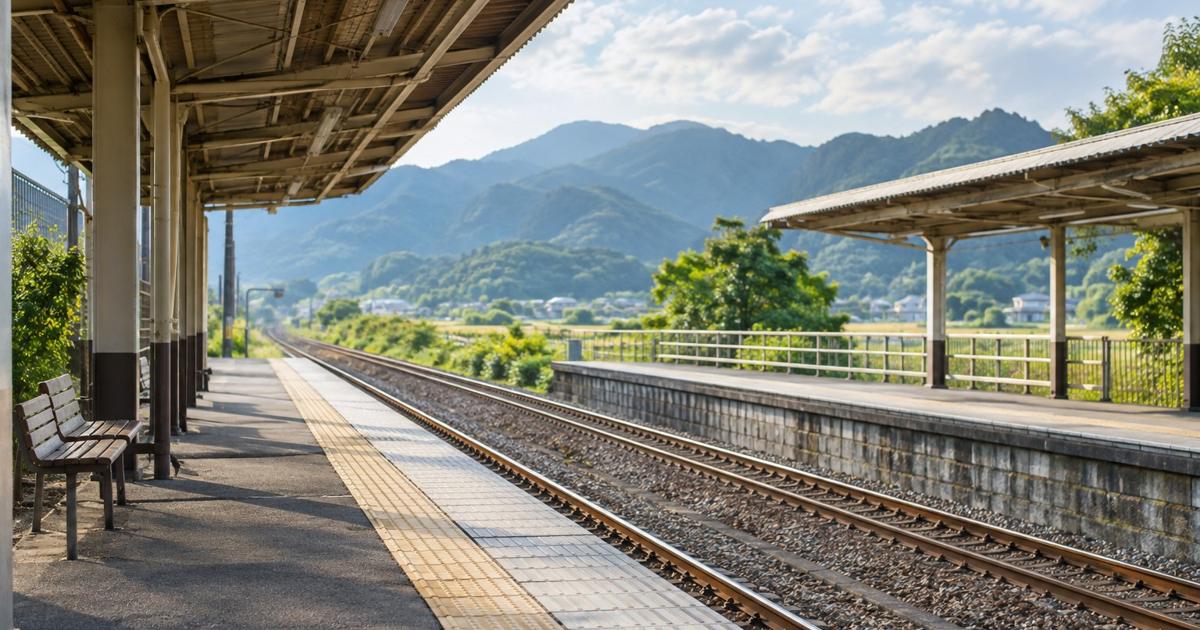
The easiest way to reach the historic Nakasendo Trail is to take a train to Nakatsugawa (中津川) or Nagiso (南木曽) Station on the JR Chuo Line, then a short local bus to the trailhead at Magome (馬籠) or Tsumago (妻籠). From Tokyo or Osaka, plan on roughly 3 to 4 hours of total travel time one way; from Nagoya, it is closer to 1 to 1.5 hours.
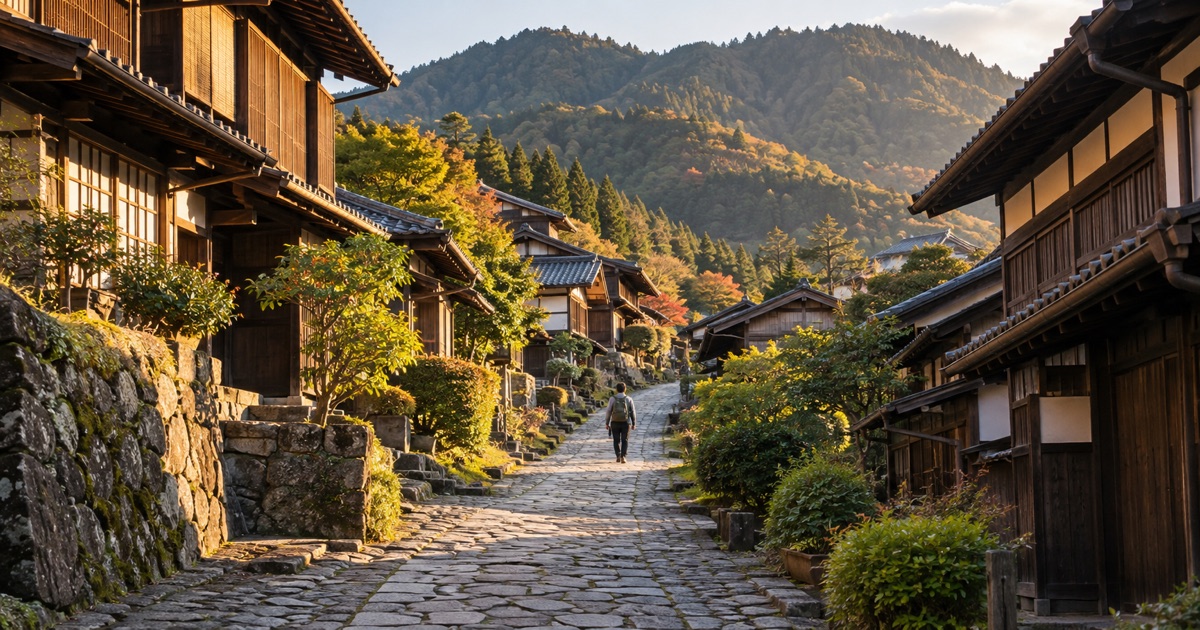
The Nakasendo (中山道) was one of the old Edo-period routes connecting Kyoto and Tokyo (then Edo), running through the mountains rather than along the coast. Today, almost all independent travelers head for the best-preserved stretch of it, the roughly 8-kilometer walking path between the post towns of Magome and Tsumago in the Kiso Valley, part of Nagano and Gifu prefectures. This article focuses on that section, since it's what most people mean when they search for "the Nakasendo Trail."
Starting Point: Which City Are You Coming From?
This trip is realistic as a long day trip or an overnight stay, and the route differs slightly depending on your starting station.
From Tokyo Station: Take the JR Tokaido/Chuo shinkansen or limited express services are not direct, so the standard route is Tokyo → Nagoya by Tokaido Shinkansen (around 1 hour 40 minutes), then change to a JR Chuo Line limited express or local train toward Nakatsugawa or Nagiso (roughly 50 minutes to 1.5 hours, depending on the train). Total travel time from Tokyo is usually around 3.5 to 4 hours door-to-door, including the connection.
From Kyoto Station: Take the Tokaido Shinkansen to Nagoya (about 35 to 40 minutes), then transfer to a JR Chuo Line train bound for Nakatsugawa or Nagiso (around 50 minutes to 1.5 hours). Total time is roughly 2 to 2.5 hours, making this a comfortable day trip from Kyoto.
From Osaka (Shin-Osaka Station): The route is the same as from Kyoto — Shinkansen to Nagoya, then the JR Chuo Line. Total travel time is around 2.5 to 3 hours.
From Nagoya Station: This is the main hub for the trip regardless of where you start. Direct JR Chuo Line trains run to Nakatsugawa and continue toward Nagiso and Kiso-Fukushima. Journey time to Nakatsugawa is roughly 50 minutes to 1 hour by limited express, a little longer by local train.

Check current routes and fares on JR Central, which operates the Tokaido Shinkansen and the JR Chuo Line sections most relevant to this trip.
From the Station to the Trailhead
Neither Magome nor Tsumago has its own train station, so a bus connection is required.
- Magome: From Nakatsugawa Station, a local bus run by the regional bus company takes passengers up to the Magome bus stop in around 25 to 30 minutes. Buses are timed loosely around train arrivals but are not frequent, so check the schedule as soon as you arrive at the station rather than assuming you can simply turn up.
- Tsumago: From Nagiso Station, a local bus to Tsumago takes around 10 minutes. This bus also tends to run on a limited schedule.
A common approach is to walk the trail in one direction and take the bus back, or to start at Magome, walk to Tsumago, and catch the bus from Tsumago back to Nagiso Station to continue your journey onward — this avoids doubling back on foot.
Suggested Route for a Day Trip
- Take the shinkansen to Nagoya, then transfer to the JR Chuo Line toward Nakatsugawa.
- From Nakatsugawa Station, take the local bus up to Magome.
- Walk the Nakasendo Trail from Magome to Tsumago (around 2.5 to 3.5 hours, uphill at the start, then mostly downhill).
- From Tsumago, take the local bus to Nagiso Station.
- Board a JR Chuo Line train from Nagiso back toward Nagoya, then the shinkansen home.
Because bus timings are limited, it's worth building in flexibility — if you miss one bus, the next one may not come for a while, and that can affect your return shinkansen connection.
What to Bring
- Comfortable walking shoes. Sections of the trail are paved mountain road, but there are unpaved and uneven stretches, tree roots, and some stone paving that can be slippery when wet.
- Cash in small denominations. Vending machines, rest stops, and small shops along the trail may not accept cards.
- A refillable water bottle and light snacks, since there are only a handful of rest points along the walking route.
- Rain gear, as mountain weather in the Kiso Valley can change quickly, and there is little shelter on parts of the trail.
- A paper map or offline map saved on your phone. Mobile signal can be patchy in the valley between the two towns.
Common Mistakes to Avoid
- Assuming trains run as frequently as in central Tokyo or Osaka. The JR Chuo Line beyond Nagoya has a mix of limited express and local services, and gaps between trains can be long, especially on local legs.
- Not checking the local bus timetable in advance. The Nakatsugawa–Magome and Nagiso–Tsumago buses do not run constantly throughout the day, and missing one can cost an hour or more.
- Underestimating the walk. While popular, the trail does include a genuine uphill climb near Magome and uneven forest paths — it is not a flat, paved stroll the whole way.
- Visiting very late in the day. Luggage delivery services (which some travelers use to send bags ahead between Magome and Tsumago) and the last buses back to the stations usually stop running in the afternoon, so starting early is strongly recommended.
Is a Rail Pass Worth It?
If your trip also includes other shinkansen travel, a national or regional JR pass may reduce costs, but passes change in price and coverage from time to time, so check current details on JR Central or Japan National Tourism Organization before assuming one applies to this specific route. For a single return trip focused only on the Nakasendo Trail, buying individual tickets is often simpler and may not cost much more.
Final Tips
Aim to start your walk by late morning at the latest, especially if you're doing this as a day trip from Tokyo or Osaka, since the return journey involves multiple connections. An overnight stay in the Kiso Valley removes the time pressure and allows for a more relaxed pace through Magome and Tsumago, but either approach works if you plan the bus and train connections carefully in advance.
FAQ
- Q. Can I get to the Nakasendo Trail without a car?
- A. Yes. The Magome-Tsumago section is designed for train and bus access, and most visitors arrive this way rather than driving.
- Q. Which station is closest to the Nakasendo Trail?
- A. Nakatsugawa (中津川) and Nagiso (南木曽) stations, both on the JR Chuo Line, are the closest major rail stations to the Magome-Tsumago trailheads.
- Q. How long does the Magome to Tsumago walk take?
- A. Most walkers cover the roughly 8-kilometer route in about 2.5 to 3.5 hours at a relaxed pace, not counting stops.
Cite or share this article
Copy the link below. If you quote this article, please link to this page as the source.