Things to Do in Sapporo in Summer: The Complete Guide
Key takeaways
- Summer brings pleasant 20–25°C weather without the sticky humidity found across Tokyo, Kyoto, or Osaka.
- Major seasonal highlights include the massive Odori Park beer garden, blooming flower farms, and hillside viewpoints.
- Sapporo Station serves as a convenient train and subway hub for reaching downtown attractions and nearby day trips.
The best things to do in Sapporo in summer include drinking draft beer at the massive Odori Park beer gardens, taking in cool panoramic views from Mount Moiwa, and exploring lush lavender fields and open-air food markets. Unlike mainland Honshu, Hokkaido avoids intense tropical humidity and the rainy season, making Sapporo an ideal warm-weather destination for independent rail travellers.
Summer temperatures typically hover around 20°C to 28°C from late June through August. This guide covers top activities, concrete transit steps starting from Sapporo Station (札幌駅), and practical advice for navigating the northern capital smoothly without Japanese language skills.
Sip and Celebrate at the Odori Park Beer Garden
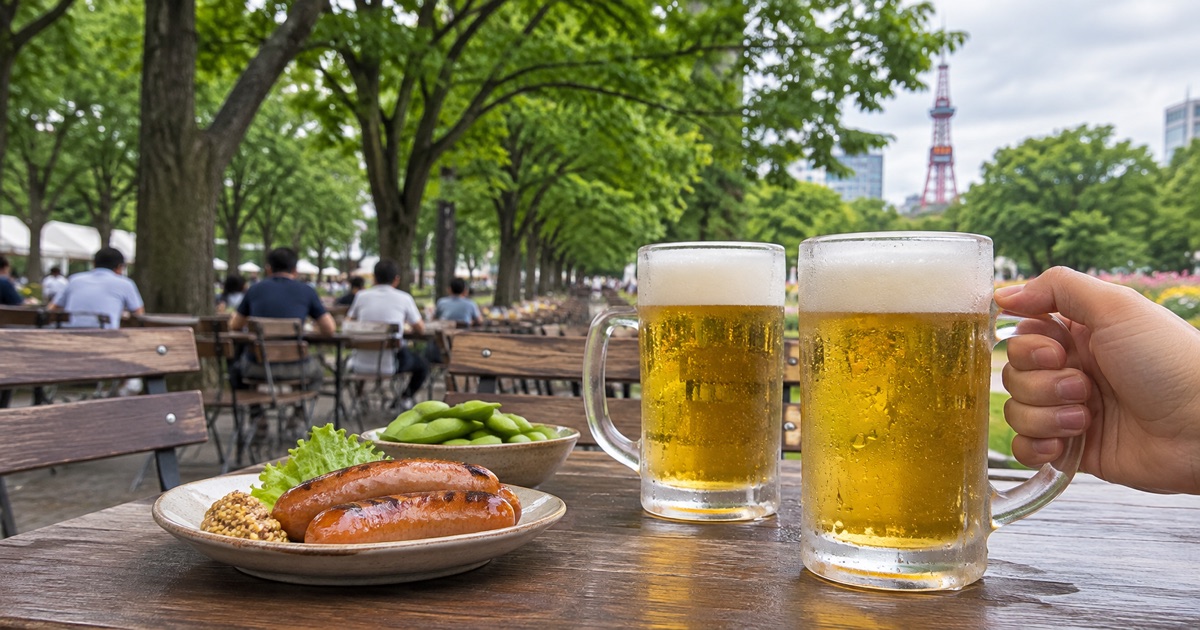
During mid-summer, usually spanning late July into mid-August, Odori Park (大通公園) transforms into one of the largest open-air beer gardens in the world. Stretching across multiple city blocks, the park is divided into zones hosted by major Japanese breweries alongside international craft stalls.
How to Get There and What to Expect
- Route: From Sapporo Station, walk south through the underground pedestrian concourse (Chi-Ka-Ho) for roughly 10 minutes, or take the Nanboku Subway Line one stop to Odori Station (大通駅).
- Ordering System: Most sections use a ticket-vending system or counter payment. Touchscreens often have English options, or you can point to photo menus displaying beer jugs, tower dispensers, and regional snacks like grilled lamb, edamame, and Hokkaido sausages.
- Atmosphere: Seating fills up quickly on sunny weekend afternoons and weekday evenings. Finding a single seat is relatively easy, but groups should arrive in the early afternoon to claim a table.
Official dates, participating brewers, and operating hours adjust every year, so confirm details through the Japan National Tourism Organization before your trip.
Catch Panoramic Summer Sunsets from Mount Moiwa
Mount Moiwa (藻岩山, Moiwayama) offers an expansive view over the Sapporo grid. In summer, the observation deck catches refreshing evening breezes and displays dramatic sunsets that transition into Sapporo's recognized nightscape.
Transit Steps from Central Sapporo
- From Odori, board the Sapporo Streetcar (tram) heading south to Ropeway Iriguchi stop (ロープウェイ入口). The ride takes around 25 minutes.
- Board the free shuttle bus from the tram stop to the lower ropeway station (runs every 15 minutes roughly).
- Purchase a round-trip ticket for the ropeway and mini-cable car up to the summit station. Round-trip fares generally fall between 1,800 and 2,200 yen.
Bring a light jacket or windbreaker. Even on warm July afternoons, the mountain summit feels several degrees cooler once the sun sets.

We are working to carry Japanese craft and everyday culture beyond Japan, by building Japan Towns with local partners.
Read the Japan Town plan →Stroll the Fields of Hitsujigaoka Observation Hill and Makomanai Takino
Summer in Hokkaido is synonymous with purple lavender, sunflowers, and lush greens. While famous rural farms sit further out in Furano, you can experience striking summer landscapes within easy reach of Sapporo's subway network.
Makomanai Takino Cemetery and the Hill of the Buddha
Designed by architect Tadao Ando, the Hill of the Buddha (Atama Daibutsu) sits within a dramatic hill covered in over 150,000 lavender plants that bloom vivid purple in July.
- Route: Take the Nanboku Subway Line from Sapporo Station to the final stop, Makomanai Station (真駒内駅), taking roughly 20 minutes.
- From bus stop #2 outside the station, board the Chuo Bus heading toward Takino Reien. The ride takes around 20 to 30 minutes.
Hitsujigaoka Observation Hill
Famous for the bronze statue of Dr. William S. Clark, Hitsujigaoka (羊ヶ丘展望台) offers sweeping pastoral views of grazing sheep and the Sapporo Dome against green summer plains.
- Route: Take the Toho Subway Line from Sapporo Station to Fukuzumi Station (福住駅), roughly 13 minutes.
- Transfer to local bus Fuk 84 from platform 4, arriving at the observation hill in about 10 minutes.
Feast on Summer Seafood at Nijo Market and Curb Market
Hokkaido’s surrounding waters supply exceptional seafood year-round, but summer brings seasonal sweet sea urchin (uni), sweet melon, and fresh squid.
| Market Name | Closest Station | Rough Travel Time from Sapporo Station | Specialty Highlights |
|---|---|---|---|
| Nijo Market (二条市場) | Odori or Bus Center-Mae | 15 min walk or 5 min subway | Central location, kaisen-don bowls, fresh melon slices |
| Sapporo Curb Market (場外市場) | Soen Station (JR) or Nijuyonken | 10 to 15 min train/subway + 10 min walk | Wholesale atmosphere, king crab, direct vendor counters |
Tips for Market Dining
- Timing: Arrive between 7:30 and 10:00 for the freshest seafood rice bowls (kaisen-don). Many stalls close by mid-afternoon.
- Budgeting: Seafood bowls vary widely by topping, typically ranging from 2,000 yen for basic tuna and salmon up to 6,000 yen or more for premium sea urchin and crab legs.
- Payment: While many indoor vendor restaurants now accept credit cards and IC transit cards, carry cash for smaller outdoor fruit stands.
Escape into Nature at Maruyama Park and Hokkaido Shrine
Nestled at the base of Maruyama, this shaded wooded park provides an easy natural retreat from urban heat. Ancient cedar and elm trees line the paths leading to Hokkaido Shrine (北海道神宮, Hokkaido Jingu).
- Route: From Sapporo Station, take the Nanboku Subway Line to Odori, transfer to the Tozai Subway Line, and alight at Maruyama-Koen Station (円山公園駅). The journey takes approximately 15 minutes.
- Walk 5 minutes through the park grounds to reach the main shrine gate.
- Seasonal Experience: In summer, the shrine grounds host traditional stalls during festival days, and visitors can purchase soft-serve ice cream or cold roasted green tea (hojicha) at the small rest house nearby.
Easy Summer Day Trips by Train from Sapporo
Sapporo serves as the central rail hub for western Hokkaido. These easy morning departures let you explore coastal towns without changing hotels.
1. Historic Canal Town of Otaru (小樽)
- Train: JR Hakodate Main Line Semi-Rapid or Rapid Airport train from Sapporo Station to Otaru Station (around 35 to 45 minutes).
- Highlights: Stroll the historic canal lined with stone warehouses, explore delicate glassware workshops, and try fresh sushi along Sushiya-dori. Check railway operations directly on JR East or local Hokkaido rail portals.
2. Craft Beer and History at Kaitaku-no-Mura (Historic Village of Hokkaido)
- Train: JR Hakodate Line from Sapporo Station to Shin-Sapporo Station (roughly 10 to 15 minutes), followed by a short bus ride from platform 10.
- Highlights: An expansive open-air museum set in lush forest, featuring preserved Meiji- and Taisho-era timber buildings, horse-drawn streetcars, and quiet walking paths.
Practical Summer Travel Tips for Sapporo
What to Pack
- Light layers: Daytime highs often reach 25°C to 28°C, perfect for t-shirts and shorts. However, evening winds from the Ishikari Plain can drop temperatures down near 17°C. Pack a light cardigan or windproof jacket.
- Sun protection: Hokkaido's summer sun is strong; sunglasses, sunscreen, and a brimmed hat are essential for open parks like Moerenuma or Odori.
- Comfortable walking shoes: Sapporo's city center is designed on a massive grid; walking between adjacent subway stops often takes longer than first-time visitors estimate.
Navigating Transit
- IC Cards: Major transit IC cards (such as Suica, Pasmo, and local Kitaca) work seamlessly across the Sapporo subway lines, city streetcar, and JR trains.
- Subway Day Passes: If taking more than three subway rides in a single day, consider purchasing a Donchika Pass (weekend subway pass) or a standard weekday subway day pass at automated station ticket machines. Machines offer comprehensive English menu options.
- Taxis: Readily available outside Sapporo Station and Odori. Rear doors open and close automatically; drivers generally appreciate having your destination written out in Japanese characters or shown on a phone map.
FAQ
- Q. What is the best month to visit Sapporo in the summer?
- A. July and August offer warm, comfortable weather and major seasonal events like the Odori Park beer gardens and blooming flower fields.
- Q. Does Sapporo get a rainy season in summer?
- A. Hokkaido does not have a formal rainy season (tsuyu), making it noticeably drier and less humid than Honshu during June and July.
- Q. Can I explore Sapporo without speaking or reading Japanese?
- A. Yes, major train lines, subways, and signs feature clear English, and tap-to-pay IC cards work across local transit.
Cite or share this article
Copy the link below. If you quote this article, please link to this page as the source.