Is Shirakawa-go Worth Visiting? What to Expect on a Day Trip
Key takeaways
- Shirakawa-go is worth visiting for rare thatched-roof architecture, but transit requires advance bus reservations.
- Expect high tourist crowds during midday peak hours; early mornings and late afternoons offer the best experience.
- Alternative villages like Gokayama or Takayama provide similar cultural heritage with significantly fewer crowds.
Shirakawa-goは、何世紀も残る合掌造りの茅葺き家屋と山々の景観を見たいなら訪れる価値があります。ただし移動には数時間かかり、高速バスの予約も必須のため、日程に余裕がない旅行者には向かない場合もあります。村の魅力と移動の手間の両方を理解したうえで、自分の旅程に合うか判断することが大切です。
あわせて読む:Best Time to Visit Shirakawa-go: Seasons & Travel Guide/Is Tokyo Worth Visiting? An Honest Answer for First-Timers/Is Tokyo Worth Visiting in January? Hone
Understanding what the village offers—and what it demands in travel planning—ensures you make the right choice for your Japan journey.
What Makes Shirakawa-go Special?
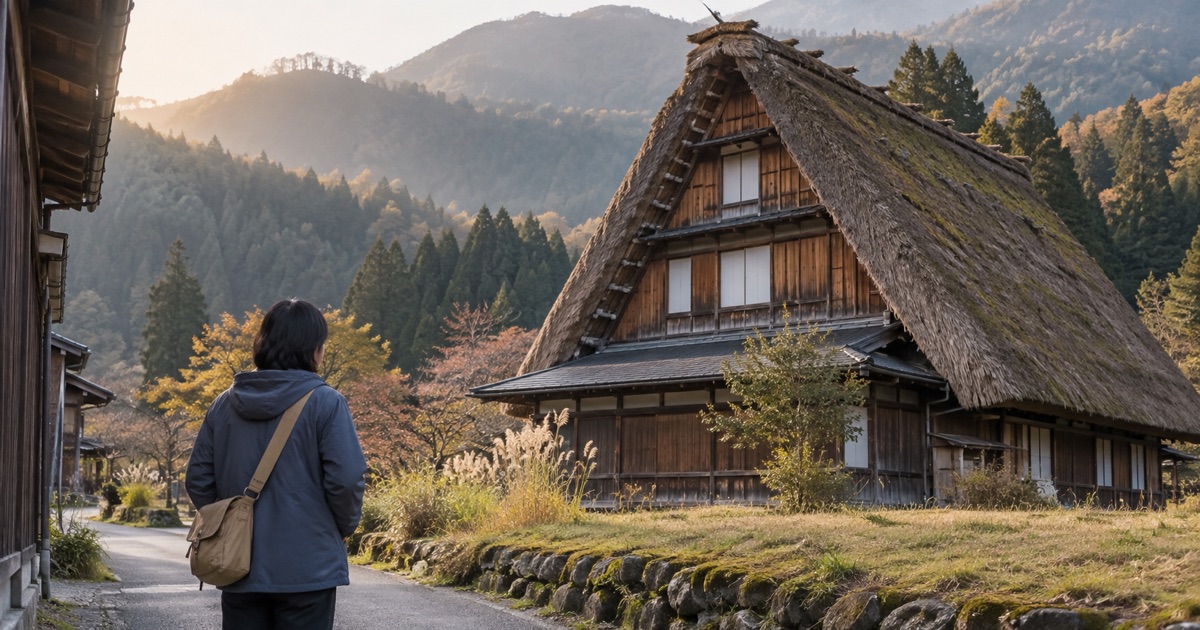
Shirakawa-go is a UNESCO World Heritage site situated in a river valley in Gifu Prefecture. Its fame stems from steep, thatched roofs designed to withstand heavy winter snowfall, resembling hands clasped in prayer (gassho).
Unlike a reconstructed theme park, Ogimachi (荻町)—the main settlement—remains a living, breathing village. Residents farm the surrounding land, maintain fragile thatch roofs through cooperative community labour (yui), and tend historic water channels running alongside pedestrian pathways.
Within the village, several large farmhouses operate as public museums. Landmarks such as Wada House (和田家), Nagase House (長瀬家), and Kanda House (神田家) allow travellers to step inside multi-storey timber structures. Climbing to the third and fourth floors reveals massive cedar roof frames lashed together with ropes rather than metal nails, historically used for sericulture (silkworm cultivation).
Beyond museum interiors, the Shiroyama Viewpoint (城山展望台) provides a panoramic outlook over the entire valley. From this elevated vantage point, the village appears timeless, framed by forested ridges and rice paddies.
The Reality: Crowds, Transit, and Commercialisation
While photos depict an untouched alpine idyll, the ground reality can feel quite different during peak hours. Tourism has grown dramatically, bringing specific trade-offs:
- Heavy Foot Traffic: Tour buses arrive in large numbers between 10:30 and 15:00. Main streets can feel congested, and quiet contemplation can be difficult along primary thoroughfares.
- Strict Bus Dependencies: Shirakawa-go has no train station. Every visitor arrives by road, meaning schedules rely entirely on highway bus bookings or tour departures.
- Limited English Signage in Outlying Corners: While central museums provide multilingual pamphlets, general village life is conducted in Japanese, and modern amenities are intentionally restricted to protect historic character.
- Commercial Strips: Souvenir stalls, soft-serve ice cream stands, and snack vendors occupy many central structures, which can diminish the sense of historic isolation for some travellers.
If you set your expectations around these elements, you will avoid disappointment. Visiting outside peak hours dramatically improves the atmosphere.

We are working to carry Japanese craft and everyday culture beyond Japan, by building Japan Towns with local partners.
Read the Japan Town plan →How to Get There by Independent Train and Bus
Visiting Shirakawa-go requires combining a train journey with an express highway bus. For regional train scheduling and rail passes, consult JR Central or JR West.
Starting from Tokyo
A day trip directly from Tokyo Station (東京駅) is technically possible but demanding, taking between four and five hours each way:
- Take the Hokuriku Shinkansen (北陸新幹線) from Tokyo Station to Kanazawa Station (金沢駅) or Toyama Station (富山駅) (roughly 2 to 2.5 hours).
- Transfer to a highway bus (such as the Nohi Bus or Hokutetsu Bus) direct to Shirakawa-go (roughly 50 to 85 minutes, depending on the departure city).
Starting from Kyoto or Osaka
Departing from Kyoto Station (京都駅) or Osaka Station (大阪駅):
- Take the JR Thunderbird Limited Express (サンダーバード) to Tsuruga Station (敦賀駅), then transfer to the Hokuriku Shinkansen to Kanazawa Station (roughly 2 to 2.5 hours total).
- Transfer to the highway bus from Kanazawa Station to Shirakawa-go (roughly 85 minutes).
Alternatively, travel via Nagoya Station (名古屋駅) using the JR Hida Limited Express (ひだ) up to Takayama Station (高山駅), followed by a 50-minute bus ride to Shirakawa-go.
The Critical Bus Reservation Step
Do not show up at Kanazawa, Toyama, or Takayama expecting to buy a walk-up ticket on the spot. Buses frequently sell out. Book reserved seats weeks ahead via official highway bus booking portals. If you hold a Japan Rail Pass, note that it does not cover highway buses between these cities and Shirakawa-go; you must purchase separate bus tickets.
Costs and Practical Logistics
- Bus Fares: One-way highway bus fares generally range around ¥2,000 to ¥3,000 from nearby hubs like Takayama or Kanazawa.
- Museum Admission: Entering preserved farmhouses like Wada House costs roughly ¥400 to ¥600 per adult. Check opening signs on arrival as maintenance schedules change.
- Luggage: Avoid wheeling heavy suitcases over village gravel and timber walkways. Use coin lockers or luggage storage counters at the Shirakawa-go bus terminal, which cost around ¥500 to ¥1,000 depending on bag size. Better yet, forward luggage via delivery services from your primary hotel.
- Cash: Bring sufficient Japanese yen. Small food stalls, local fruit vendors, and historic house admission desks often do not accept credit cards or IC transit cards.
- Footwear: Wear broken-in walking shoes. Paths can be uneven, slick with mud during rainfall, or packed with hard snow in winter.
Which Season Is Best?
Every season alters the character of the settlement:
Winter (December to March)
The village looks magical under thick blankets of snow. However, temperatures drop below freezing, footpaths become icy, and transport disruptions can occur during severe blizzards. Famous evening light-up events require strict advance lottery registrations months ahead; you cannot simply drop in.
Spring (April to May)
Cherry blossoms bloom later in this alpine valley than in Tokyo or Kyoto, typically opening in mid-to-late April. Melted snow fills the irrigation channels, and fresh rice planting begins across the terraced fields.
Summer (June to August)
Lush green rice paddies offer vivid contrasts against dark timber facades. It is noticeably cooler than lowland Tokyo or Osaka, though midday sun and humidity remain strong.
Autumn (September to November)
Surrounding mountain slopes display brilliant red and gold foliage, peaking around late October to early November. Weather is generally crisp and comfortable for walking, though tourist crowds peak alongside the leaf change.
Shirakawa-go vs. Worthy Alternatives
If the travel logistics feel excessive for your route, consider these alternatives:
- Gokayama (五箇山): Located slightly north, Gokayama comprises smaller villages (Ainokura and Suganuma) featuring similar gassho-zukuri architecture. It attracts a fraction of Shirakawa-go's crowds and provides a quieter, more intimate glimpse into rural heritage.
- Hida Folk Village (飛騨の里 - Hida no Sato): Located just outside central Takayama, this open-air museum features authentic thatched farmhouses relocated from across the region. You can walk through preserved interiors with ease and combine it seamlessly with a Takayama old town walking tour.
- Miyama (美山): Situated north of Kyoto, the Kayabuki no Sato (かやぶきの里) district in Miyama features thatched-roof farmhouses without the extensive mountain bus journey across the Japanese Alps.
The Verdict: Who Should Go?
Skip it if:
- You have less than seven days total in Japan.
- Your route is confined strictly to the Golden Route (Tokyo–Kyoto–Osaka) with no plans to stay in Kanazawa or Takayama.
- You dislike crowded tourist hubs and rigid transport timetables.
Go if:
- You are already travelling between Kanazawa, Toyama, and Nagoya/Takayama.
- You have a keen interest in traditional Japanese carpentry, vernacular architecture, and agricultural history.
- You can schedule an early-morning or late-afternoon visit before tour groups dominate the walkways.
For additional regional transit advice and alpine seasonal updates, review regional itineraries on the Japan National Tourism Organization portal before finalizing your journey.
FAQ
- Q. Is Shirakawa-go worth visiting on a day trip?
- A. Yes, Shirakawa-go is worth visiting if you appreciate traditional wooden architecture and rural landscapes. However, because it requires multiple hours of transit each way from major cities, it is best suited as a stop between Nagoya, Kanazawa, or Toyama rather than a standalone rush trip.
- Q. How much time do you need in Shirakawa-go?
- A. Most visitors need between two and four hours to explore the central village, tour inside an open farmhouse museum like Wada House, and walk up to the Shiroyama viewpoint. Staying longer allows time for a sit-down meal or exploring quieter residential lanes away from main roads.
- Q. Do you need to book buses to Shirakawa-go in advance?
- A. Yes, advance booking is strongly recommended. Most highway buses connecting Shirakawa-go with Kanazawa, Takayama, and Toyama require seat reservations. Seats frequently sell out days or weeks ahead, especially during autumn foliage and the peak winter snow season.
Cite or share this article
Copy the link below. If you quote this article, please link to this page as the source.