Things to Do in Arashiyama Bamboo Forest: Complete Guide
Key takeaways
- Walk the bamboo grove at sunrise before crowds arrive, then continue directly into Tenryu-ji Temple or Okochi Sanso Villa.
- Access Arashiyama easily in roughly 15 to 20 minutes from central Kyoto via the JR San-in Main Line to Saga-Arashiyama Station.
- Combine the grove with the iconic Togetsukyo Bridge and riverside strolls for an easy half-day or full-day independent outing.
The best things to do in the Arashiyama Bamboo Forest (嵐山竹林の小径, Chikurin no Komichi) involve walking the soaring natural pathway at daybreak, visiting world heritage temples along its borders, and exploring the historic villa gardens nested at its northern exit. Located in western Kyoto, this iconic pocket of nature is completely free to enter and pairs easily with classic river walks, ancient shrines, and peaceful hillside viewpoints.
Because the grove itself is a compact walking path that takes only 15 to 30 minutes to cross, the key to a memorable visit lies in how you explore the treasures immediately adjacent to the bamboo. This guide covers how to reach Arashiyama independently by train, what to see inside and beside the grove, and how to avoid the heavy midday crowds.
How to Get to Arashiyama from Kyoto Station
Arashiyama sits on the western edge of Kyoto, framed by the Oi River (大堰川) and forested mountains. Independent travelers can reach the area easily using Kyoto's rail network.
1. By JR Train (Fastest Option)
- Departure Station: Kyoto Station (京都駅)
- Train Line: JR San-in Main Line (also signed as the JR Sagano Line)
- Arrival Station: Saga-Arashiyama Station (嵯峨嵐山駅)
- Travel Time: Roughly 15 to 20 minutes by local or rapid service
- Cost: Around 240 yen one way (fully covered by national JR rail passes)
From Saga-Arashiyama Station, follow the English street signs pointing west toward the bamboo path. The flat walk takes around 10 to 12 minutes through a neighborhood filled with small cafes and souvenir shops. Official transit schedules and route planning can be checked on JR West.
2. By Hankyu Railway (Ideal from Central Kyoto / Kawaramachi)
- Departure Station: Kyoto-Kawaramachi Station (京都河原町駅) or Karasuma Station (烏丸駅)
- Train Line: Hankyu Kyoto Line to Katsura Station (桂駅), then transfer to the Hankyu Arashiyama Line
- Arrival Station: Arashiyama Station (Hankyu) (嵐山駅)
- Travel Time: Roughly 20 to 25 minutes
- Cost: Around 240 to 280 yen
The Hankyu station is located south of the river. Arriving here gives you a picturesque 15-minute walk across the famous Togetsukyo Bridge (渡月橋) before reaching the bamboo entrance.
3. By Keifuku Electric Railroad (Randen Tram)
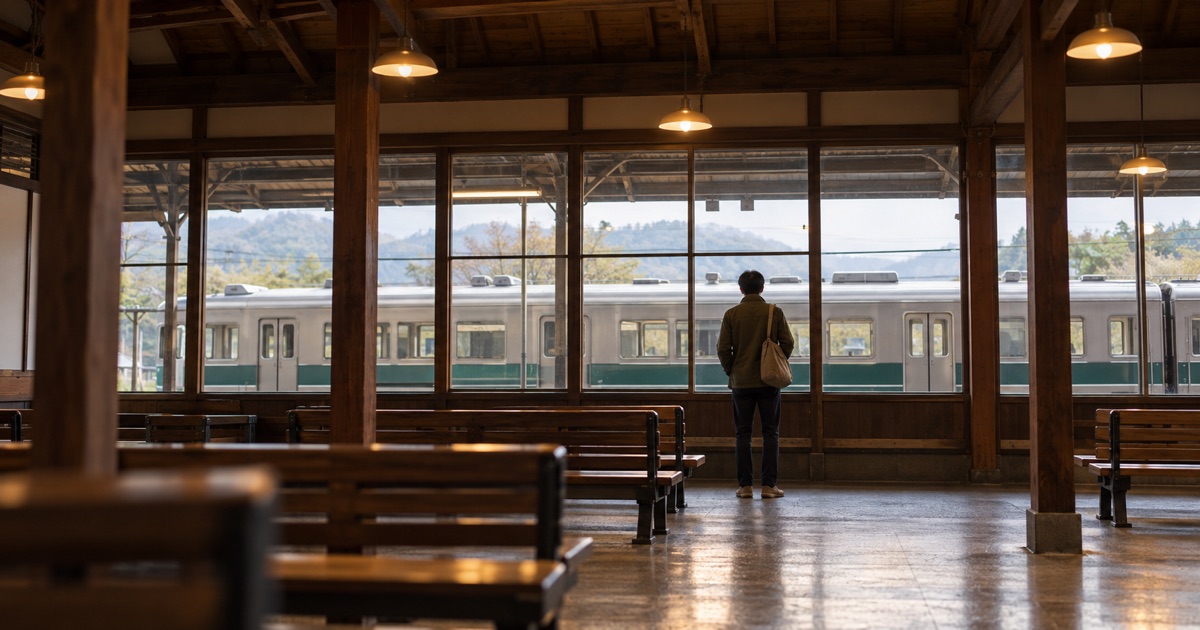
If coming from northern Kyoto or Shijo-Omiya (四条大宮), the retro Randen streetcar terminates at Arashiyama Station (Keifuku). This puts you directly onto the bustling main street, just a 5-minute stroll from the grove.
Top Things to Do in and Around the Bamboo Forest
1. Walk the Main Bamboo Grove
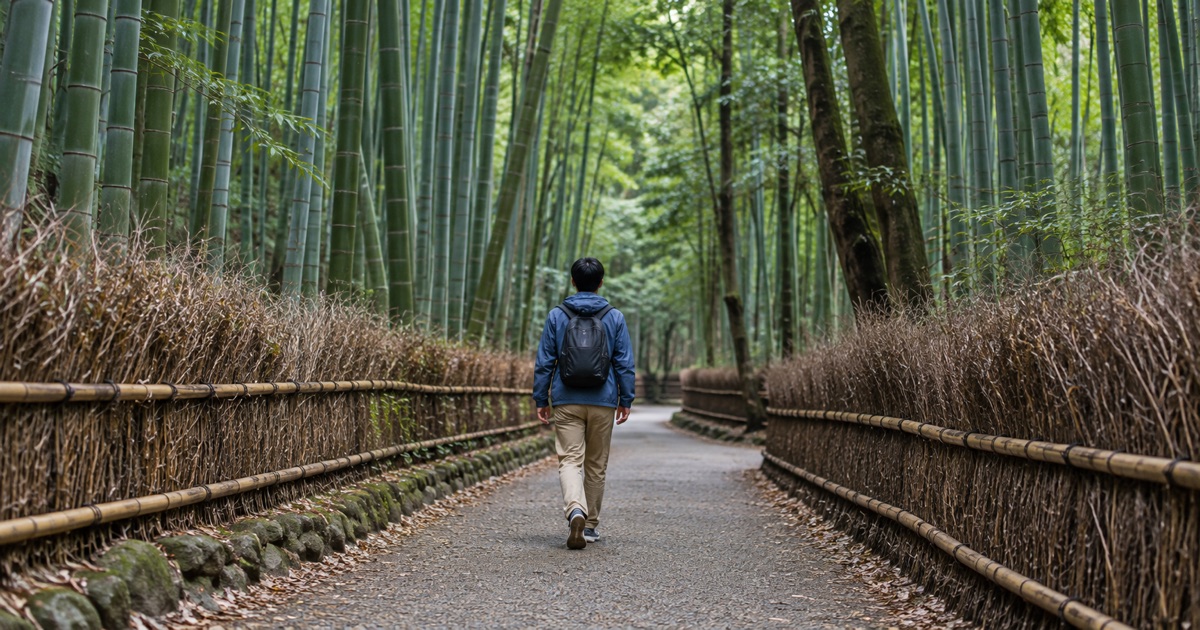
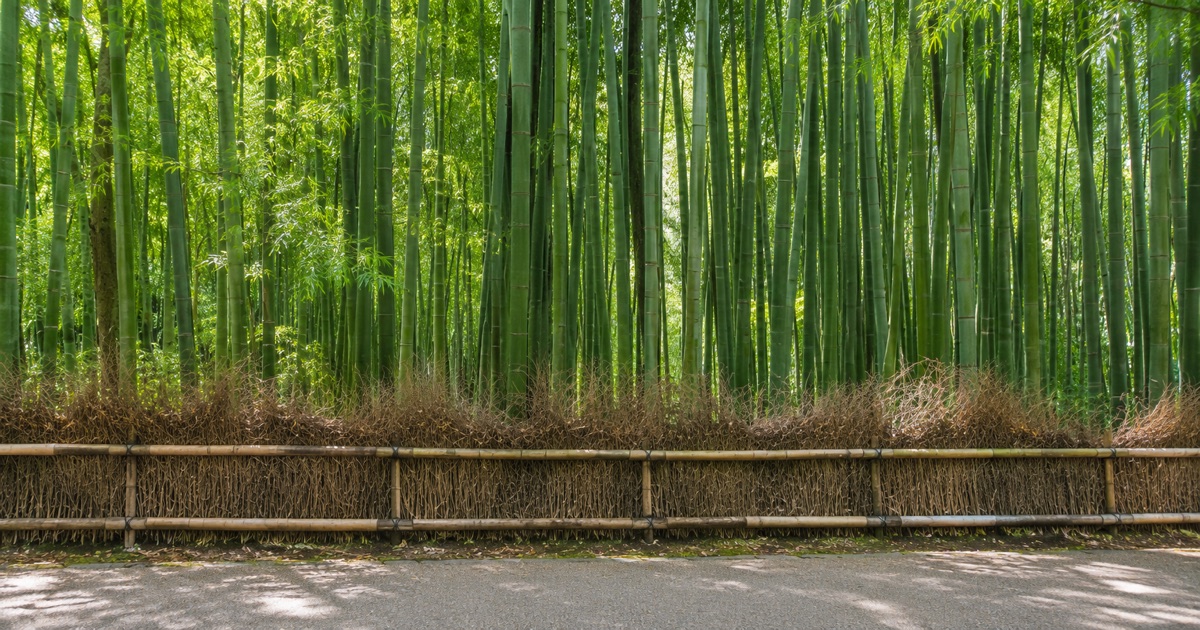
The main path winds gently uphill between towering green stalks of moso bamboo that filter the sunlight into a cool, emerald glow. Take time to pause and listen: the rustling sound of the wind moving through this grove is officially recognized by Japan's Ministry of the Environment as one of the "100 Soundscapes of Japan."
The path features rustic wooden and woven bamboo fences designed to protect the root systems. Sticking to the designated path keeps the root bed intact and preserves the grove for future generations.
2. Visit Tenryu-ji Temple
Immediately flanking the eastern border of the bamboo path lies Tenryu-ji (天龍寺), one of Kyoto's five great Zen temples and a UNESCO World Heritage site. You can access the temple grounds directly via its north gate, which opens right onto the central section of the bamboo path.
Highlights inside Tenryu-ji include:
- Sogenchi Garden (曹源池庭園): A 14th-century strolling pond garden that incorporates the surrounding Arashiyama mountains into its visual design (a landscape technique known as shakkei, or "borrowed scenery").
- Hojo (Main Hall): Traditional tatami halls offering contemplative views over the pond and gravel zen gardens.
- The Cloud Dragon Painting: Displayed on the ceiling of the Hatto (Dharma Hall), visible on select weekend and seasonal openings.
Note: Entry tickets for Tenryu-ji range from roughly 500 to 800 yen depending on whether you enter the garden only or add the temple halls. Check admission details at the entrance gate, as seasonal hours vary.
3. Explore Okochi Sanso Villa
At the very top western exit of the bamboo path sits the entrance to Okochi Sanso Villa (大河内山荘). This was the private estate of Denjiro Okochi (1898–1962), a renowned Japanese silent film actor who spent decades creating this sprawling hillside retreat.
While many tourists turn around after finishing the bamboo trail, stepping through the gate of Okochi Sanso rewards you with:
- Carefully sculpted multi-tiered gardens displaying maples, pines, and seasonal cherry blossoms.
- Panoramic vistas overlooking the city of Kyoto to the east and the Hozu River gorge to the west.
- A quiet open-air tea pavilion where your admission fee (around 1,000 yen) includes a warm bowl of freshly whisked matcha green tea and a traditional sweet confection.
4. Stop at Nonomiya Shrine
Located inside the lower section of the grove, Nonomiya Shrine (野宮神社) holds a deep place in classical Japanese literature. In ancient times, imperial princesses stayed here to purify themselves before serving at the sacred Ise Grand Shrine, a history immortalized in The Tale of Genji.
Look for the unique kuroki torii, a rare Shinto gate built from unpeeled oak logs with the bark still intact. The shrine grounds also feature a lush moss garden designed to resemble a miniature natural landscape. Admission is free.
5. Cross the Togetsukyo Bridge
A short five-minute walk south from the bamboo trail brings you to the wide Oi River and the Togetsukyo Bridge ("Moon Crossing Bridge"). The bridge spans 155 meters and offers unobstructed views of Mount Arashiyama rising directly out of the river valley. In spring, cherry blossoms line the banks; in autumn, the mountainside turns brilliant red and orange.
Riverside pathways stretch in both directions from the bridge, providing comfortable benches and flat ground away from vehicle traffic.

We are working to carry Japanese craft and everyday culture beyond Japan, by building Japan Towns with local partners.
Read the Japan Town plan →Suggested Half-Day Walking Route
To make the most of your morning, follow this efficient step-by-step route:
- 07:30 AM – Arrival: Reach Saga-Arashiyama Station via the JR Line and walk to the bamboo grove entrance.
- 08:00 AM – Bamboo Walk & Nonomiya Shrine: Experience the grove while the morning light breaks through the stalks and visitor numbers are minimal.
- 08:45 AM – Tenryu-ji Temple: Enter through the North Gate as the grounds open to tour the Sogenchi pond garden before the mid-morning tour groups arrive.
- 10:00 AM – Okochi Sanso Villa: Exit back toward the top of the grove to explore the quiet villa gardens and enjoy matcha tea.
- 11:15 AM – Main Street & Riverside: Walk down toward the Togetsukyo Bridge, browsing local street snacks like tofu soft-serve ice cream or roasted green tea (hojicha) treats along the way.
Practical Tips for First-Time Visitors
- Timing is Everything: The bamboo grove is open 24 hours a day with no gates. Arriving between 7:00 AM and 8:00 AM allows you to see the path virtually empty. By 10:30 AM, the walkway becomes heavily crowded, making photography difficult.
- What to Bring: Wear sturdy, comfortable walking shoes. While the main paths are paved or packed gravel, surrounding temple gardens and Okochi Sanso feature stone staircases and uneven earth.
- Luggage Storage: Avoid bringing large suitcases to Arashiyama. Station coin lockers at Saga-Arashiyama fill up early in the day. Leave heavy bags at Kyoto Station or your accommodation.
- Bicycles: Rental bicycles are widely available near the stations, but riding inside the main bamboo grove is strictly restricted during peak hours due to foot traffic. Park your bicycle in designated station or shop lots before entering the path.
- Seasonal Verification: For broader regional travel alerts and seasonal event schedules across Japan, consult the Japan National Tourism Organization.
Visiting the Arashiyama Bamboo Forest offers an unforgettable look into Kyoto's natural beauty and temple heritage. Starting early in the morning and continuing into the adjoining mountain gardens ensures a relaxed, scenic day trip.
FAQ
- Q. How much does it cost to enter the Arashiyama Bamboo Forest?
- A. The main bamboo walking path is a public pedestrian lane that is free to enter and open 24 hours a day.
- Q. How do I get to Arashiyama Bamboo Forest from Kyoto Station?
- A. Take the JR San-in Line (Sagano Line) from Kyoto Station to Saga-Arashiyama Station, which takes around 15 to 20 minutes.
- Q. How long should I spend at Arashiyama Bamboo Grove?
- A. Walking through the grove itself takes 15 to 30 minutes, but plan 2 to 4 hours to explore the surrounding temples and gardens.
Cite or share this article
Copy the link below. If you quote this article, please link to this page as the source.