Things to Do in Kyoto at Night: Evening Walks and Sights
Key takeaways
- Visit 24-hour shrines like Fushimi Inari and Yasaka at night to avoid daytime crowds and heat.
- Stroll lantern-lit alleys in Pontocho and Gion for evening dining, riverside views, and historic charm.
- Kyoto's subway and buses wind down around midnight, so check last train times or use local taxis.
The best things to do in Kyoto at night include walking through glowing shrine grounds like Fushimi Inari and Yasaka, exploring the atmospheric dining alleys of Pontocho and Gion, and enjoying illuminated city views from Kyoto Tower. While famous Buddhist temple halls close before sunset, the city transforms after dark into a peaceful, lantern-lit landscape with far fewer crowds.
Whether returning from a day trip or spending the evening in the ancient capital, this guide covers practical ways to experience Kyoto after dusk using public transit.
Evening Shrine Walks: Beat the Crowds
Most Buddhist temples shut their gates between 16:30 and 17:30. In contrast, many Shinto shrines have open grounds that welcome visitors around the clock, free of charge. Visiting at night offers cooler temperatures and empty stone paths.
Fushimi Inari Taisha (伏見稲荷大社)
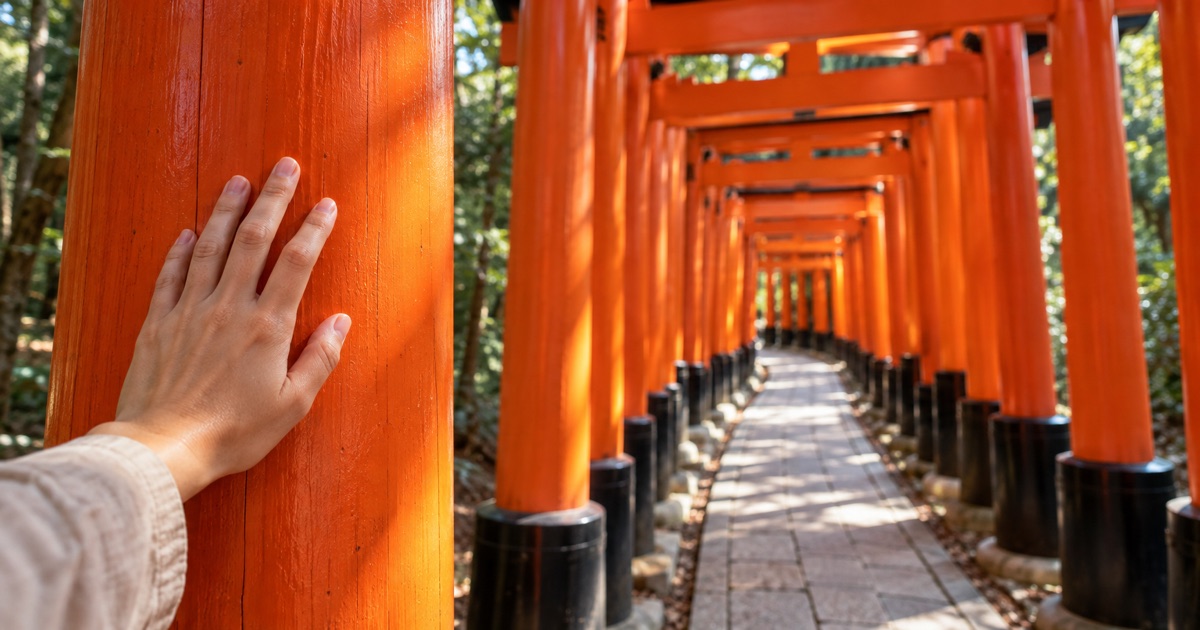
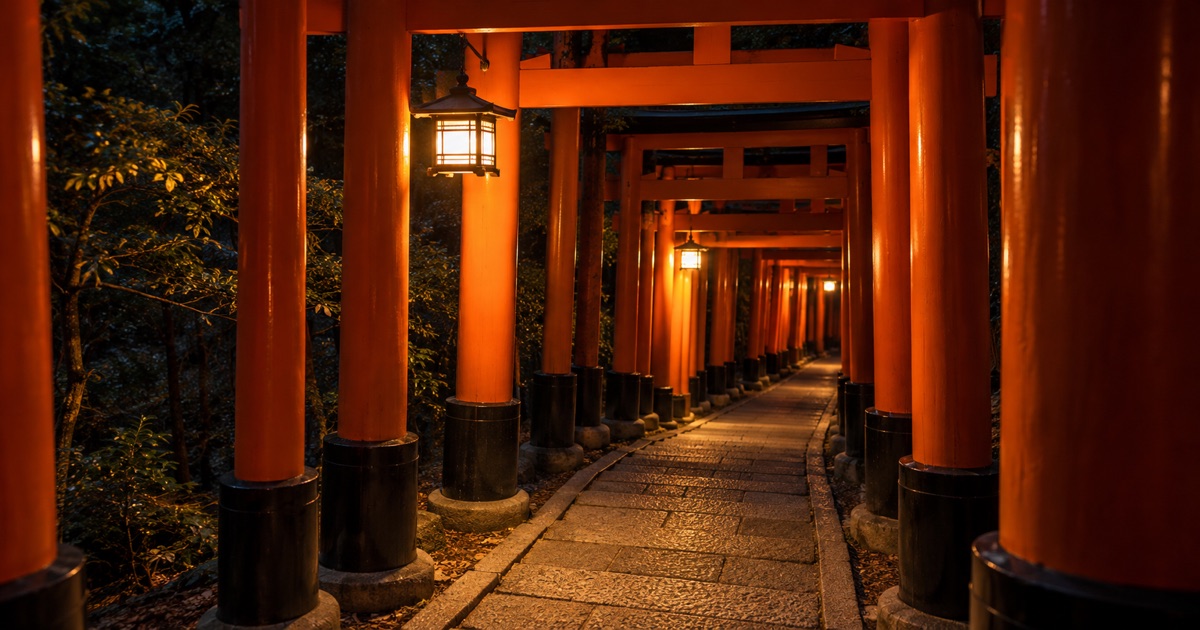
Fushimi Inari is famous for its thousands of vermilion torii gates winding up Mount Inari. During midday, the lower paths are heavily congested. At night, warm pendant lamps illuminate the tunnels of red wood, creating an entirely different atmosphere.
- How to get there: From Kyoto Station (京都駅), take the local train on the JR Nara Line to Inari Station (稲荷駅). The ride takes roughly 5 to 7 minutes. You can also take the Keihan Main Line to Fushimi-Inari Station (伏見稲荷駅). For schedules and rail passes, check JR West.
- Practical tips: The lower loops around the main hall (honden) are well-lit and take about 30 to 45 minutes to explore. Hiking all the way to the summit takes roughly 2 to 3 hours round-trip, but higher paths grow progressively darker and quieter. Bring a small flashlight or keep your phone battery charged, and stick to paved trails.
Yasaka Shrine (八坂神社)
Positioned at the eastern end of Shijo Street (四条通) in the heart of Gion, Yasaka Shrine is one of the most vibrant spots in the city after dark. The dance stage in the center of the courtyard features hundreds of hanging paper lanterns inscribed with the names of local businesses, which glow brightly throughout the night.
- How to get there: From Kyoto Station, take city bus 206 toward Gion, which takes around 20 minutes depending on traffic. By train, take the subway to Shijo Station (四条駅) or the Keihan Line to Gion-Shijo Station (祇園四条駅) and walk east along Shijo Street.
- What to expect: Because it sits directly between the dining districts of Gion and Maruyama Park (円山公園), Yasaka Shrine is easy to combine with dinner. The gates do not close, making it an ideal post-dinner walk.
Atmospheric Historic Districts
Kyoto’s traditional wooden architecture takes on a distinct character once streetlamps flicker on and shop shutters roll down.
Pontocho Alley (先斗町)
Pontocho is a narrow, pedestrian-only corridor running parallel to the Kamogawa River (鴨川) between Shijo and Sanjo streets. Packed with traditional wooden townhouses (machiya), it houses an eclectic mix of yakitori stalls, modern cocktail bars, and high-end kaiseki restaurants.
- How to get there: A 3-minute walk from Gion-Shijo Station on the Keihan Line or Kyoto-Kawaramachi Station (京都河原町駅) on the Hankyu Line.
- Visiting advice: During warmer months (typically May through September), riverside restaurants construct raised wooden platforms called kawayuka overlooking the river. If you want to sit outside, book ahead or arrive right as dinner service starts around 17:30. If menus lack English, look for restaurants displaying clear pricing outside to avoid unexpected table charges (otōshi).
Gion and Shirakawa (祇園・白川)
Across the bridge from Pontocho lies Gion, Kyoto's most renowned geisha district. Hanami-koji Street (花見小路) features preserved tea houses with latticed wooden windows. A short walk north leads to the Shirakawa canal area, where willow trees weep over stone bridges lined with lanterns.
- Etiquette reminder: Photography is strictly prohibited on private side streets branching off Hanami-koji, marked by clear signage. Always keep to public thoroughfares, never block the path, and never pursue geiko or maiko walking to evening appointments.
Kamogawa Riverbank
On dry evenings, the flat dirt banks of the Kamogawa River fill with locals and travelers sitting along the water's edge. It is common to buy a drink or a light snack from a nearby convenience store (konbini) and relax by the water near Sanjo Bridge (三条大橋) or Shijo Bridge (四条大橋).
We are working to carry Japanese craft and everyday culture beyond Japan, by building Japan Towns with local partners.
Read the Japan Town plan →Night Views and Illuminations
If you prefer wide-angle skyline views or seasonal light displays, Kyoto offers several distinct vantage points.
Kyoto Tower (京都タワー)
Standing directly across from the central exit of Kyoto Station, Kyoto Tower provides a 360-degree view across the entire Kyoto basin. At roughly 100 meters above the ground, the observation deck lets you see the grid layout of the ancient city outlined in streetlights, with dark mountain silhouettes framing the horizon.
- Details: Admission is around 900 yen, and entry generally winds down around 21:00, though exact operating hours vary throughout the year. The basement level features a modern food hall serving craft beer, gyoza, and ramen.
Kyoto Station Building (京都駅ビル)
The modern glass-and-steel Kyoto Station building itself is an architectural attraction at night. The Grand Staircase (Daikaidan), leading up to the rooftop garden from the west side of the station, features a permanent LED light display that projects moving patterns across its 171 steps.
- Access: Completely free to visit. Simply take the long escalators up from the main station atrium. It provides a quiet view of the illuminated Kyoto Tower against the dark sky.
Seasonal Temple Illuminations (Yakan Haikan)
During peak spring cherry blossom season and autumn foliage season (usually late March to early April, and mid-November to early December), select major temples open for ticketed nighttime viewings (yakan haikan).
- Frequent participants: Kiyomizu-dera (清水寺), Kodai-ji (高台寺), and To-ji (東寺) often illuminate their gardens, pagodas, and trees. Kiyomizu-dera casts a striking blue searchlight across the Kyoto skyline during these events.
- Planning: These special openings require separate admission fees, typically between 500 and 1,000 yen. Lines can be substantial, so planning to arrive right before closing admission or checking updates via the Japan National Tourism Organization is recommended.
Practical Tips for Kyoto at Night
Public Transit Timelines
Unlike Tokyo or Osaka, Kyoto relies heavily on its municipal bus network, but city buses decrease in frequency after 20:00 and largely stop running between 21:30 and 22:30.
- Subway and Trains: The Karasuma and Tozai subway lines, as well as JR lines from Kyoto Station, typically operate until roughly midnight. Always confirm your last train time if you are staying outside the central Shimogyo or Nakagyo wards.
- Taxis: Taxis are abundant around major train stations and outside large hotels in Kawaramachi and Gion. They accept cash and IC cards (like ICOCA or Suica), with an automatic late-night surcharge of roughly 20% applied between 22:00 and 05:00.
What to Bring
- Comfortable walking shoes: Kyoto's historic districts feature stone pavers that can be slick after rain.
- Fully charged mobile device or power bank: Dimly lit alleys and parks mean your smartphone will serve as your transit timetable, translator, and flashlight.
- Cash: While department stores and chain bars accept cards, many small bars, noodle shops, and shrines require Japanese yen.
Common Mistakes to Avoid
- Showing up at temples without checking evening openings: Assuming famous temples like Ginkaku-ji or Kinkaku-ji are open after dark leads to closed gates. Unless an evening light-up event is officially running, visit shrines instead.
- Relying on buses late at night: Don't plan to catch a bus back to your hotel after 22:00. Plan your route around train stations or be prepared to hail a taxi.
- Entering private alleys in Gion: Pay strict attention to "No Photography" and "No Trespassing" signs posted along side streets in the geisha quarters to respect local residents.
FAQ
- Q. Is Kyoto safe to walk around late at night?
- A. Kyoto is generally very safe for evening walks, but side streets can be poorly lit, so carry a charged smartphone.
- Q. How late does public transit run in Kyoto?
- A. Most city trains and subways stop running around midnight, while city buses often finish earlier, around 21:30 to 22:30.
- Q. Are Kyoto temples and shrines open at night?
- A. Shinto shrines are often accessible 24 hours, while Buddhist temples usually close gates by late afternoon unless holding special evening illuminations.
Cite or share this article
Copy the link below. If you quote this article, please link to this page as the source.