Hakone Itinerary 1 Day: A Simple Plan From Tokyo
Key takeaways
- Start early from Shinjuku or Tokyo Station; the round trip plus sightseeing fills a full day.
- The classic loop covers Lake Ashi, the Hakone Ropeway, and Owakudani in roughly one circuit.
- A Hakone Freepass covers most local transport in the area and can simplify the day considerably.
Hakone Itinerary 1 Day: The Short Answer
A one-day Hakone itinerary from Tokyo is absolutely doable if you leave early, roughly before 8:00, and follow the classic loop route rather than trying to see the whole region. In a single day you can realistically combine Lake Ashi (芦ノ湖), the Hakone Ropeway, the volcanic valley of Owakudani (大涌谷), and a soak in the area's hot spring atmosphere, before returning to Tokyo by early evening.
This itinerary works best for travellers who are comfortable with a full day of trains, buses, and some walking, and who want a taste of mountains, a crater lake, and onsen town scenery without needing to book a hotel overnight.
Getting to Hakone From Tokyo
Hakone is most commonly reached from Shinjuku Station, with direct limited express trains running toward Hakone-Yumoto (箱根湯本), the gateway town to the Hakone area. The journey takes roughly 80-90 minutes one way, depending on the train type. Reserved seats are recommended for the limited express, especially on weekends and holidays, so it's worth checking availability in advance.
Alternatively, travellers starting from Tokyo Station or using a JR Pass can reach Odawara (小田原) by Shinkansen in around 35 minutes, then transfer to a local or express train for the short ride to Hakone-Yumoto. This option suits visitors already holding a Japan Rail Pass, since the Shinkansen portion may be covered, though the Hakone Tozan line and buses within Hakone itself are generally not JR-operated, so a separate local pass or tickets are still needed.
For up-to-date routes and train information, it's worth checking JR East for Shinjuku-area services or JR Central for Shinkansen connections via Odawara.
Should You Buy a Hakone Freepass?
The Hakone Freepass, sold by Odakyu, is a popular option for day-trippers. It generally covers the train between Shinjuku and the Hakone area (or a discount if combined with the limited express), plus unlimited rides on local buses, the Hakone Tozan Railway, the Hakone Ropeway, the Hakone Tozan Cable Car, and the Hakone Sightseeing Cruise on Lake Ashi. Given how many of these forms of transport a one-day loop uses, the pass often works out convenient, and sometimes cheaper, than buying individual tickets. Prices and exact coverage can change, so check current details before your trip.
We are working to carry Japanese craft and everyday culture beyond Japan, by building Japan Towns with local partners.
Read the Japan Town plan →A Realistic 1-Day Hakone Route
This is the loop most first-time visitors follow, adjusted as needed depending on your starting time and energy levels.
Morning: Arrival and Hakone-Yumoto
After arriving in Hakone-Yumoto, most travellers transfer onto the Hakone Tozan Railway, a mountain train line known for its switchback route and seasonal scenery, heading toward Gora (強羅). This ride takes roughly 40 minutes and offers views of forested slopes along the way.
Midday: Gora to Owakudani
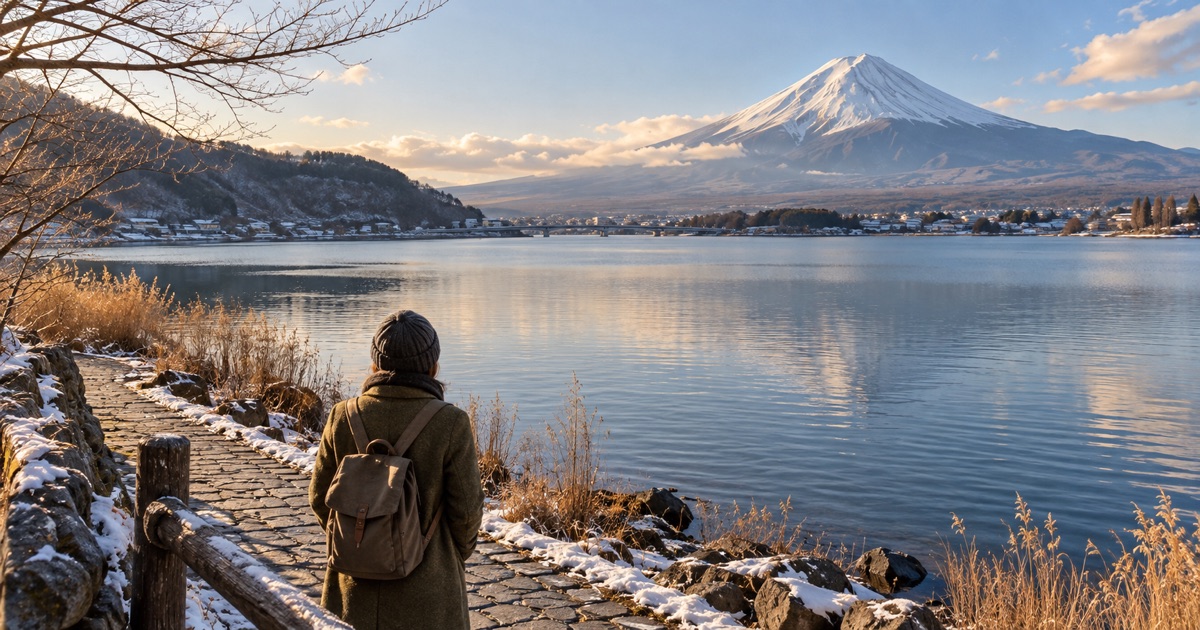
From Gora, a cable car (funicular) continues up to Sounzan (早雲山), where you then switch to the Hakone Ropeway. The ropeway carries you over the mountains to Owakudani, a volcanic valley known for its sulphurous steam vents and black eggs said locally to be boiled in the hot springs there. On clear days, there are views toward Mount Fuji from this stretch, though visibility depends heavily on weather, so don't plan the day around guaranteed views.
Note that the ropeway occasionally suspends operation in certain sections due to volcanic gas levels or weather, with alternative bus transport sometimes arranged instead. Always check current operating status before you go, rather than assuming the full route will be running.
Afternoon: Lake Ashi and the Sightseeing Cruise
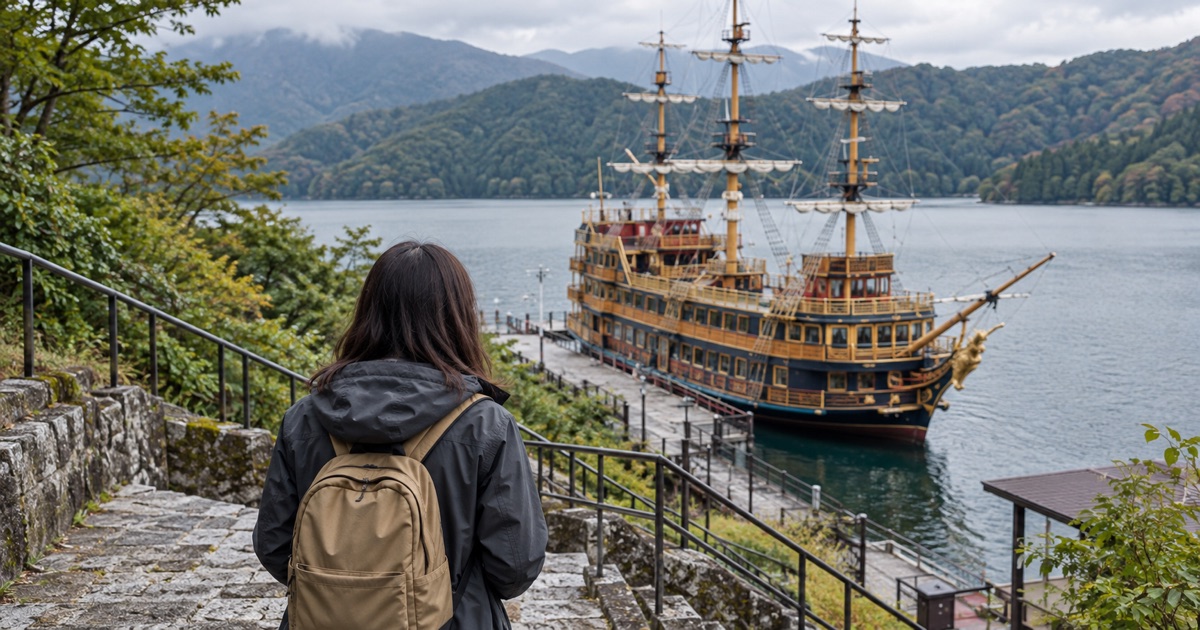
Continuing on the ropeway brings you down to Togendai (桃源台), on the shore of Lake Ashi. From here, the Hakone Sightseeing Cruise crosses the lake toward Hakone-machi (箱根町) or Moto-Hakone (元箱根), with views of the surrounding hills and, conditions permitting, Mount Fuji in the distance. The boat ride itself takes around 30 minutes.
Near the lake, many visitors stop to see the Hakone Shrine (箱根神社) torii gate standing at the water's edge, a popular photo spot, as well as explore the old Tokaido cedar avenue nearby if time allows.
Late Afternoon: Heading Back
From Moto-Hakone or Hakone-machi, buses run back toward Hakone-Yumoto Station, typically taking around 30-40 minutes depending on traffic, which can be heavier on weekends. From Hakone-Yumoto, the limited express or local train returns you to Shinjuku, completing the loop.
If you have extra time before boarding your return train, Hakone-Yumoto itself has a walkable main street with shops and casual eateries where you can pick up a snack or browse local goods before heading home.
What to Bring and Common Mistakes
Footwear and layers. Hakone involves a fair amount of walking between transport connections, plus elevation changes that can mean noticeably cooler temperatures at Owakudani than in Tokyo. Comfortable shoes and a layer you can add or remove are worth packing.
Cash for small purchases. While many places accept cards, smaller food stalls and some bus payments may be easier with cash on hand.
Don't try to see everything. A common mistake is attempting to add extra stops, such as art museums or additional onsen visits, on top of the full loop. The ropeway, cruise, and connecting transfers already take up most of a day, and rushing can mean missing the last reasonable return train.
Check the weather and ropeway status in advance. Fog, rain, or volcanic activity advisories can affect ropeway operation or visibility at Owakudani. Building in flexibility, such as being willing to skip one stop, helps keep the day stress-free.
Reserve seats where possible. Limited express trains between Shinjuku and Hakone-Yumoto can sell out on busy weekends and during cherry blossom or autumn foliage season, so booking ahead is sensible if your travel dates are fixed.
Planning Ahead
Because a one-day Hakone trip involves multiple transfers, it helps to have a rough schedule in mind before leaving Tokyo, rather than figuring out connections on the spot. Checking current train schedules and any service disruptions on official sites, such as Japan National Tourism Organization, alongside the Freepass details from Odakyu, is a sensible final step before you go. With an early start and a clear route, Hakone remains one of the most accessible and rewarding day trips from Tokyo for travellers who don't read Japanese and are navigating independently.
FAQ
- Q. Can Hakone be done as a day trip from Tokyo?
- A. Yes. Hakone is roughly 85-120 minutes from central Tokyo by train, making it a realistic one-day trip if you start early and plan a focused route.
- Q. What is the best way to see Hakone in one day?
- A. Most first-time visitors follow the Hakone loop: Hakone-Yumoto, Lake Ashi, the ropeway over Owakudani, and back, using local trains, buses, boats and cable cars along the way.
- Q. Do I need a Hakone Freepass?
- A. It's not mandatory, but it covers many local trains, buses, the ropeway and the sightseeing boat, which usually makes travel easier and can be good value for a full-day loop.
Cite or share this article
Copy the link below. If you quote this article, please link to this page as the source.