How to Get to Yokohama: Tokyo to Yokohama Train Guide
Key takeaways
- Direct trains link central Tokyo and Yokohama in 20 to 45 minutes, with one-way fares generally between 300 and 600 yen.
- JR lines serve Tokyo and Shinagawa directly, while the Tokyu Toyoko Line offers cheap, direct access from Shibuya.
- Pick your arrival station based on your itinerary: Yokohama Station for transit, or Minatomirai or Motomachi-Chukagai for sightseeing.
The easiest and fastest way to get to Yokohama (横浜) from central Tokyo is by train, which takes between 20 and 45 minutes depending on your departure station. Direct local and rapid services operate frequently throughout the day on both JR lines and private rail networks, costing roughly 300 to 600 yen for a standard one-way fare.
Yokohama sits immediately south of Tokyo along Tokyo Bay, making it one of the most accessible day trips in Japan. Because several rail operators link the two cities, your best route depends on which part of Tokyo you depart from and where in Yokohama you want to arrive.
Which Yokohama Station Do You Need?
Before boarding, clarify your destination within the city. First-time visitors often assume every train trip must end at Yokohama Station (横浜駅). While Yokohama Station is the city’s primary transport hub, other stations may place you closer to your final destination:
- Yokohama Station (横浜駅): The main terminal for JR, Keikyu, Sotetsu, and subway lines. It is surrounded by massive department stores and commercial districts.
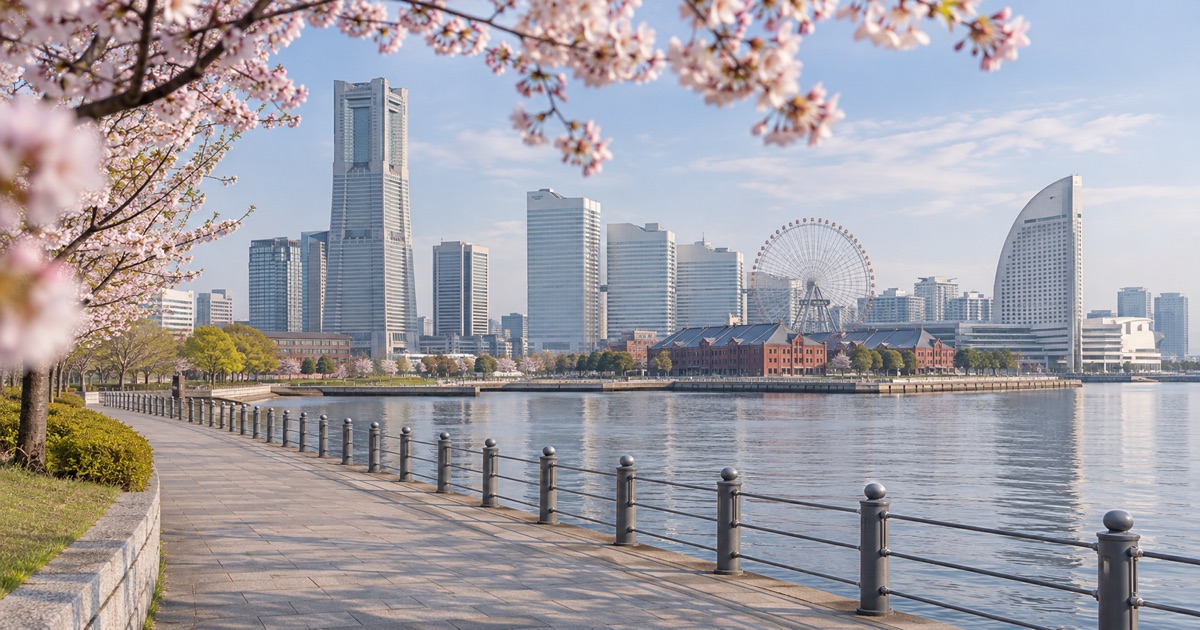
- Minatomirai Station (みなとみらい駅): Ideal for the modern waterfront, the Landmark Tower, PACIFICO Yokohama, and the Cup Noodles Museum.
- Motomachi-Chukagai Station (元町・中華街駅): The closest station to Yokohama Chinatown (中華街), Yamashita Park (山下公園), and the historic western-style Motomachi shopping street.
- Shin-Yokohama Station (新横浜駅): Located inland, this is the Shinkansen (bullet train) station and the stop for the Shin-Yokohama Ramen Museum. It is not within walking distance of the bay area.
How to Get to Yokohama from Tokyo Station
If you are staying near Tokyo Station (東京駅) or in eastern Tokyo districts like Nihombashi or Ginza, Japan Railways (JR) offers multiple direct options. Check timetable updates and service status directly with JR East.
1. JR Tokaido Line or Ueno-Tokyo Line (Fastest JR Route)
The JR Tokaido Line (東海道線) and Ueno-Tokyo Line (上野東京ライン) offer the quickest standard service between Tokyo Station and Yokohama Station.
- Travel Time: Roughly 25 to 30 minutes.
- Cost: Around 490 to 510 yen one way.
- Details: These are standard commuter trains that do not require an express surcharge. Trains run frequently throughout the day.
2. JR Yokosuka Line
The JR Yokosuka Line (横須賀線) departs from the underground platforms at Tokyo Station.
- Travel Time: Roughly 30 to 35 minutes.
- Cost: Around 490 to 510 yen one way.
- Details: This train makes slightly more stops than the Tokaido Line, but it is a reliable alternative if you are already closer to Tokyo Station’s underground tracks.
3. JR Keihin-Tohoku Line (Local Option)
The JR Keihin-Tohoku Line (京浜東北線) runs along the same corridor but stops at every local station.
- Travel Time: Roughly 40 to 45 minutes.
- Cost: Around 490 to 510 yen one way.
- Details: This route is generally slower than the Tokaido Line. However, it connects directly through areas like Akihabara and Ueno without requiring a transfer at Tokyo Station.

We are working to carry Japanese craft and everyday culture beyond Japan, by building Japan Towns with local partners.
Read the Japan Town plan →How to Get to Yokohama from Shinagawa Station
Shinagawa Station (品川駅) serves as a primary southern departure gate for travelers heading toward Kanagawa Prefecture.
1. JR Lines from Shinagawa
The JR Tokaido, Yokosuka, and Keihin-Tohoku lines all stop at Shinagawa on their way south.
- Travel Time: Roughly 17 to 22 minutes on the Tokaido Line.
- Cost: Around 310 to 330 yen one way.
2. Keikyu Main Line (京急本線)
Keikyu is a private railway company operating from Shinagawa directly through Yokohama and onward toward Haneda Airport and the Miura Peninsula.
- Travel Time: Roughly 17 to 20 minutes on a Limited Express (Kaitoku / 快特).
- Cost: Around 320 to 340 yen one way.
- Details: Ensure you board an express service (such as Rapid Limited Express or Limited Express), as local trains make dozens of minor stops. Keikyu services do not accept the standard JR Pass.
How to Get to Yokohama from Shibuya Station
If you are based on the western side of Tokyo—near Shibuya, Harajuku, or Omotesando—you have both JR and private line choices. The private Tokyu network is usually the most convenient option here.
1. Tokyu Toyoko Line (Direct to Minatomirai & Chinatown)
The Tokyu Toyoko Line (東急東横線) is often the best choice for tourists because many of its trains run directly onto the Minatomirai Line (みなとみらい線) tracks past Yokohama Station.
- Travel Time: Roughly 25 to 30 minutes to Yokohama Station on an Express or F-Liner; roughly 35 minutes directly to Motomachi-Chukagai.
- Cost: Around 300 to 320 yen to Yokohama Station; roughly 500 yen through to Motomachi-Chukagai.
- Details: Look for trains marked "F-Liner," "Limited Express" (特急), or "Commuter Ltd. Exp." on the departure boards. If you board one of these, you do not need to change trains at Yokohama Station to reach the waterfront or Chinatown.
2. JR Shonan-Shinjuku Line
If you prefer to use a JR line or hold an active JR Pass, board the south-bound JR Shonan-Shinjuku Line (湘南新宿ライン) from Shibuya.
- Travel Time: Roughly 25 to 30 minutes to Yokohama Station.
- Cost: Around 400 to 420 yen one way.
- Details: Board trains bound for Zushi (逗子) or Odawara (小田原). Avoid switching onto lines running in the opposite direction toward Shinjuku or Omiya.
How to Get to Yokohama from Shinjuku Station
Shinjuku (新宿) connects directly to Yokohama via JR lines without transfers.
1. JR Shonan-Shinjuku Line
This is the most straightforward direct connection from Shinjuku.
- Travel Time: Roughly 30 to 35 minutes to Yokohama Station.
- Cost: Around 570 to 600 yen one way.
- Details: Trains depart several times per hour. Board trains bound for Zushi or Ofuna.
2. Tokyo Metro Fukutoshin Line via Shibuya
You can board the Tokyo Metro Fukutoshin Line (副都心線) at Shinjuku-sanchome Station (新宿三丁目駅). Many of these trains run directly through Shibuya onto the Tokyu Toyoko Line and Minatomirai Line.
- Travel Time: Roughly 40 to 45 minutes to Motomachi-Chukagai.
- Cost: Around 580 to 620 yen one way.
Ticketing, Rail Passes, and Practical Tips
IC Cards (Suica and Pasmo)
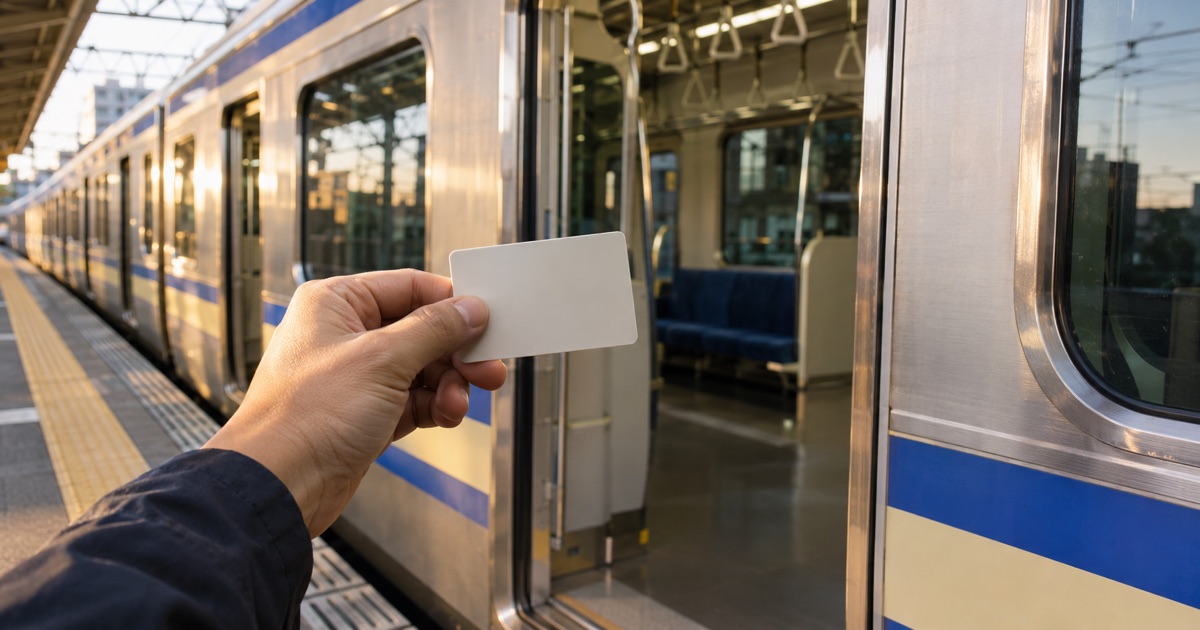
The simplest way to ride any of these lines is with an IC card (such as Suica, Pasmo, or mobile versions in your digital wallet). You simply tap your card or phone at the ticket gates when entering and exiting. Fares are calculated automatically, allowing you to seamlessly transfer between JR lines and private railways like Tokyu and Keikyu.
Japan Rail Pass
If you are traveling with a nationwide Japan Rail Pass, all JR lines (Tokaido Line, Yokosuka Line, Keihin-Tohoku Line, and Shonan-Shinjuku Line) are fully covered. However, the pass does not cover the Tokyu Toyoko Line, the Keikyu Line, or the Minatomirai Line. If you take a through-service train that transitions from a Tokyo Metro or Tokyu line onto the Minatomirai Line, you must pay the non-JR fare. You can consult overall trip planning resources through the Japan National Tourism Organization.
Upgrading to a Green Car
On JR Tokaido, Yokosuka, and Shonan-Shinjuku trains, two double-decker cars in the middle of each train are designated as "Green Cars" (first class). These offer forward-facing, reclining seats and small tray tables.
- You must purchase a Green Car ticket prior to boarding at platform vending machines using your IC card.
- The surcharge is usually around 800 to 1,000 yen depending on the distance and day of travel. Standard commuter cars do not require any seat reservation.
Common Mistakes to Avoid
- Boarding the Shinkansen by Mistake: High-speed bullet trains run between Tokyo/Shinagawa and Shin-Yokohama. However, this trip is expensive, does not save meaningful time once you factor in station navigation, and drops you at Shin-Yokohama Station—miles away from the main harbor and Chinatown. Stick to regular commuter and rapid lines.
- Taking an "All-Stations" Local Train: Lines like Keikyu and Tokyu run multiple tiers of trains: Local (Kakueki-teisha / 各駅停車), Express (Kyuko / 急行), and Limited Express (Tokkyu / 特急). Avoid local trains for long stretches; they wait on side tracks while faster trains pass them, doubling your transit time.
- Getting Confused at Yokohama Station: Yokohama Station is one of the busiest railway stations in the world. If you plan to visit Chinatown or the waterfront, look specifically for signs directing you to the Minatomirai Line underground, or consider taking a direct Tokyu train from Shibuya to avoid navigating the terminal entirely.
FAQ
- Q. What is the fastest standard train to get from Tokyo to Yokohama?
- A. The JR Tokaido Line and JR Ueno-Tokyo Line connect Tokyo Station to Yokohama Station in roughly 25 to 30 minutes without extra express fees.
- Q. Can I use the Japan Rail Pass to travel from Tokyo to Yokohama?
- A. Yes, the Japan Rail Pass covers JR lines including the Tokaido, Yokosuka, and Keihin-Tohoku lines, but it does not cover private lines like Tokyu.
- Q. Should I take the train to Yokohama Station or Minatomirai Station?
- A. For shopping and major transfers, use Yokohama Station. For waterfront sights, the Cup Noodles Museum, or Chinatown, consider direct trains to Minatomirai or Motomachi-Chukagai.
Cite or share this article
Copy the link below. If you quote this article, please link to this page as the source.