Things to Do in the Nakasendo: A First-Timer's Walking Guide
Key takeaways
- The signature activity is the roughly 7.8km walk between Magome (馬籠) and Tsumago (妻籠), taking about 2.5-3 hours.
- Both post towns are reachable by bus and train from Nagoya Station in around 2-2.5 hours total, making a day trip possible.
- Luggage-forwarding services between Magome and Tsumago let you walk without carrying your bags; book this at the local tourist office on arrival.
Things to Do in the Nakasendo
The best thing to do in the Nakasendo (中山道) is to walk the preserved post-town trail between Magome (馬籠) and Tsumago (妻籠) in the Kiso Valley, a scenic 2.5-3 hour hike through forest and farmland lined with Edo-period buildings. Beyond the walk itself, visitors can explore wooden inns, teahouses, small museums, and the lesser-visited post town of Narai-juku (奈良井宿) further north, all accessible by train and bus without a car.
The Nakasendo was one of the main routes connecting Edo (modern Tokyo) and Kyoto during the Edo period, and the Kiso Valley section preserves several of its post towns almost intact. For travelers without a car, this is one of the more rewarding rural day-trip areas in central Japan, and it can be reached from Nagoya, Nagano, or as a longer excursion from Tokyo or Kyoto.
Walk the Magome to Tsumago Trail
This is the single most popular activity in the area and the reason most people come. The trail runs roughly 7.8km one way and takes about 2.5 to 3 hours at a relaxed pace, including stops for photos and the occasional rest bench along the way.
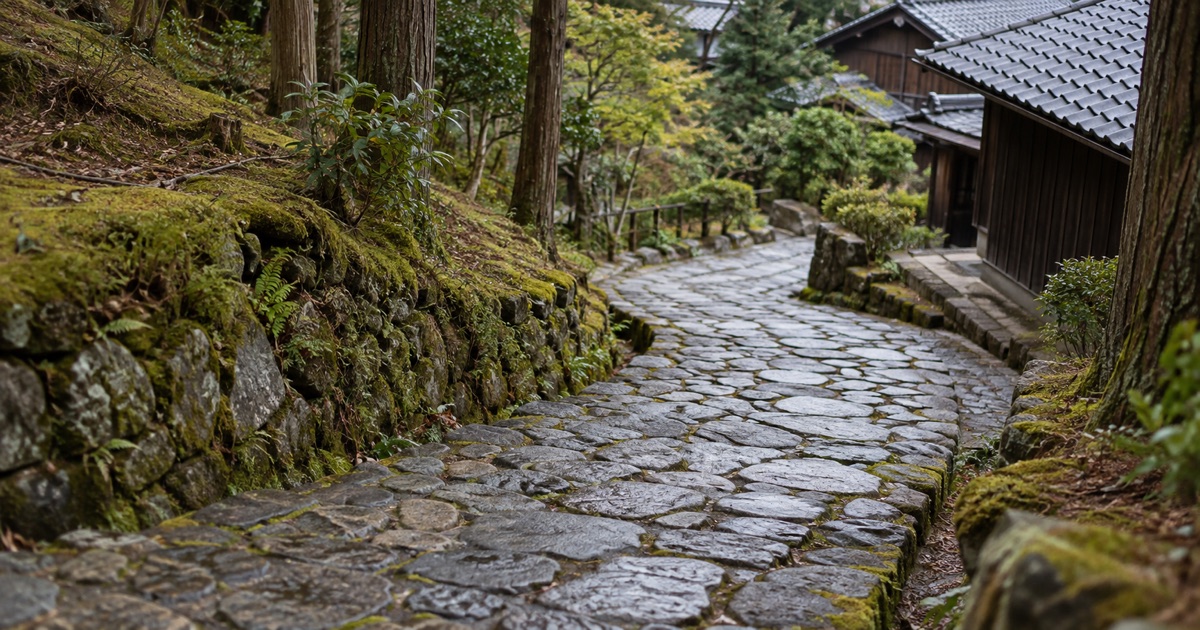
The path climbs out of Magome through terraced fields before entering forest, passing a waterfall and a couple of simple rest huts, then descends into Tsumago. Signage along the route is in both Japanese and English, and the trail is well maintained, though there are some uphill stretches near the Magome end that can be tiring in summer heat.
Most visitors walk from Magome to Tsumago rather than the reverse direction, partly because it's a gentler net descent and partly because bus and train connections work more smoothly that way at the end of the day.
What to bring:
- Comfortable walking shoes (the surface is mixed paved road, gravel, and dirt path)
- Water, since there are limited vending machines once you leave the town centers
- A light jacket in cooler months, and sun protection in summer
- Cash, as many small shops and rest stops do not accept cards
Common mistakes to avoid:
- Underestimating the time needed; allow at least 3 hours including a stop at the halfway point
- Starting too late in the afternoon, especially in autumn and winter when daylight is shorter
- Assuming you can easily buy food along the trail — it's better to eat in Magome or Tsumago before or after walking
Explore Magome and Tsumago Post Towns
Both towns reward some time spent wandering before or after the walk. Magome is built on a sloped main street with stone paving, small shops selling local snacks and crafts, and viewpoints looking out over the valley. Tsumago is flatter and arguably better preserved, with no visible power lines or vending machines along its main street, a deliberate choice by the local community to maintain the historic atmosphere.
Look out for the honjin and waki-honjin buildings in Tsumago, which were former official lodgings used by traveling feudal lords, and now function as small museums with modest entry fees.
Use the Luggage Forwarding Service
A well-known feature of this walk is the same-day luggage forwarding service that operates between Magome and Tsumago during the main travel season. Travelers can drop a bag at the tourist information office in one town in the morning and pick it up at the other town's office later the same day, for a small fee per bag. This service typically has a cutoff time for drop-off and does not run every day of the year, so confirm current details and times at the local tourist information office before relying on it.
Visit Narai-juku, a Quieter Alternative
Narai-juku (奈良井宿) sits further north along the old Nakasendo route and is reachable by JR train. It's less crowded than Magome and Tsumago, with a long, atmospheric main street of wooden merchant houses, and makes a good option if you'd rather explore on foot without the uphill hike, or if you want to combine a shorter walk with more time for browsing shops and cafes.
How to Get There
From Nagoya
Nagoya Station is the most practical starting point for a day trip. From Nagoya, take a JR train on the Chuo Line toward Nakatsugawa (中津川), which takes roughly 1 to 1.5 hours depending on the train type. From Nakatsugawa Station, a local bus runs to Magome in about 25-30 minutes. After walking to Tsumago, local buses and trains connect back toward Nagoya via Nagiso (南木曽) Station, which is on the JR Chuo Line. Total travel time from Nagoya to Magome is roughly 2 to 2.5 hours each way, so a full day trip is realistic if you start reasonably early. Check current schedules on the JR Central website before traveling.
From Nagano or Tokyo
Travelers coming from Nagano can reach the Kiso Valley via JR train lines heading toward Nakatsugawa or Nagiso, though journey times are longer and connections should be checked in advance. From Tokyo, the trip is long enough that many visitors prefer to combine it with a stay in Nagoya, Nagano, or the Kiso Valley itself rather than attempting a single-day round trip, since one-way travel time can run to around 4 hours depending on the route chosen. For rail pass options and route planning, see JR East and JR Central.
From Kyoto or Osaka
From Kyoto or Osaka, the most straightforward approach is via Nagoya, connecting onto the JR Chuo Line toward Nakatsugawa. Depending on train connections, total one-way travel time is likely to be around 3 hours, so an early start is recommended if attempting this as a day trip.

We are working to carry Japanese craft and everyday culture beyond Japan, by building Japan Towns with local partners.
Read the Japan Town plan →Planning Tips
- Check weather and trail conditions before heading out, particularly in winter when snow can make sections of the path slippery.
- Tourist information offices in both Magome and Tsumago can store larger luggage or arrange the forwarding service, and are worth visiting as soon as you arrive.
- Toilets and rest points exist along the trail but are limited, so use the facilities in town before setting off.
- Bus and train schedules in this rural area are less frequent than in major cities, so confirm return times before starting your walk rather than after.
- Opening hours for small museums and shops in Magome and Tsumago can vary by season, so treat posted hours as approximate and check locally.
For general trip planning and current travel advisories, the Japan National Tourism Organization is a reliable starting point before finalizing your itinerary.
FAQ
- Q. Can I do the Nakasendo trail as a day trip from Tokyo?
- A. It's possible but long. Most visitors base the trip from Nagoya or stay overnight in the Kiso Valley, since travel time from Tokyo to Magome or Tsumago can take around 4 hours each way.
- Q. Do I need to be an experienced hiker to walk Magome to Tsumago?
- A. No. The trail is a well-marked mix of paved road, forest path, and some uphill sections, suitable for most people with a reasonable level of fitness and proper shoes.
- Q. Is the Nakasendo trail open all year?
- A. The route is generally walkable most of the year, but winter can bring snow and icy sections, so check conditions locally before visiting between December and March.
Cite or share this article
Copy the link below. If you quote this article, please link to this page as the source.