How to Get to Kumano Kodo from Osaka: Route & Transit Guide
Key takeaways
- Take the JR Kuroshio Limited Express from Shin-Osaka or Tennoji directly to Kii-Tanabe Station in about two to 2.5 hours.
- Local Meiko buses connect Kii-Tanabe to key Nakahechi trailheads like Takijiri-oji and Hongu Taisha in roughly 40 to 120 minutes.
- Carry physical Japanese yen cash, as local rural buses in the mountains do not accept IC cards or credit cards.
To get to the Kumano Kodo pilgrimage trail from Osaka, take the JR Kuroshio Limited Express train from Shin-Osaka Station (新大阪駅) or Tennoji Station (天王寺駅) to Kii-Tanabe Station (紀伊田辺駅), which takes around two to 2.5 hours. From Kii-Tanabe, local buses run directly into the mountains to major trailheads such as Takijiri-oji (滝尻王子) and Kumano Hongu Taisha (熊野本宮大社) in roughly 40 to 120 minutes.
The Kumano Kodo (熊野古道) is an ancient network of pilgrimage trails winding across the Kii Peninsula in Wakayama Prefecture. Because it is a sprawling network rather than a single destination, reaching the trail requires understanding which trailhead you want to visit and how the train and local bus connections link together. This guide explains how to make the journey independently, step by step.
Starting Points in Osaka: Train Options to the Gateway
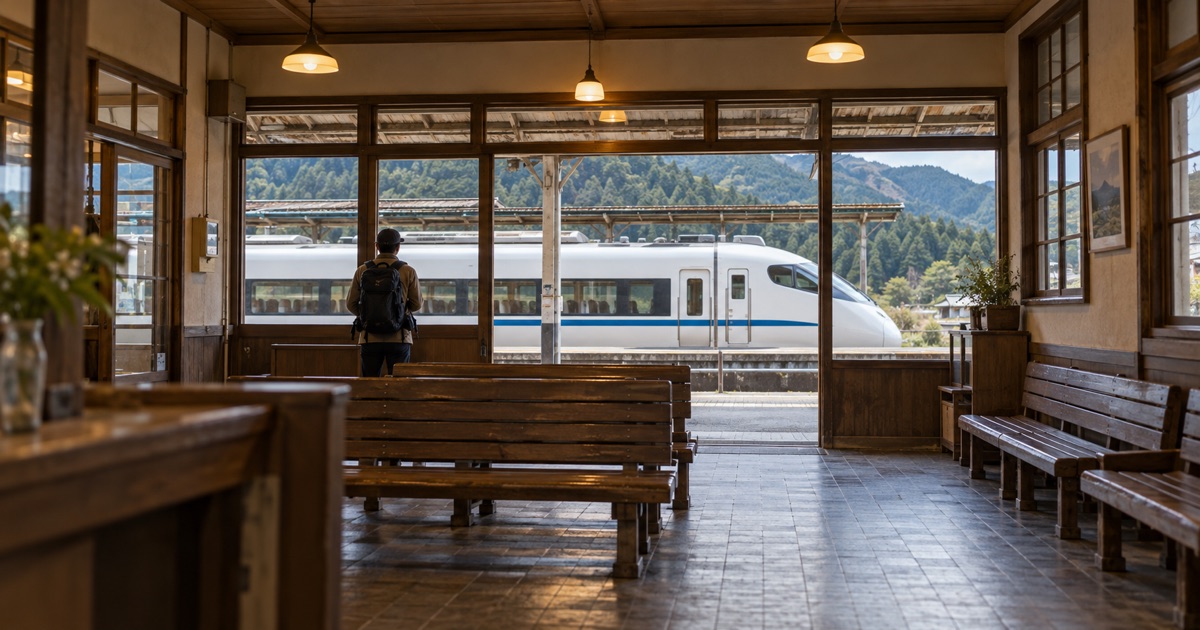
Your primary gateway on the western side of the Kumano Kodo network is Kii-Tanabe Station (紀伊田辺駅), located in the coastal city of Tanabe. This station serves as the central hub for the popular Nakahechi (中辺路) route.
The Direct Route: JR Limited Express Kuroshio
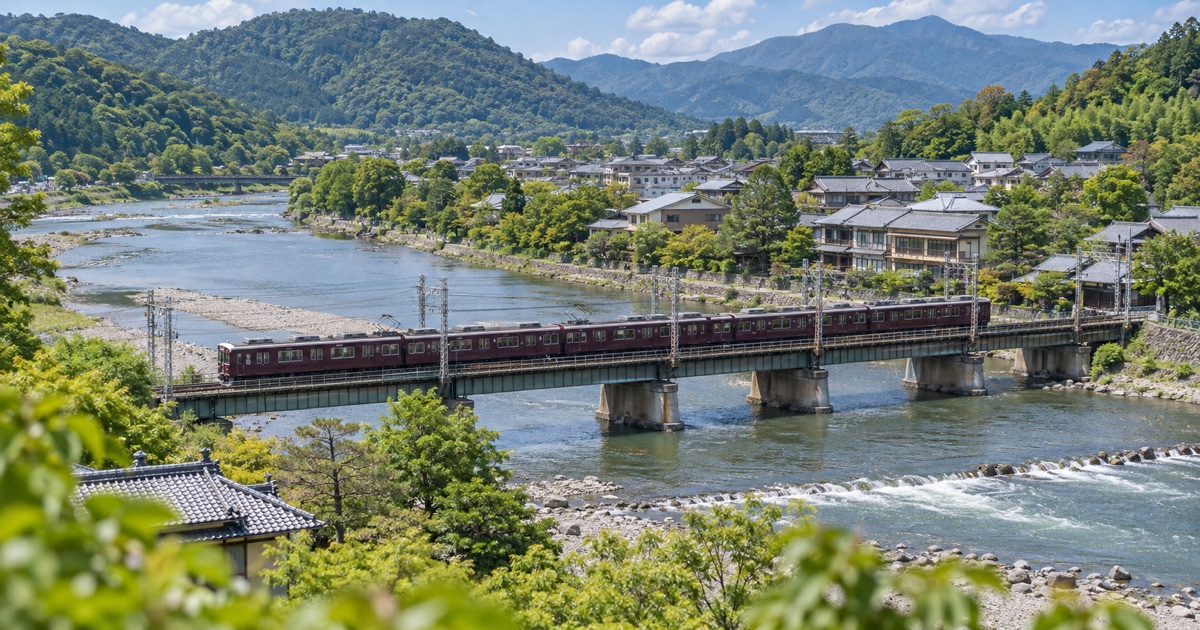
The fastest and most comfortable way to travel south from Osaka is the JR Kuroshio Limited Express (くろしお).
- Departing stations: Shin-Osaka Station (新大阪駅), Osaka Station (大阪駅 - underground platforms), or Tennoji Station (天王寺駅).
- Travel time: Around two hours and 10 minutes from Shin-Osaka, or just under two hours from Tennoji.
- Frequency: Trains generally depart roughly once per hour.
- Seating rules: Note that the JR Kuroshio is an all-reserved train service. You must reserve a seat before boarding; there are no non-reserved cars.
You can check rail network details, station layouts, and fare rules directly on JR West.
Alternative Local Trains
While local and rapid trains run along the JR Kinokuni Line (part of the Kisei Main Line), they require multiple transfers (often at Wakayama Station and Gobo Station) and take upwards of 3.5 to four hours. For a day trip or an efficient start to a multi-day hike, the Limited Express Kuroshio is strongly recommended.
Connecting from Kii-Tanabe Station into the Mountains
Once you exit Kii-Tanabe Station, you will transfer to a local bus to head inland toward the trailheads. The Tanabe City Kumano Tourism Bureau information center sits right next to the station exit and offers English-language bus schedules and trail maps.
Bus services from Kii-Tanabe into the Kumano mountains are operated primarily by Ryujin Bus and Meiko Bus.
Key Trailhead Destinations by Bus
- Takijiri-oji (滝尻王子): Regarded as the spiritual entrance to the sacred Kumano mountains on the Nakahechi route. The bus ride takes around 40 minutes from Kii-Tanabe Station.
- Hosshinmon-oji (発心門王子): A favorite starting point for day hikers looking for a gentle, mostly downhill 7-kilometer walk down to the grand shrine. The bus ride takes roughly one hour and 45 minutes to two hours.
- Kumano Hongu Taisha (熊野本宮大社): The heart of the pilgrimage route and one of the three grand shrines (Kumano Sanzan). The bus ride takes approximately one hour and 50 minutes to two hours directly from Kii-Tanabe.
Bus schedules can vary significantly between weekdays, weekends, and holidays, and departures into the mountains are infrequent—often spaced one to two hours apart. Review schedules in advance to avoid long waits at the station.

We are working to carry Japanese craft and everyday culture beyond Japan, by building Japan Towns with local partners.
Read the Japan Town plan →Rail Passes That Cover the Route
Traveling down the Kii Peninsula can be pricey on regular point-to-point tickets. Several rail passes can help lower your transit costs:
- JR Kansai WIDE Area Pass: This 5-day pass covers the JR Kuroshio Limited Express between Osaka and Kii-Tanabe (and further south to Nachi and Shingu), including reserved seat bookings up to the pass limit. If you are doing a round trip within five days, this pass usually pays for itself.
- Japan Rail Pass (Whole Japan): Covers the JR Kuroshio route entirely. You must obtain seat reservations before boarding.
- Local Bus Passes: Keep in mind that standard JR rail passes do not cover local buses operated by Ryujin Bus or Meiko Bus from Kii-Tanabe into the mountains. You must pay bus fares separately.
How to Ride the Mountain Buses
Navigating rural Japanese buses can be confusing if you have only used city transit. Follow these standard steps:
- Board through the rear door.
- Pull a small paper ticket (numbered slip) from the dispenser inside the door. The number indicates the zone where you boarded.
- Watch the electronic fare board above the driver at the front of the bus. As the bus travels, the cash fare shown under your ticket number will increase.
- Press the stop button when your stop is announced.
- Pay at the front exit. Drop your exact cash fare along with your paper ticket into the fare box next to the driver. If you do not have exact change, use the change machine built into the fare box (which typically accepts 1,000-yen notes and 500, 100, and 50-yen coins) before dropping in your payment.
IC cards (such as ICOCA, Suica, or Pasmo) are not accepted on these rural bus routes. Always carry sufficient cash yen in small bills and coins.
Realistic Day Trip Itinerary from Osaka
While the Kumano Kodo is traditionally hiked over multiple days, a focused day trip from Osaka is feasible if you target a manageable section of the Nakahechi trail.
- 07:30–08:00: Board an early JR Kuroshio Limited Express from Shin-Osaka or Tennoji.
- 10:00–10:30: Arrive at Kii-Tanabe Station. Pick up a map from the tourism center and head to the bus stop outside.
- 10:45–11:30: Take the local bus to Takijiri-oji.
- 11:30–14:30: Visit the Kumano Kodo Kan Pilgrimage Center, explore the Takijiri-oji shrine grounds, and hike an introductory section of the trail (such as the steep climb to Tsurugi-no-ishi rock and back, or up to Takahara if you are a fast, experienced walker).
- 15:00–16:00: Catch a return bus back to Kii-Tanabe Station.
- 17:00–19:30: Board the JR Kuroshio back to central Osaka.
For general planning and trail safety recommendations, consult the Japan National Tourism Organization alongside local municipal tourism resources.
Essential Packing List and Practical Tips
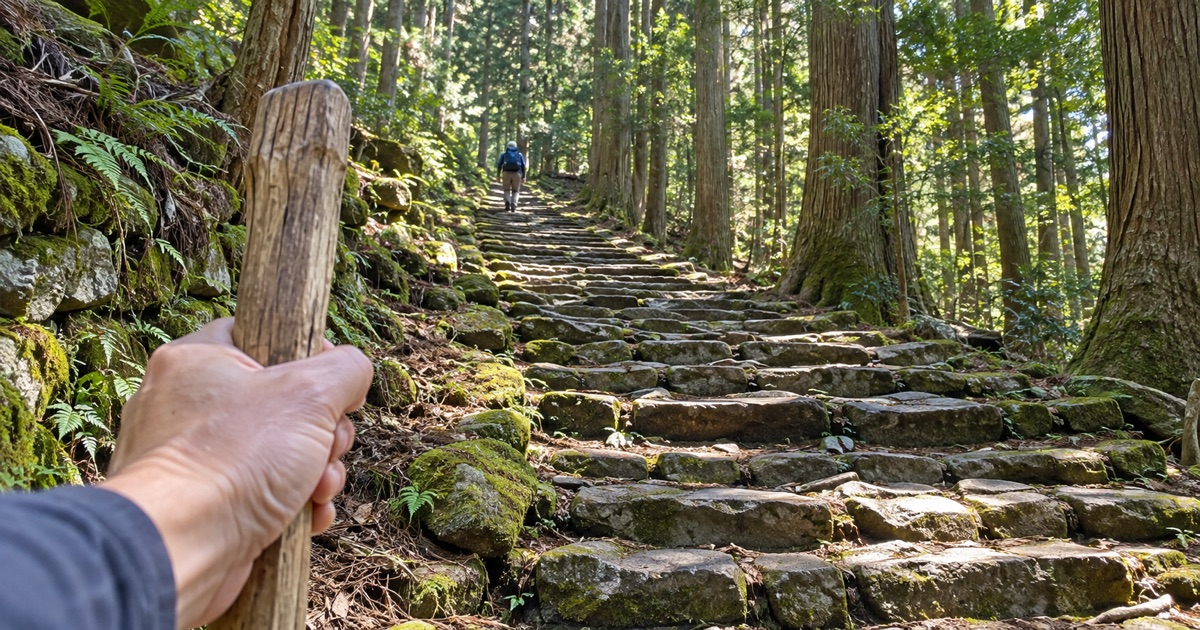
The trails of Kumano Kodo involve uneven stone paths, tree roots, and steep stairways that become slick in wet conditions.
- Footwear: Wear sturdy walking shoes or trail runners with reliable grip. Flat sneakers with smooth soles are unsafe on mossy stone paths.
- Physical cash: Essential for buses, coin lockers, trail donations, and small mountain shops. ATMs are scarce once you leave Kii-Tanabe.
- Rain gear: The Kii Peninsula receives some of the highest rainfall in mainland Japan. Carry a packable rain jacket or poncho rather than an umbrella, which can be awkward on narrow forest ridges.
- Hydration and snacks: Vending machines and convenience stores disappear quickly once you enter the trail. Stock up on water and food near Kii-Tanabe Station before boarding the bus.
- Timetable awareness: Mountain buses stop running relatively early in the late afternoon. Missing the final bus back to Kii-Tanabe can leave you stranded in remote mountain villages where taxis are limited and costly.
Common Mistakes to Avoid
- Confusing train destinations: Some Kuroshio trains terminate at Shirahama (白浜), while others continue past Kii-Tanabe all the way to Shingu (新宮). Ensure your train stops at Kii-Tanabe Station.
- Assuming trains go directly to the trail: Trains run along the coast, not through the mountainous interior where the hiking routes lie. You will always need a connecting bus or taxi to reach the Nakahechi trails.
- Underestimating hiking terrain: The paths are legitimate mountain trails, not paved park walkways. Check elevation profiles before committing to a route to ensure it matches your fitness level and schedule.
FAQ
- Q. Can I use an IC card like ICOCA or Suica on the buses in Kumano Kodo?
- A. No, rural buses running into the Kumano mountains do not accept IC transit cards or credit cards. You must take a numbered paper fare ticket when boarding and pay the exact fare in cash Japanese yen when getting off.
- Q. Is Kumano Kodo doable as a day trip from Osaka?
- A. Yes, a day trip is possible if you catch an early JR limited express train to Kii-Tanabe and focus on an introductory walk, such as around Takijiri-oji or Hongu Taisha. Start early to make the return train connections.
- Q. Which rail pass covers the train ride from Osaka to Kumano Kodo?
- A. The JR West Kansai WIDE Area Pass covers the JR Kuroshio Limited Express between Osaka and Kii-Tanabe, making it one of the most cost-effective transit passes for this trip.
Cite or share this article
Copy the link below. If you quote this article, please link to this page as the source.