Best Day Trips from Osaka: Nara, Kyoto, Himeji and More
Key takeaways
- Nara, Kyoto, Kobe and Himeji are all reachable from Osaka in well under two hours each way by train.
- Most day trips start from Osaka Station, Shin-Osaka Station or Namba Station, depending on the destination.
- Buying individual tickets or an IC card is usually cheaper than a special pass for a single day trip from Osaka.
Best Day Trips from Osaka
Nara, Kyoto, Kobe and Himeji are the most practical day trips from Osaka, each reachable in well under two hours by train with no car needed. All of them can be done as a round trip in a single day, starting from one of Osaka's main stations and returning in the evening.
This guide covers how to get to each destination, roughly how long it takes, and what to keep in mind if you don't read Japanese and are traveling independently.
Why Osaka is a good base for day trips
Osaka sits in the middle of the Kansai region, within easy train reach of some of Japan's most famous historical sites. Unlike trips from Tokyo, where destinations like Hakone or Nikko can take two hours or more one way, several excellent day trips from Osaka take under an hour. This means you can sleep in a little, still have a full day of sightseeing, and be back in Osaka in time for dinner.
Most routes described below start from Osaka Station (大阪駅), Shin-Osaka Station (新大阪駅), or Namba Station (難波駅), so it helps to know which station is closest to your hotel before planning your morning.
Nara: temples, deer and a compact old town
Nara (奈良) is probably the single best day trip from Osaka for first-time visitors. It's home to Todai-ji Temple, with its giant bronze Buddha, and Nara Park, where hundreds of tame deer wander freely among the visitors.
How to get there: From Namba Station, take the Kintetsu Nara Line directly to Kintetsu-Nara Station. The journey takes roughly 35–45 minutes depending on the train type (the faster "limited express" trains cost a bit more but save some time). Alternatively, JR trains run from Osaka Station (via the JR Yamatoji Line, usually with a change) to JR Nara Station, taking somewhat longer.
What to expect: Nara Park and most major temples are walkable from either station, though Kintetsu-Nara is closer to the park. Deer crackers are sold by vendors near the park entrance if you want to feed the deer, but keep food out of sight otherwise, as deer can be persistent.
Common mistake: Many visitors underestimate how much walking is involved between Todai-ji, Kasuga Taisha and the park itself. Comfortable shoes are worth it.

We are working to carry Japanese craft and everyday culture beyond Japan, by building Japan Towns with local partners.
Read the Japan Town plan →Kyoto: temples, shrines and traditional streets
Kyoto (京都) is close enough to Osaka that many visitors base themselves in one city and day-trip to the other.
How to get there: From Osaka Station, JR Special Rapid trains run to Kyoto Station in roughly 30 minutes. From Namba, the Hankyu or Keihan lines also connect to central Kyoto, though with a slightly longer ride.
What to expect: Kyoto has far more sights than can be covered in one day, so it's worth picking one or two areas rather than trying to see everything. Fushimi Inari Taisha, with its thousands of red torii gates, and the Arashiyama bamboo grove are both popular choices and are reachable by local trains or buses from Kyoto Station.
Common mistake: Treating Kyoto as a single compact area. Sights like Fushimi Inari, Arashiyama and Kinkaku-ji are spread across the city, often 20–40 minutes apart from each other, so it helps to choose a route in advance rather than moving back and forth.
Himeji: one of Japan's best original castles
Himeji Castle (姫路城) is widely regarded as Japan's finest surviving original castle, with its brilliant white wooden structure earning it the nickname "White Heron Castle."
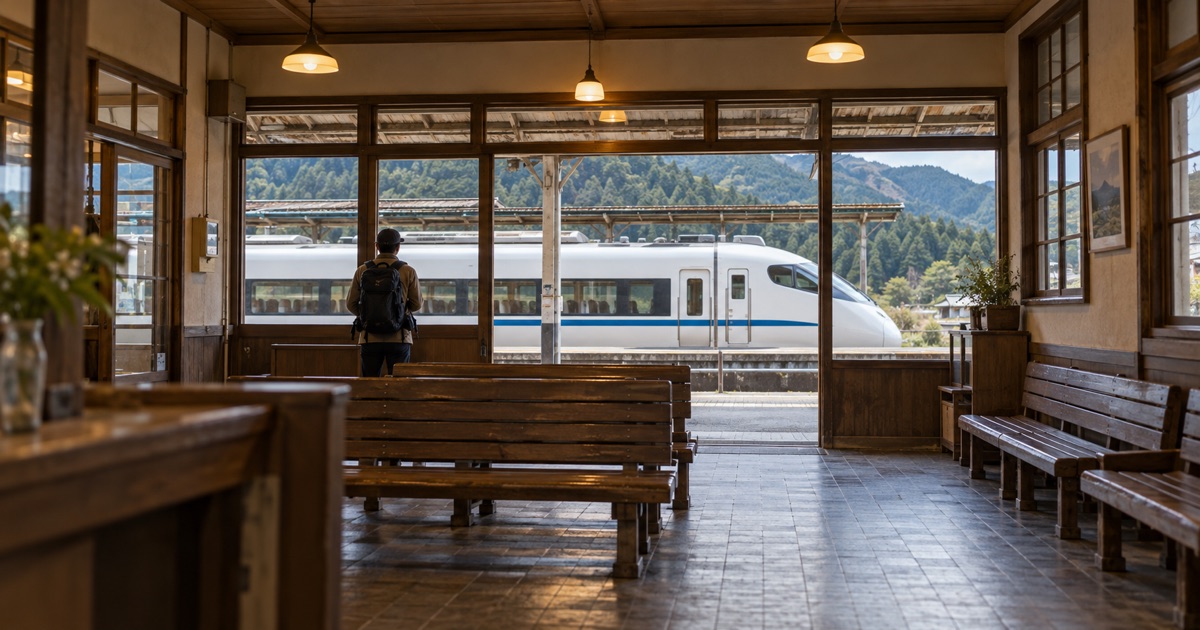
How to get there: From Osaka Station or Shin-Osaka Station, take a JR train on the Tokaido-Sanyo Line toward Himeji; Shinkansen (bullet train) services also stop at Himeji and cut the trip to around 30 minutes from Shin-Osaka. Regular JR rapid trains from Osaka Station take roughly 60–90 minutes.
What to expect: The castle is about a 15–20 minute walk straight up a wide boulevard from Himeji Station, so it's hard to miss. Climbing to the top involves steep wooden stairs, and queues can build up in peak seasons like spring and autumn.
Common mistake: Visitors sometimes plan too little time for the castle interior, which involves a one-way route through multiple floors. Allow at least 90 minutes to two hours for the visit itself.
Kobe: port views, Chinatown and Mount Rokko
Kobe (神戸) makes for a relaxed day trip, known for its harbor views, Chinatown district and beef dishes.
How to get there: From Osaka Station, JR Special Rapid trains reach Kobe's Sannomiya area (Sannomiya Station) in around 20–30 minutes, making it one of the quickest trips on this list.
What to expect: Kobe's Chinatown (Nankinmachi), the harbor area around Kobe Port Tower, and the Kitano district with its old Western-style houses are all within a reasonable walk or short bus ride of Sannomiya Station.
Practical tips for day trips from Osaka
Buy the right ticket. For most of these trips, a prepaid IC card (such as ICOCA or Suica) is the simplest option, letting you tap in and out of JR, Kintetsu, Hankyu and Keihan lines without buying individual paper tickets each time. Special regional passes exist for some routes, but for a single day trip they often don't save money compared to paying as you go; check current prices before deciding.
Check the timetable the day before. Train schedules, especially for limited express or seasonal services, can change, and some lines run less frequently in the evening. It's worth checking departure times on the relevant operator's website or an app before you set out, rather than assuming trains run as often as in central Osaka.
Start reasonably early. None of these destinations require an extremely early start, but leaving Osaka by mid-morning gives you a comfortable full day, especially for Nara or Kyoto, where sights are spread out.
Bring cash as backup. While IC cards and credit cards are widely accepted at stations and larger shops, smaller temples, shrines and local eateries sometimes still require cash for entry fees or purchases.
Watch the weather and season. Spring (cherry blossoms) and autumn (fall foliage) are the busiest times at Nara, Kyoto and Himeji, with crowds to match. If visiting during these seasons, arriving at popular sites early in the day can make a noticeable difference.
Planning your route
If this is your only day trip during a Kansai stay, Nara or Himeji are good choices for a clear, satisfying day without needing to rush. If you have more time in the region, combining a morning in Nara with an afternoon back in Osaka, or splitting a multi-day stay between Osaka and Kyoto, is also common among independent travelers.
For official train information, route planning and any updates to schedules or fares, check JR West before you travel, and consult the Japan National Tourism Organization for broader planning resources, including seasonal event information that might affect crowd levels at these destinations.
FAQ
- Q. What is the best day trip from Osaka for a first-time visitor?
- A. Nara is often considered the easiest and most rewarding, since it combines a short train ride from Osaka with temples, Nara Park and its free-roaming deer in a compact, walkable area.
- Q. Do I need the Japan Rail Pass for a day trip from Osaka?
- A. For a single day trip, a nationwide Japan Rail Pass is usually not worth the cost. It can make sense if you are combining the trip with other long-distance JR travel during your stay.
- Q. How early should I leave Osaka for a day trip?
- A. Leaving by mid-morning (around 9:00) is a reasonable rule of thumb, since most destinations covered here are 30 to 90 minutes away and this still leaves a full day for sightseeing.
Cite or share this article
Copy the link below. If you quote this article, please link to this page as the source.