Kumano Kodo Day Trip Guide: Hiking from Osaka & Kyoto
Key takeaways
- A Kumano Kodo day trip is possible from Osaka or Kyoto if you start early and focus on the Nachi area.
- Take the JR Kuroshio limited express to Kii-Katsuura Station, then a local bus directly to Daimon-zaka.
- The ancient cobblestone walk up Daimon-zaka to Kumano Nachi Taisha and Nachi Falls takes 2 to 3 hours.
A Kumano Kodo day trip is entirely possible from Osaka or Kyoto if you focus on the accessible Daimon-zaka and Nachi Falls area. By catching an early morning train to the coastal town of Kii-Katsuura, independent travelers can experience ancient moss-covered stone paths, soaring cedar groves, and sacred shrine grounds within a single day.
Because the UNESCO World Heritage-listed Kumano Kodo (熊野古道) spans hundreds of kilometers across the mountainous Kii Peninsula, attempting multi-day trekking routes in 24 hours is unrealistic. However, the compact section leading up Daimon-zaka to Kumano Nachi Taisha and Nachi Falls offers an authentic taste of pilgrimage history combined with manageable logistics.
The Best One-Day Kumano Kodo Route: Daimon-zaka to Nachi Falls
For an independent day trip, the most practical trail is the Daimon-zaka (大門坂) path, an iconic cobblestone staircase that leads up to Kumano Nachi Taisha (熊野那智大社), Seiganto-ji (青岸渡寺), and the famous Nachi Falls (那智の滝).
This route delivers the classic Kumano Kodo scenery without stranding you deep in the wilderness far from train connections.
- Starting point: Daimon-zaka bus stop (大門坂バス停)
- Trail distance: Approximately 2.5 to 3 kilometers total
- Walking time: Roughly 2 to 3 hours of steady walking, including shrine exploration
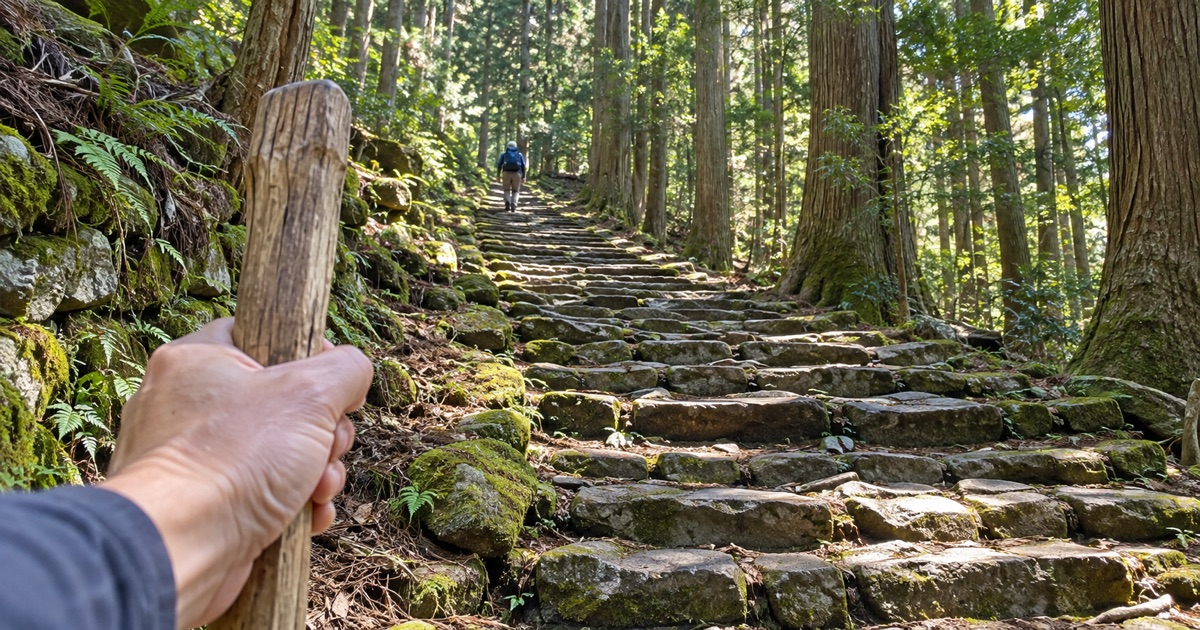
- Difficulty: Moderate; involves a continuous uphill climb across roughly 267 ancient stone steps
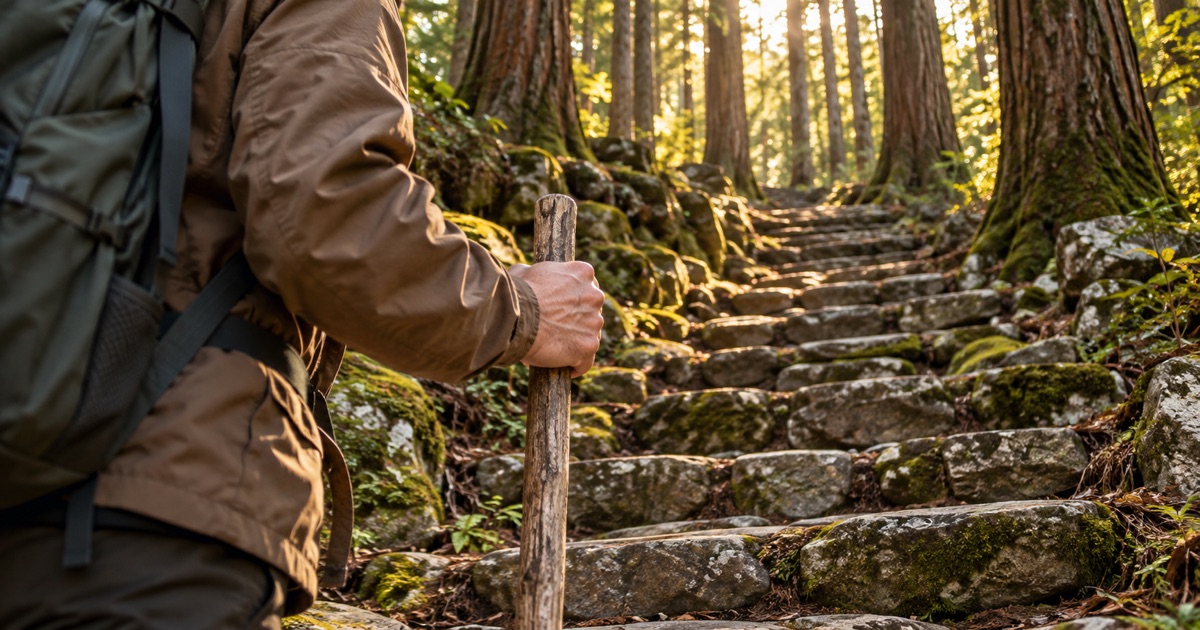
The path begins surrounded by centuries-old Japanese cedars (cryptomeria), passing the Meoto-sugi (夫婦杉, "Husband and Wife Cedars"). As you ascend the mossy stones, you leave modern roads behind before arriving at the shrine complex. From the terrace of Seiganto-ji, you can see the red three-story pagoda framed against Japan’s tallest single-drop waterfall, Nachi Falls (133 meters high). A gentle descent brings you to Hiro-jinja (飛瀧神社), the shrine right at the base of the cascade.
How to Get There: Train and Bus Connections
Planning transit carefully is the foundation of a successful Kumano Kodo day trip. The entire journey relies on Japan's dependable rail network and local connecting buses.
Step 1: Train from Osaka or Kyoto to Kii-Katsuura
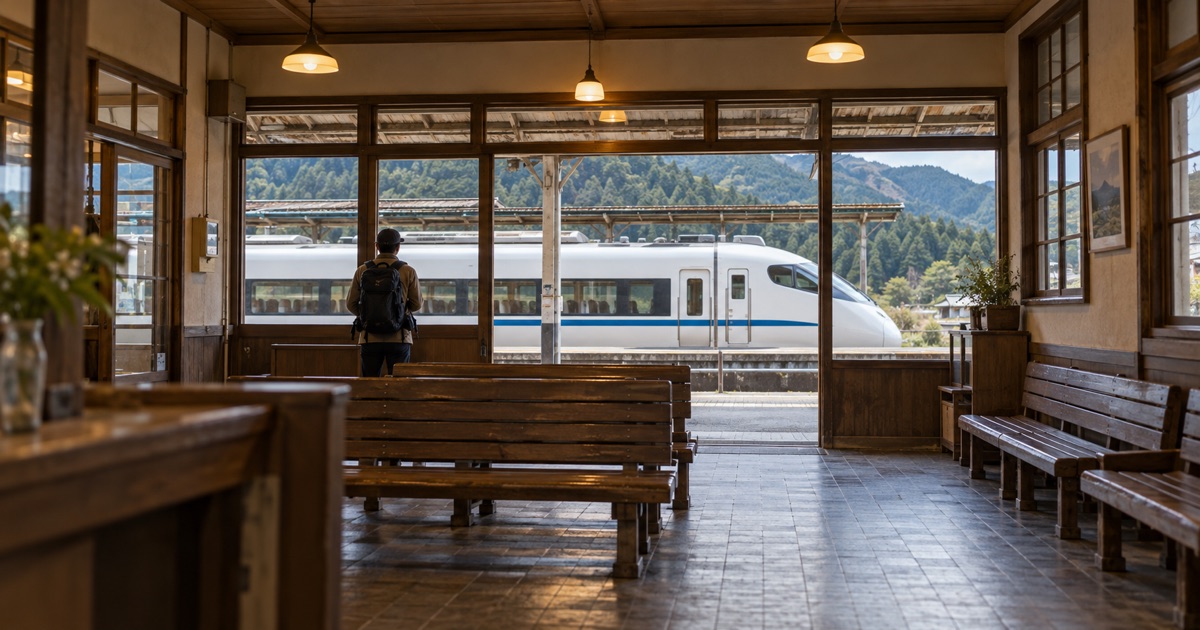
Your rail gateway is Kii-Katsuura Station (紀伊勝浦駅) on the JR Kinokuni Line.
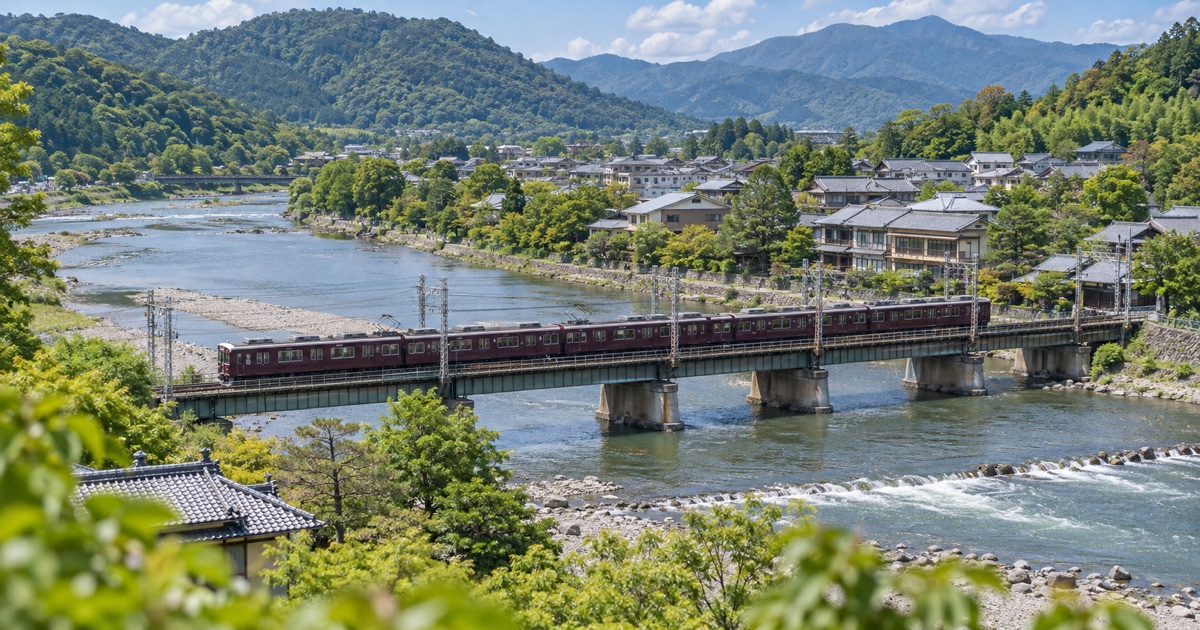
- From Osaka: Depart from Shin-Osaka Station (新大阪駅) or Tennoji Station (天王寺駅) aboard the JR Limited Express Kuroshio (くろしお). The direct train ride from Shin-Osaka takes roughly 3 hours and 45 minutes to 4 hours. From Tennoji, it is around 3.5 hours.
- From Kyoto: Board an early morning Tokaido-Sanyo Shinkansen or JR rapid service to Shin-Osaka Station (around 15 to 25 minutes), then transfer to the Limited Express Kuroshio. Alternatively, a few Kuroshio services run directly from Kyoto Station (京都駅) each morning, taking roughly 4.5 hours.
Transit note: Seat reservations are mandatory on all JR Limited Express Kuroshio trains. Secure your reserved seat in advance at ticket offices or ticket machines. If you use a nationwide Japan Rail Pass or a regional rail pass like the Kansai WIDE Area Pass, verify coverage on the official JR West website.
Step 2: Bus from Kii-Katsuura to Daimon-zaka
After arriving at Kii-Katsuura Station, exit through the main gates and locate the Kumano Gobo Nankai Bus terminal directly outside.
- Purchase a round-trip bus ticket or day pass at the bus ticket counter (around 1,000 to 1,500 yen; fares subject to change).
- Board the local bus bound for Nachisan (那智山).
- Ride the bus for roughly 20 minutes and alight at the Daimon-zaka bus stop.
Starting your walk at Daimon-zaka allows you to hike up the historic trail rather than riding the bus straight to the top, preserving the pilgrimage experience.

We are working to carry Japanese craft and everyday culture beyond Japan, by building Japan Towns with local partners.
Read the Japan Town plan →Suggested One-Day Itinerary
To make the most of your day, an early start is non-negotiable. Train frequency down the coast of Wakayama is limited.
- 07:30 – 11:30: Depart Shin-Osaka on an early JR Kuroshio train; enjoy coastal views of Wakayama.
- 11:45 – 12:15: Arrive at Kii-Katsuura Station, purchase bus tickets, and catch the connecting bus.
- 12:20 – 13:00: Arrive at Daimon-zaka. Walk the historic stone staircase through the cedar forest.
- 13:00 – 14:15: Tour Kumano Nachi Taisha and adjacent Seiganto-ji temple. Photograph the iconic pagoda.
- 14:15 – 15:00: Walk down the forest path to Hiro-jinja to stand before the spray of Nachi Falls.
- 15:15 – 15:45: Board the return bus from the Nachi-no-Taki-mae (那智の滝前) bus stop back to Kii-Katsuura Station.
- 16:00 – 17:00: Explore the port near Kii-Katsuura Station and enjoy fresh local Pacific bluefin tuna before your train.
- 17:30 – 21:30: Board the Limited Express Kuroshio for the return journey to Osaka or Kyoto.
Always verify up-to-date bus and train schedules before travel, as timetables adjust seasonally. Check travel advisories via the Japan National Tourism Organization or local operator sites.
What to Bring and Wear
While the Daimon-zaka trail is relatively short, it is an authentic mountain trail composed of natural stone that requires sensible preparation.
- Footwear: Wear sturdy walking shoes, cross-trainers, or light hiking shoes with textured rubber outsoles. Avoid smooth-soled street shoes, high heels, and flat sandals; the wet stones can be treacherous.
- Weather Protection: Rain is common throughout the mountainous Kii Peninsula. Pack a compact waterproof jacket or poncho and an umbrella.
- Cash: Local buses, small tea stalls, coin lockers, and shrine amulets often accept only cash. Keep 5,000 to 10,000 yen in small bills and coins handy.
- Hydration & Snacks: While vending machines exist near shrine plazas, carry a water bottle for the trail itself.
- Light Backpack: Keep your hands free while ascending the stone steps.
Luggage can be stored in coin lockers at Kii-Katsuura Station so you do not carry heavy bags onto the trail.
Common Mistakes to Avoid
- Attempting deeper trails on a day trip: Routes like the Nakahechi trail between Takijiri-oji and Tsugizakura-oji require 5 to 7 hours of backcountry walking plus extensive rural bus transfers. Attempting them as a day trip from Osaka leaves no room for missed connections.
- Missing the last return bus: Mountain buses from Nachisan back to Kii-Katsuura stop running relatively early in the late afternoon. As soon as you arrive, check the departure timetable posted at the bus stop and set an alarm on your phone.
- Underestimating the stone steps: The historic stones of Daimon-zaka are irregular and slick, especially during morning humidity or after rainfall. Take short, steady paces and use handrails where available.
- Skipping seat reservations: The JR Kuroshio is entirely reserved. Travelers boarding without a reserved seat risk facing penalties or finding sold-out cars during peak travel windows like golden week or autumn foliage.
By keeping your plans focused on Daimon-zaka and Nachi Falls, catching early transit, and packing for mixed mountain weather, you can comfortably explore one of Japan's most sacred pilgrimage landscapes and return to Osaka or Kyoto the very same evening.
FAQ
- Q. Is a Kumano Kodo day trip actually feasible from Osaka or Kyoto?
- A. Yes, provided you focus on a single accessible section like Daimon-zaka and Nachi Falls, catching the earliest morning train and planning for a long travel day.
- Q. Which Kumano Kodo trail is best for a one-day excursion?
- A. The Daimon-zaka (大門坂) route to Kumano Nachi Taisha (熊野那智大社) and Nachi Falls (那智の滝) is the most practical choice due to straightforward train and bus access.
- Q. Do I need specialized trekking boots for a Nachi day trip?
- A. While full mountaineering boots are not required, sturdy walking shoes or trail runners with good traction are essential because the ancient stone stairs get slippery when wet.
Cite or share this article
Copy the link below. If you quote this article, please link to this page as the source.