Kumano Kodo Itinerary: Self-Guided Day Trips and Trails
Key takeaways
- A focused Kumano Kodo day hike is possible from Osaka via direct JR limited express trains to the Kii Peninsula.
- The classic Nakahechi route offers accessible day walks between Takijiri-oji and Kumano Hongu Taisha.
- Bus connections run infrequently in the mountains, making advance timetable checks essential for a smooth trip.
The ideal Kumano Kodo itinerary for a short visit focuses on the accessible Nakahechi route, taking an early limited express train from Osaka or Kyoto to Tanabe before heading into the mountains. While multi-day treks cover the full peninsula, independent travellers can complete rewarding one-day walking segments and visit ancient shrines using trains and local buses.
This guide outlines practical day trip and overnight itineraries on the Kumano Kodo (熊野古道), with clear transit connections, packing lists, and essential mountain transit logistics.
Understanding the Kumano Kodo Network
The Kumano Kodo is an ancient pilgrimage network on the mountainous Kii Peninsula in Wakayama Prefecture. For over a millennium, pilgrims from all levels of society—including retired emperors—walked these sacred paths to worship at the Kumano Sanzan (熊野三山), the three grand shrines of Kumano:
- Kumano Hongu Taisha (熊野本宮大社): The administrative heart of the shrine network, located deep in the mountains.
- Kumano Hayatama Taisha (熊野速玉大社): Situated along the coast in Shingu where the Kumano River meets the sea.
- Kumano Nachi Taisha (熊野那智大社): Famous for its dramatic mountain setting overlooking the iconic Nachi Falls (那智の滝).
For travellers without a full week to walk the entire network, the Nakahechi Route (中辺路) is the premier choice. It offers established trailheads, frequent bus links along the highway corridor, and clear multilingual signage.
Option 1: The Day Trip Itinerary from Osaka (Nachi Area)
If you only have a single day, the most visually striking and time-efficient target is the Nachi area on the southeastern coast. This day trip starts at Shin-Osaka Station (新大阪駅) or Tennoji Station (天王寺駅).
Morning: Rail Journey to the Coast
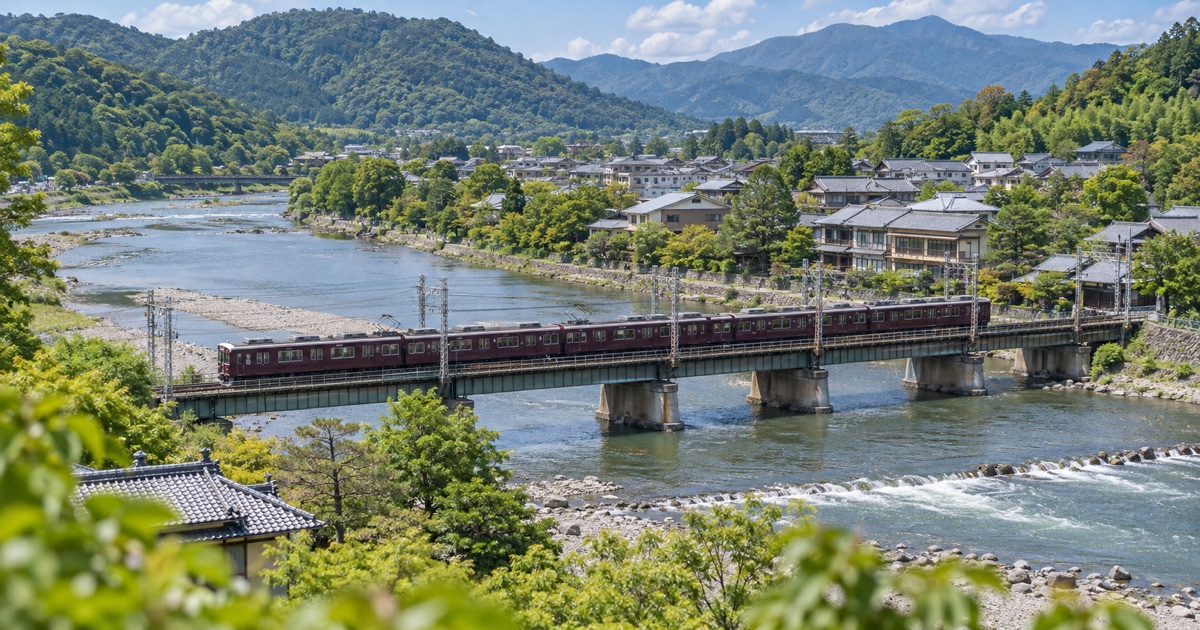
Board the early-morning JR Kuroshio limited express (特急くろしお) from Shin-Osaka or Tennoji directly to Kii-Katsuura Station (紀伊勝浦駅). The train ride takes roughly 3.5 to 4 hours, hugging the scenic Wakayama coastline. Check rail passes and schedules beforehand on JR West.
Midday: Daimon-zaka Cobblestones to Nachi Taisha
From Kii-Katsuura Station, step outside to the bus stop and catch a local bus bound for Nachisan (那智山). The ride takes around 20 minutes.
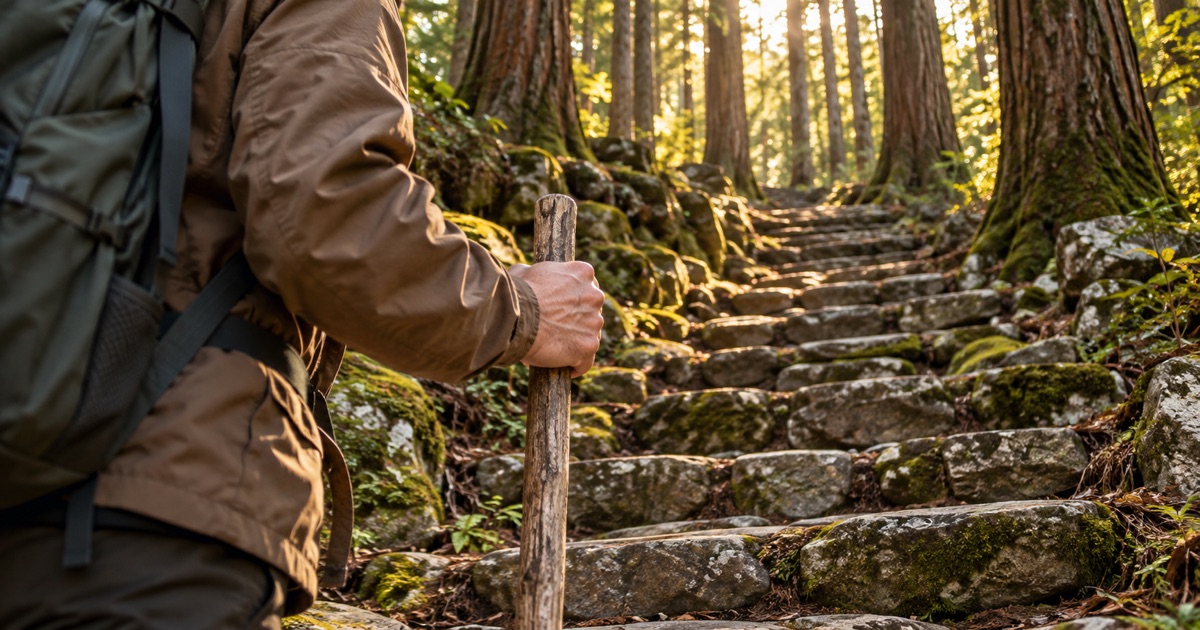
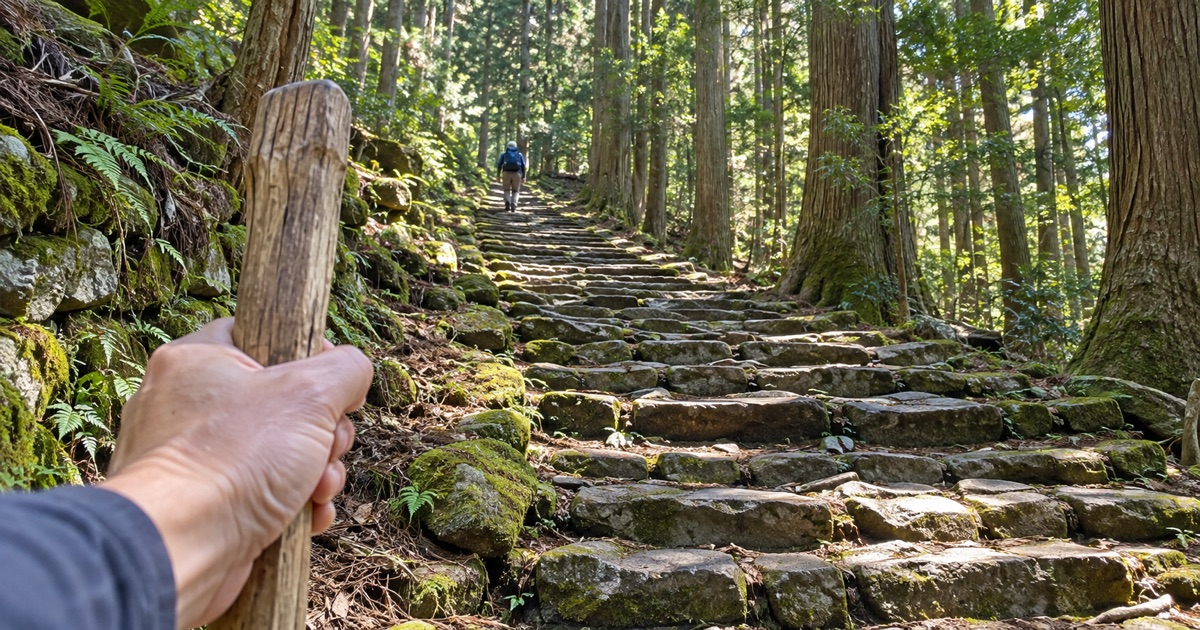
Get off at the Daimon-zaka (大門坂) bus stop. From here, walk the atmospheric 600-metre stone staircase lined with towering Japanese cedar trees. The cobblestone trail takes roughly 30 to 45 minutes of moderate uphill walking and delivers you directly to the base of Kumano Nachi Taisha and Seiganto-ji (青岸渡寺).
Afternoon: Nachi Falls and Return
Admire the classic view of the three-story orange pagoda framing Nachi Falls in the background. Follow the walking trail down to the base of the waterfall (Hiro-jinja / 飛瀧神社), which drops 133 metres.
Catch the local bus from the Nachi Falls bus stop back to Kii-Katsuura Station. Take the late-afternoon JR Kuroshio limited express back to Osaka, arriving by mid-to-late evening.

We are working to carry Japanese craft and everyday culture beyond Japan, by building Japan Towns with local partners.
Read the Japan Town plan →Option 2: The Day Hike Itinerary (Hosshinmon-oji to Hongu Taisha)
For travellers who want actual dirt-trail hiking alongside shrine exploration, the walk from Hosshinmon-oji (発心門王子) to Kumano Hongu Taisha is the gold standard for a single day.
Distance: roughly 7 kilometres (4.3 miles)
Walking time: 2 to 3 hours
Difficulty: Easy to moderate (mostly downhill and flat)
Step 1: Train to Kii-Tanabe
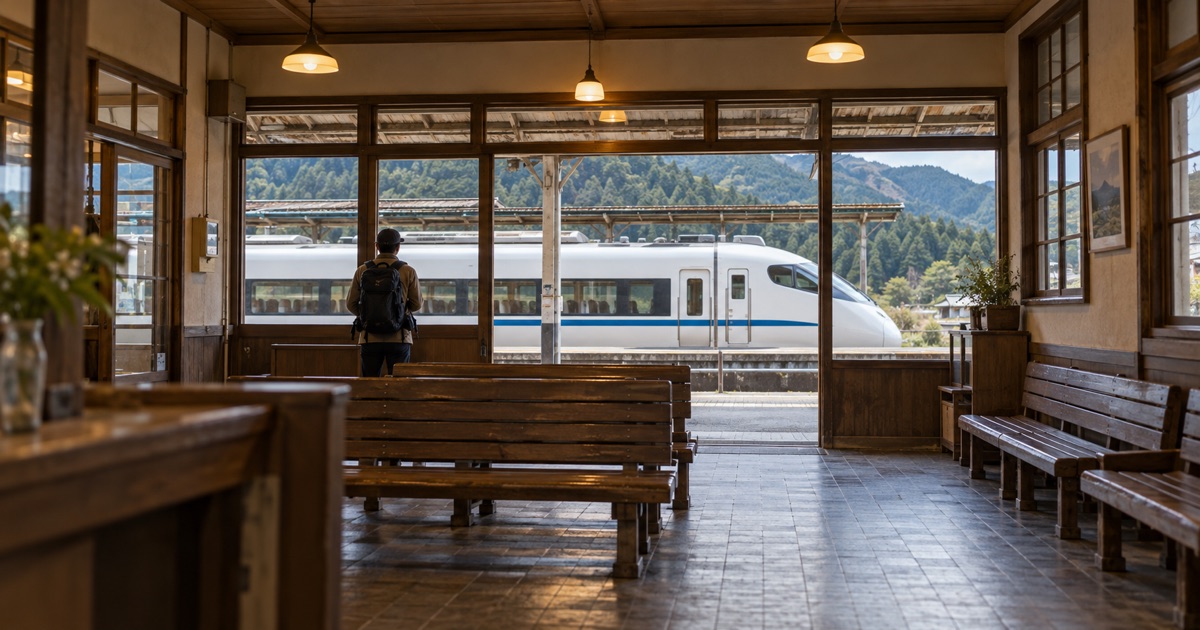
Take the morning JR Kuroshio limited express from Shin-Osaka or Tennoji to Kii-Tanabe Station (紀伊田辺駅). This journey takes around 2 to 2.5 hours. Kii-Tanabe is the main western gateway to the Nakahechi trail.
Step 2: Bus into the Mountains
Directly outside Kii-Tanabe Station, find the municipal bus stops. Board the local Ryujin or Meiko bus bound for Hongu Taisha or Hosshinmon-oji. The winding bus journey takes roughly 1.5 to 2 hours through forested river valleys.
Step 3: Walking the Trail
Get off the bus at Hosshinmon-oji. This historic gate marks the outer entrance to the holy precinct of Hongu. The route winds through peaceful mountain hamlets, terraced tea fields, and shady pine forests. The trail surface alternates between packed dirt, dirt paths with tree roots, and paved country lanes.
Along the way, you will pass smaller Oji shrines—spiritual waystations where ancient pilgrims conducted purification rituals:
- Mizunomi-oji (水呑王子): A quiet resting spot with preserved stone markers.
- Fushigami-oji (伏拝王子): The crest where historic pilgrims fell to their knees in prayer as they caught their first glimpse of Hongu Taisha in the valley below.
Step 4: Kumano Hongu Taisha and Oyunohara
The path descends into the village of Hongu, emerging near the gates of Kumano Hongu Taisha. Walk through the cedar-shaded shrine grounds, then cross the road to Oyunohara (大斎原). This is the original riverbank site of the shrine, marked by one of the world's largest Torii gates, standing over 30 metres tall.
From the Hongu Taisha-mae bus stop, board a return bus back to Kii-Tanabe Station, then transfer to the JR Kuroshio back to Osaka or Kyoto.
Multi-Day Extension: The Overnight Loop
If you have two days, you can link the mountain heartland with the sea.
- Day 1: Train from Osaka/Kyoto to Kii-Tanabe, bus to Hosshinmon-oji, hike to Hongu Taisha. Spend the night at one of the nearby riverside hot spring settlements: Yunomine Onsen (湯の峰温泉), known for its tiny wooden bathhouse over a riverbed, or Kawayu Onsen (川湯温泉), where thermal waters bubble up directly through river gravel.
- Day 2: Take a morning bus down the Kumano River valley toward the eastern coast at Shingu (Kumano Hayatama Taisha), continue by train or bus to Nachi Falls, and return to Osaka from Kii-Katsuura Station.
General regional travel advice and seasonal updates can be checked through the Japan National Tourism Organization.
Essential Packing List
Mountain weather on the Kii Peninsula can change rapidly. Even on an introductory day trip, carry:
- Footwear: Broken-in trail running shoes or hiking boots. The wet stone steps of Daimon-zaka and mossy forest trails are slick in standard sneakers.
- Weather Protection: A compact, breathable rain jacket. The Kii mountains receive some of the highest annual rainfall in mainland Japan.
- Small Towel: Essential for wiping sweat, rain, or drying off at trailside footbaths.
- Physical Cash: Japanese yen notes and coins are necessary. Many rural buses and small food stands along the Kumano Kodo do not accept IC cards (like Suica or Icoca) or international credit cards.
- Hydration and Snacks: While vending machines appear near road crossings, stretches of the forest path have no services. Carry at least 1 litre of water and trail snacks purchased at the train station before departing.
Transit Tips and Common Mistakes
1. Mountain Bus Frequencies Are Low
Unlike urban Japan, rural buses in Tanabe, Hongu, and Nachi run only once every 1 to 2 hours, with significant midday gaps. Always pick up a printed paper timetable at the tourist information center inside Kii-Tanabe or Kii-Katsuura station before boarding your first bus. Missing a late-afternoon bus can leave you stranded in the mountains.
2. Paying Local Bus Fares
Most mountain buses use the traditional numbered ticket system:
- Take a small numbered paper slip from the dispenser inside the door as you enter.
- An electronic fare board above the driver shows fare amounts that increase as the trip progresses. Match your ticket number to the board.
- Drop the exact cash fare into the fare box next to the driver when exiting. Drivers have coin-change machines for 1,000-yen notes, but they cannot break 5,000 or 10,000-yen bills.
3. Limited Cell Coverage in Valleys
While mobile data coverage is generally good at major trailheads and shrine grounds, deep forest gaps between mountain ridges can lose signal. Download offline maps and train schedules to your smartphone before leaving your hotel.
FAQ
- Q. Can you do a Kumano Kodo hike as a single-day trip from Osaka?
- A. Yes, an early start on the JR Kuroshio limited express allows you to complete an introductory day hike on the Nakahechi route or visit the grand shrines before returning to Osaka by evening.
- Q. Which Kumano Kodo trail is best for first-time visitors?
- A. The Nakahechi (中辺路) route is the most popular and practical for beginners because it has reliable bus connections, clear English signage, and luggage shuttle options.
- Q. Do I need hiking boots for the Kumano Kodo?
- A. Sturdy trail shoes or hiking boots with good grip are strongly recommended. Ancient stone paths like the Daimon-zaka staircase can become extremely slippery when damp or mossy.
Cite or share this article
Copy the link below. If you quote this article, please link to this page as the source.