Things to Do in Hakone Day Trip: Complete Guide
Key takeaways
- Depart Shinjuku Station early via the Odakyu Line to complete the full scenic transit loop smoothly in one day.
- Ride the classic Hakone Golden Loop combining mountain railways, cable cars, ropeways, and a lake sightseeing cruise.
- Purchase the Hakone Freepass to cover virtually all transit across the region while saving time on individual tickets.
The best things to do on a Hakone day trip include riding the scenic mountain transport loop, viewing Mount Fuji across Lake Ashi, exploring the volcanic Owakudani valley, and relaxing in a traditional hot spring. By starting early from central Tokyo, independent travelers can experience all of these highlights seamlessly in roughly 10 hours to 12 hours.
This independent travel guide breaks down step-by-step how to navigate the region from Tokyo, what to pack, how to avoid common rookie mistakes, and how to execute the famous "Hakone Golden Loop" without speaking or reading Japanese.
Quick Answer: The Classic Hakone 1-Day Plan
- Starting Hub: Shinjuku Station (新宿駅) in central Tokyo
- Core Route: The Hakone Golden Loop (Train → Cable Car → Ropeway → Pirate Ship Cruise → Bus)
- Top Highlights: Owakudani (大涌谷) sulfur vents, Lake Ashi (芦ノ湖), Hakone Shrine (箱根神社) peace torii gate, and an afternoon dip in a hot spring (温泉, onsen)
- Essential Ticket: Hakone Freepass issued by the Odakyu Electric Railway
- Estimated Transit Time: Roughly 75 minutes to 90 minutes each way from Shinjuku to Hakone-Yumoto Station (箱根湯本駅)
How to Get to Hakone from Tokyo
Independent journeys to Hakone start at Shinjuku Station in Tokyo. The most straightforward route uses the private Odakyu Line rather than Japan Railways (JR).
Option 1: Odakyu Romancecar (Fastest and Most Comfortable)
The Romancecar is a limited express service operated by Odakyu Electric Railway. It runs directly from Shinjuku Station to Hakone-Yumoto Station in about 75 minutes to 85 minutes. Every seat requires a reserved seat ticket in addition to the base rail fare. The forward-facing panoramic cars offer large windows that look out toward the Kanagawa countryside.
Option 2: Odakyu Express Train (Budget Alternative)
Standard commuter express trains leave Shinjuku Station frequently. These require a transfer at Odawara Station (小田原駅) and take around 110 minutes to reach Hakone-Yumoto Station. While cheaper and fully covered by the standard base pass, standard trains lack assigned seating and luggage storage space.
Travelers holding a JR Pass can take the Tokaido Shinkansen from Tokyo Station or Shinagawa Station to Odawara Station in roughly 35 minutes. At Odawara, transfer to the local Hakone Tozan Railway into the mountains. For national transit rules and network maps, consult the Japan National Tourism Organization before your journey.
We are working to carry Japanese craft and everyday culture beyond Japan, by building Japan Towns with local partners.
Read the Japan Town plan →The Hakone Golden Loop: What to Do Step-by-Step
The "Hakone Golden Loop" is a circular journey linking five unique transit modes. Traversing this route counterclockwise offers the most reliable flow for day trippers.
Step 1: Ride the Hakone Tozan Railway to Gora
From Hakone-Yumoto Station, board the Hakone Tozan Railway (箱根登山電車) heading toward Gora Station (強羅駅). This mountain rail line uses three zigzag switchbacks to climb steep, lush mountain slopes. The train journey lasts approximately 40 minutes. Along the way, you can stop at the Hakone Open-Air Museum (彫刻の森美術館), where large modern sculptures sit across sprawling green lawns against a mountain backdrop.
Step 2: Ascend via Cable Car to Sounzan
At Gora Station, walk straight across the platform to the Hakone Tozan Cable Car (箱根登山ケーブルカー). This funicular car pulls travelers up a dramatic gradient to Sounzan Station (早雲山駅) in roughly 10 minutes. At Sounzan, step out onto the modern observation deck, which features footbaths overlooking the surrounding peaks.
Step 3: Glide Over Volcanic Vents on the Hakone Ropeway
Transfer at Sounzan to the Hakone Ropeway (箱根ロープウェイ). The aerial gondola carries you up and over the mountain ridge toward Owakudani.
As the gondola crests the mountain peak, the ground drops away into a dramatic crater filled with billowing sulfurous steam vents. On clear days, the ride between Sounzan, Owakudani, and Togendai offers unobstructed panoramas of Mount Fuji (富士山). The complete ropeway ride to the lake takes roughly 30 minutes, though you will want to disembark at Owakudani midway.
Step 4: Explore the Volcanic Valley of Owakudani
Owakudani is an active volcanic zone formed around 3,000 years ago. Walk the paved paths around the station to watch mineral steam rise from the earth.
Here, vendors sell kuro-tamago (black eggs), chicken eggs boiled in the naturally mineral-rich, sulfurous spring water. Local folklore says eating one adds seven years to your life. Note that trails occasionally close if volcanic gases spike; travelers with respiratory conditions should check safety alerts before exiting the station.
Step 5: Cruise Across Lake Ashi on a Pirate Ship
Board the ropeway again from Owakudani down to Togendai Station (桃源台駅) on the northern shore of Lake Ashi. Here, transfer to the Hakone Sightseeing Cruise, known for vessels designed like historic European pirate ships.
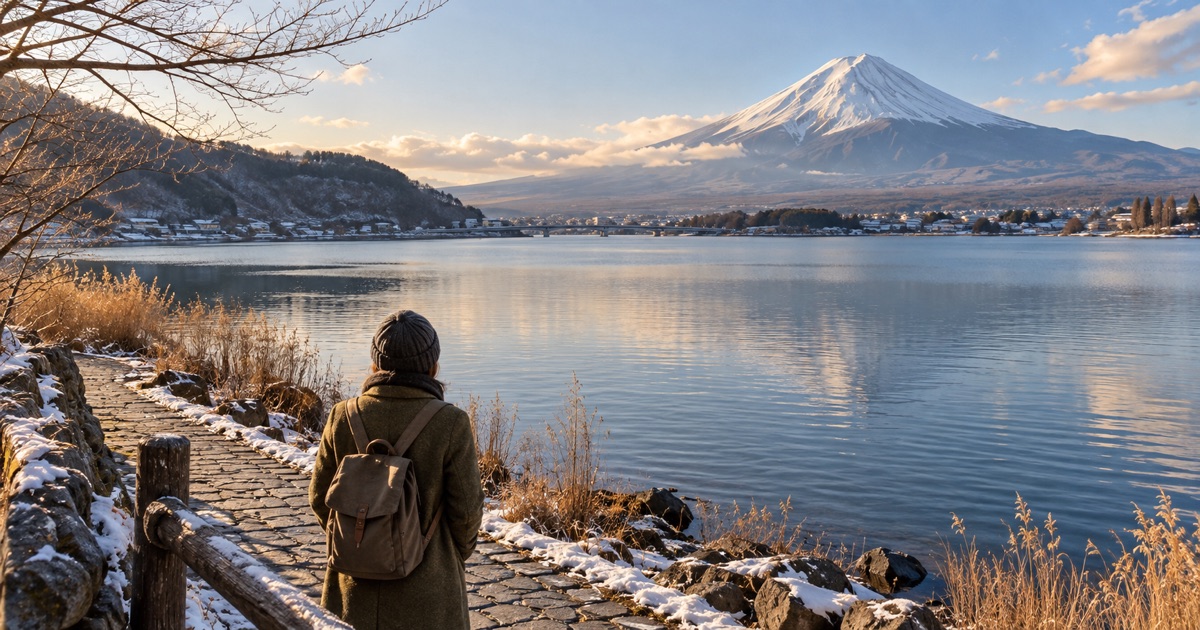
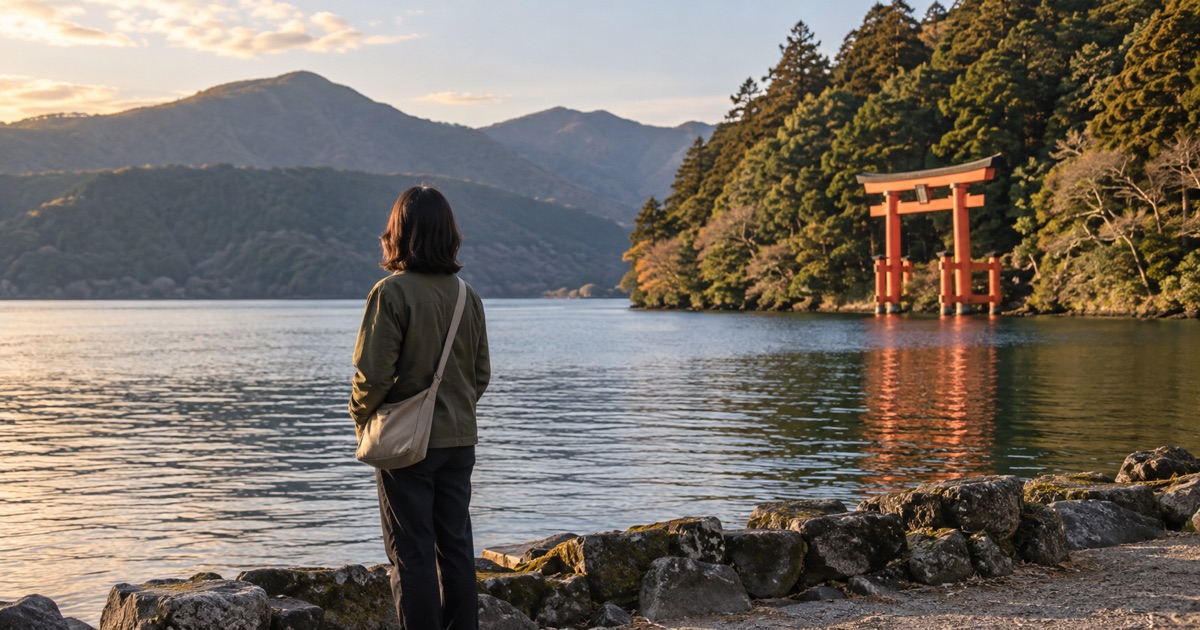
The boat ride takes roughly 30 minutes to 40 minutes across the caldera lake to Moto-Hakone Port (元箱根港). On calm mornings and clear afternoons, Mount Fuji reflects across the surface of the water behind the red torii gate of Hakone Shrine.
Step 6: Walk to the Lakeside Torii of Hakone Shrine
From Moto-Hakone Port, follow the forested footpath along the lake shore for about 10 minutes to reach Hakone Shrine. Walk beneath tall cedar trees to find the "Torii of Peace," a bright vermilion gate standing directly in the lake waters. Expect a queue during midday if you want a photo standing right before the water gate.
Step 7: Return to Hakone-Yumoto by Bus
From Moto-Hakone, hop on the Hakone Tozan Bus (Line H or Line K) back to Hakone-Yumoto Station. The winding bus ride takes approximately 35 minutes to 45 minutes depending on traffic. From Hakone-Yumoto, connect back to your train bound for Shinjuku.
Relaxing in a Day-Use Onsen
No trip to Hakone is complete without soaking in natural mineral springs. You do not need an overnight ryokan stay to enjoy the baths; several facilities offer day-use access (higaeri onsen, 日帰り温泉).
- Hakone Yuryo (箱根湯寮): Located near Hakone-Yumoto Station, this traditional woodland facility provides large communal baths and private rental bath cabins. A free shuttle bus connects the bathhouse to the station in about 3 minutes.
- Tenzan Tohji-kyo (天山湯治郷): Set in the Sukumo River valley, this multi-bath outdoor complex features raw stone tubs, natural river views, and traditional architecture. Accessible via local bus from Hakone-Yumoto in roughly 15 minutes.
Remember standard bathing customs: wash thoroughly with soap before entering the hot water, tie long hair up, and keep small hand towels out of the bathwater. While rules have relaxed in recent years, facilities with strict policies may ask guests to cover tattoos.
Essential Rail Pass: The Hakone Freepass
Purchasing the Odakyu Hakone Freepass is the most cost-effective decision for this day trip. The pass includes:
- Round-trip rail transport between Shinjuku Station and Odawara Station
- Unlimited rides on the Hakone Tozan Railway, Cable Car, Ropeway, Sightseeing Cruise, and Tozan Buses
- Small discounts at selected museums, hot springs, and gift shops
A standard 2-day pass (which day-trippers use for a single day) typically costs around 6,000 yen to 7,000 yen per adult. Adding the Romancecar requires an extra limited express surcharge of roughly 1,200 yen to 1,500 yen each way. You can purchase physical passes at the Odakyu Sightseeing Service Center in Shinjuku Station or secure digital passes online prior to departure. Check the official Odakyu Electric Railway site for current ticket tiers and operating notices.
What to Bring and Wear
- Layered Clothing: Mountain weather shifts rapidly. High-altitude spots like Owakudani can be roughly 5 degrees to 8 degrees Celsius colder than central Tokyo.
- Comfortable Walking Shoes: You will navigate train platforms, inclined ramps, stone steps, and uneven forest paths throughout the day.
- Cash (Yen): While train passes cover transit, smaller food stalls, roadside vending machines, and local coin lockers frequently require physical coins and notes.
- Small Towel: Essential for outdoor footbaths (ashi-yu) found along the transit route and required if you visit a hot spring.
Common Mistakes to Avoid
- Leaving Tokyo Too Late: The transit network in the mountains winds down earlier than in big cities. Mountain cable cars and lake boats generally cease departures between roughly 16:00 and 17:00. Aim to board a train out of Shinjuku no later than 07:30.
- Bringing Large Luggage: Commuter buses, funiculars, and ropeway cabins become crowded. Store large suitcases in lockers at Shinjuku Station or Odawara Station, carrying only a day pack into the mountains.
- Ignoring Weekend Traffic: On weekend afternoons and public holidays, the mountain roads feeding into Hakone-Yumoto become congested. The Hakone Tozan Bus ride can take double its normal travel time. Take the mountain railway instead of the bus whenever possible on peak travel days.
- Expecting Guaranteed Fuji Views: Mount Fuji is notoriously bashful. Cloud cover frequently shrouds the mountain by midday, especially from June through August. Check morning live cameras online before heading out to set realistic expectations.
FAQ
- Q. Is one day enough to see Hakone from Tokyo?
- A. Yes, an early morning departure lets you complete the entire scenic transit loop, see key sights, and soak in an onsen.
- Q. Which rail pass should I use for a Hakone day trip?
- A. The Odakyu Hakone Freepass covers round-trip transit from Shinjuku Station and unlimited rides on eight local transit systems.
- Q. Can I see Mount Fuji from Hakone on a day trip?
- A. You can see Mount Fuji from the Hakone Ropeway and Lake Ashi on clear days, though clouds frequently obscure views in warmer months.
Cite or share this article
Copy the link below. If you quote this article, please link to this page as the source.