Koyasan Itinerary: 1 Day Trip from Osaka or Kyoto
Key takeaways
- A complete 1-day trip to Koyasan takes roughly 10 to 12 hours round-trip, best started early from Osaka's Namba Station.
- Key stops include the ancient Okunoin cemetery, the Danjo Garan temple complex, and Kongobuji head monastery.
- Use the Nankai Koya Line and cable car; local buses within the town coordinate seamlessly with arriving trains.
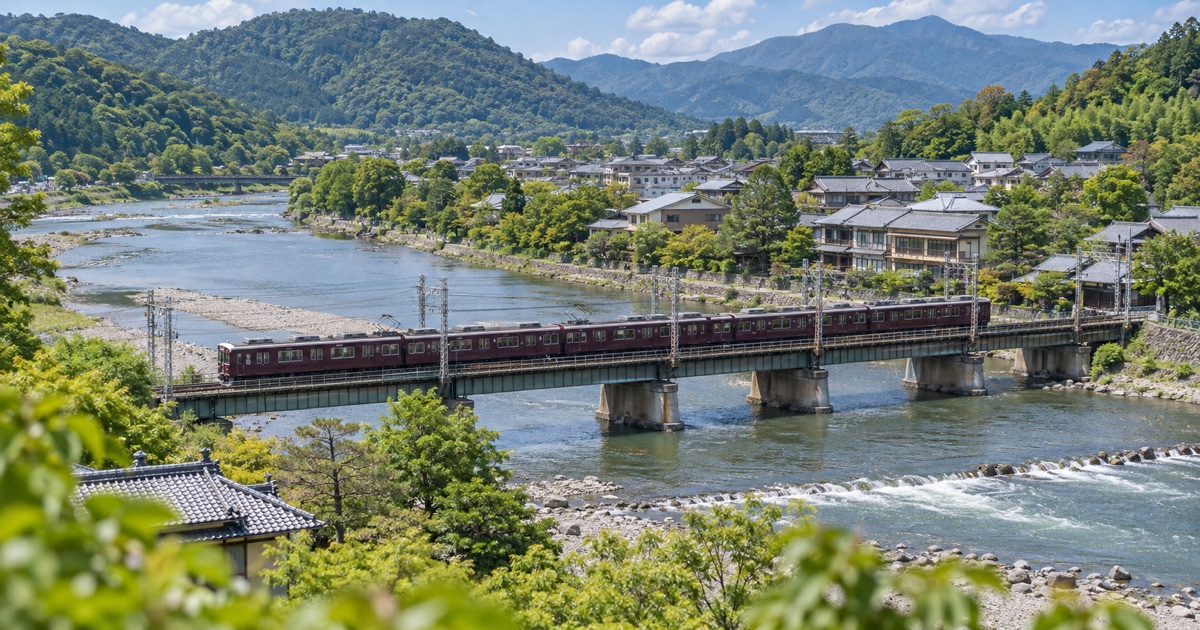
A one-day itinerary for Koyasan (高野山) is completely feasible as a day trip from Osaka or Kyoto if you start early in the morning. By catching an early train on the private Nankai Railway, you can explore Mount Koya's atmospheric moss-covered forest cemetery at Okunoin, admire the sacred temples of Danjo Garan, and tour Kongobuji before returning to the city by evening.
Perched high in the forested mountains of Wakayama Prefecture, Koyasan is the spiritual headquarters of Shingon Buddhism, founded by the monk Kobo Daishi (Kukai) in the 9th century. While many visitors choose an overnight temple stay (shukubo), this comprehensive one-day walking plan covers all the primary highlights for independent travelers without needing to book an overnight room.
Starting Your Journey: Getting to Koyasan
The most straightforward gateway to Koyasan is central Osaka. If you are departing from Kyoto, you must first take a train south into Osaka to connect to the private rail network.
From Osaka (Namba Station)
- Head to Nankai Namba Station (南海なんば駅) in central Osaka.
- Board the Nankai Koya Line (南海高野線). You can take a direct Limited Express "Koya" train (requires a seat reservation fee) or an express commuter train bound for Hashimoto Station (橋本駅), transferring there to a local mountain train toward Gokurakubashi Station (極楽橋駅). Total train time is roughly 90 minutes.
- At Gokurakubashi Station, walk directly across the platform to the Koyasan Cable Car (高野山ケーブル), which takes around 5 minutes to lift passengers up the steep mountain incline to Koyasan Station (高野山駅).
From Kyoto Station
Take a JR Special Rapid service or the Shinkansen down to Osaka Station or Shin-Osaka, connect via the Osaka Metro Midosuji Line to Namba Station, and switch to the Nankai Koya Line. Allow roughly 2.5 to 3 hours each way from Kyoto.
Note: The national Japan Rail Pass does not cover Nankai Railway lines, the cable car, or Koyasan local buses. Consider checking the Japan National Tourism Organization website for general regional transit overviews, and verify current fares and timetables with the transport operators, as departures change seasonally.
Koyasan 1-Day Itinerary: Step-by-Step
Upon arriving at Koyasan Station, private pedestrian walking along the mountain access highway is strictly prohibited for safety reasons. You must board a Nankai Rinkan Bus outside the station exit. Buses are timed to depart shortly after the cable car arrives, and IC cards (such as ICOCA and Suica) are widely accepted.
[Osaka Namba] --(Nankai Train + Cable Car: ~90-110 min)--> [Koyasan Station]
   |
   +--> Bus to Okunoin-mae (~20 min)
   |
   +--> Walk through Okunoin Cemetery to Gobyo (~2 hours)
   |
   +--> Lunch in town center (~1 hour)
   |
   +--> Kongobuji Temple visit (~1 hour)
   |
   +--> Danjo Garan complex walk (~1 hour)
   |
   +--> Daimon Gate photo stop (~20 min)
   |
   +--> Return bus to Koyasan Station & train to Osaka
Morning: Okunoin Cemetery (奥之院)
Take the bus directly from Koyasan Station to either the Ichinohashi-mae (一の橋前) or Okunoin-mae (奥の院前) stop. For first-time visitors, getting off at Ichinohashi-mae is recommended, as this is the traditional entry gate.
- Rough Time Allocation: 2 to 2.5 hours
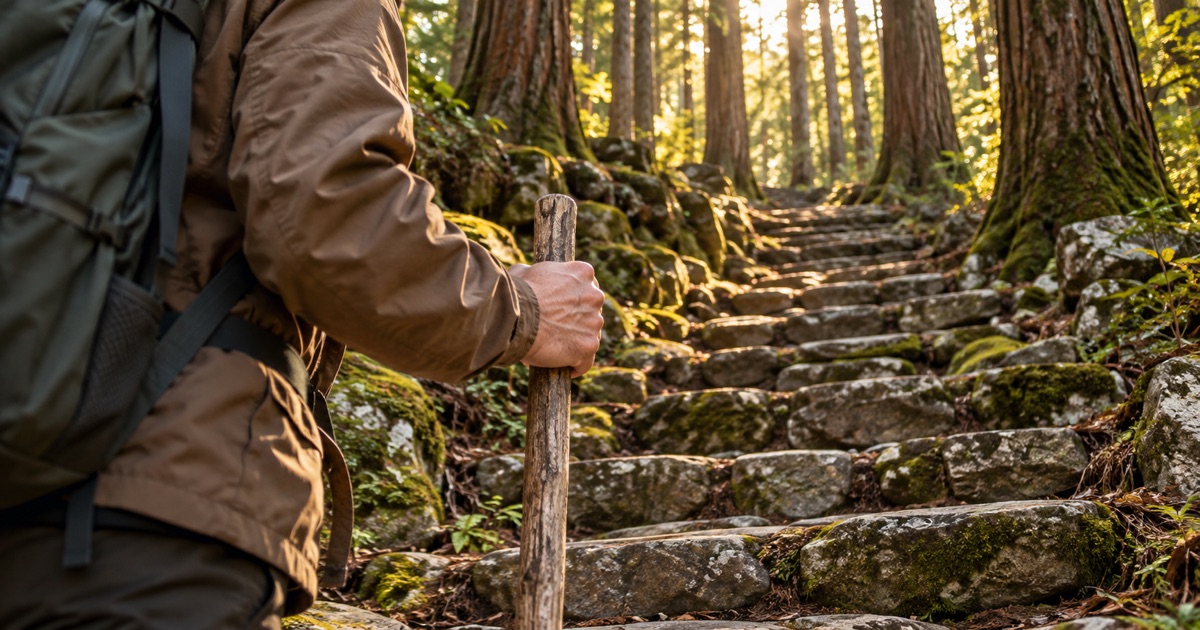
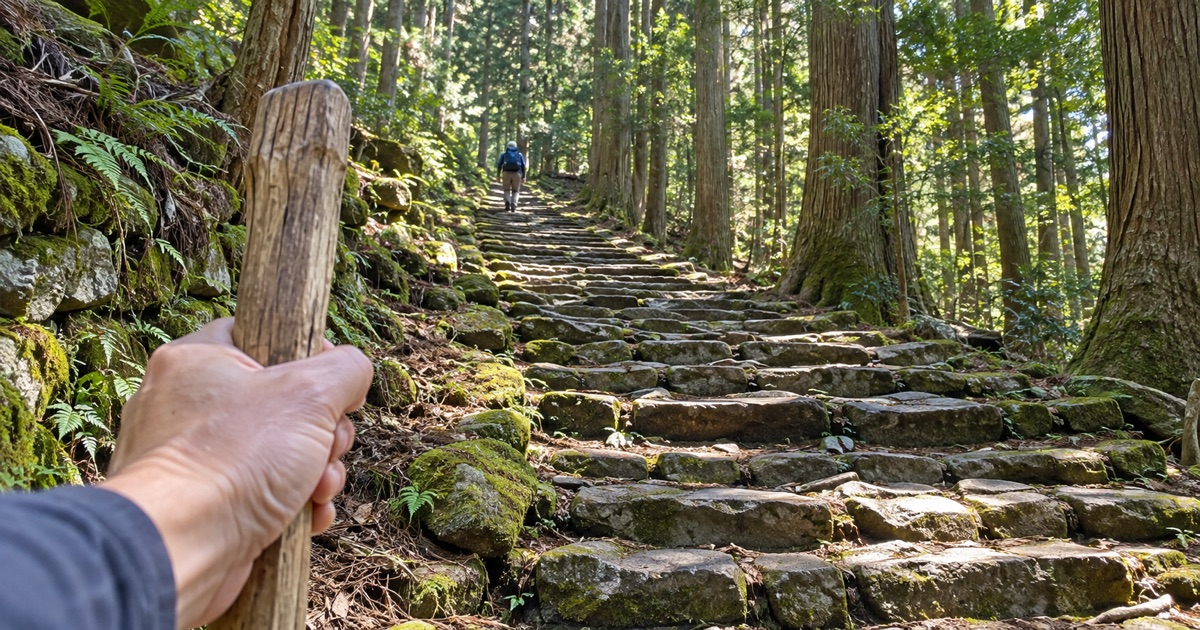
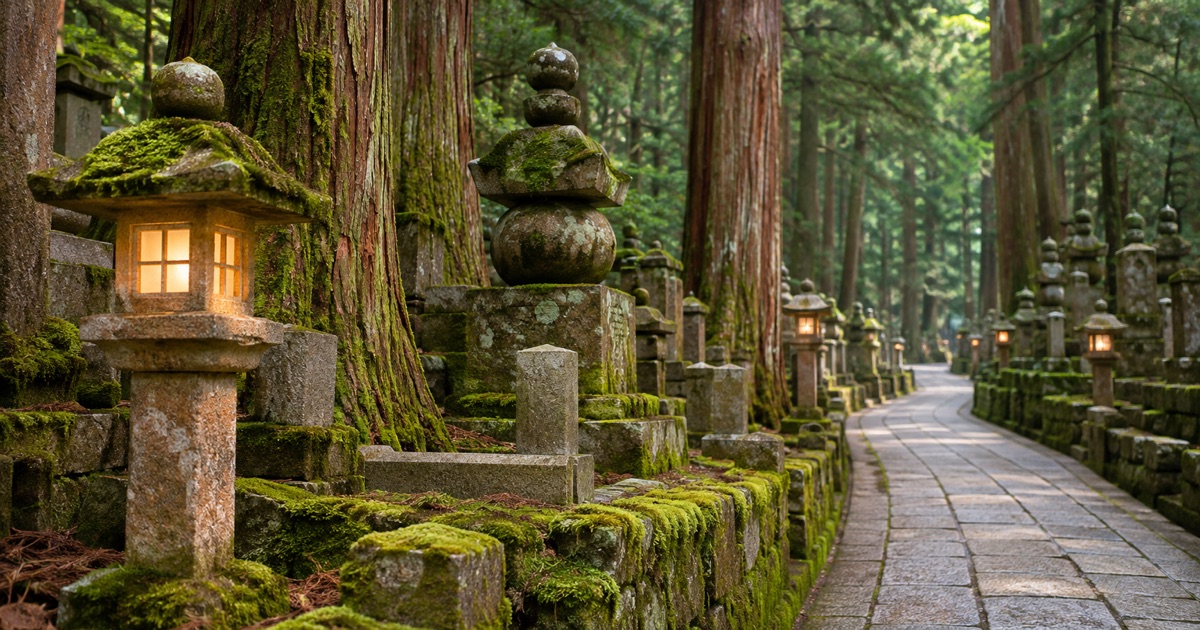
- What to See: The cobblestone path from Ichinohashi leads through a forest of ancient cedar trees past more than 200,000 stone tombstones, memorials, and monuments. It is one of the most sacred pilgrimage grounds in Japan.
- The Culmination: At the end of the path stands the Gobyo (御廟), the mausoleum where followers believe Kobo Daishi rests in eternal meditation rather than having passed away. Just before the mausoleum is the Torodo (Hall of Lanterns), housing thousands of continually burning brass lanterns.
Cultural Etiquette: Beyond the Gobyo-bashi bridge, photography, video recording, food, and beverages are strictly prohibited. Remove your hat and bow slightly before crossing the bridge into the inner sanctum.
Midday: Vegetarian Lunch in Koyasan Town
Walk or catch a brief bus ride back to the central junction around Sengoku-bashi or Koya Police Station.
Here, you will find independent cafes and casual eateries along the main street serving Koyasan's culinary specialty, Shojin Ryori (精進料理)—traditional Buddhist vegetarian cuisine made without meat, fish, garlic, or onions. A staple dish is Goma-dofu (sesame curd topped with wasabi and soy sauce). If you do not prefer vegetarian dining, several town cafes serve standard soba noodles, curry rice, and set lunches. Budget around 1,200 to 2,500 yen for a midday meal.
Early Afternoon: Kongobuji Temple (金剛峯寺)
Walk a few minutes westward from the town center to Kongobuji, the head temple of Koyasan Shingon Buddhism.
- Rough Time Allocation: 45 to 60 minutes
- Highlights: The complex features magnificent Japanese sliding screen doors (fusuma) painted with cranes and cherry blossoms by masters of the Kano School.
- Banryutei Rock Garden: Behind the temple halls lies Japan's largest rock garden, where 140 granite stones are arranged in raked white quartz sand to represent a pair of dragons emerging from a sea of clouds to protect the shrine.
Mid-Afternoon: Danjo Garan (壇上伽藍)
Follow the quiet pine tree-lined pathway west toward Danjo Garan, the central temple precinct designed by Kobo Daishi as a training ground for esoteric Buddhism.
- Rough Time Allocation: 1 hour
- Konpon Daito (根本大塔): The defining landmark of the complex is this striking 48.5-meter-tall vermilion pagoda. Step inside to view a three-dimensional cosmic mandala formed by a golden statue of Dainichi Nyorai surrounded by massive painted pillars.
- Kondo (Golden Hall): The main ceremonial hall standing opposite the pagoda, rebuilt several times over the centuries, where major Buddhist rituals continue to take place.
Late Afternoon: Daimon Gate (大門) and Departure
Conclude your walking tour by strolling west to Daimon, the grand two-story wooden gate that marks the traditional southern mountain entrance to Koyasan. Standing over 25 meters tall, it houses two fierce Nio guardian statues protecting the sanctuary.
From the Daimon-mae bus stop, catch the Nankai Rinkan Bus directly back to Koyasan Station, take the cable car down to Gokurakubashi, and catch your return train back to Osaka.

We are working to carry Japanese craft and everyday culture beyond Japan, by building Japan Towns with local partners.
Read the Japan Town plan →Practical Tips for First-Time Visitors
- Temperatures Differ from the Plains: Koyasan sits roughly 800 to 900 meters above sea level. Temperatures are often 5°C to 10°C colder than Osaka or Kyoto. Even in summer, bring a light windbreaker or sweater; in spring and late autumn, warm layers and gloves are recommended.
- Footwear Matters: You will easily log 12,000 to 18,000 steps during this itinerary. Stone paths around Okunoin can be slick with rain, moss, or morning frost. Choose sturdy walking shoes with strong grip.
- Cash Still Counts: While bus transit accepts major IC cards and souvenir shops accept credit cards, smaller admission windows, coin lockers, and street food stalls may only accept Japanese yen cash.
- Watch the Afternoon Clock: Mountain daylight fades quickly, especially between November and February. Temple ticket counters generally cease admissions around 4:30 PM, and bus intervals lengthen significantly by 5:00 PM. Aim to head toward Koyasan Station by late afternoon.
- Luggage Storage: It is strongly advised to leave large suitcases in lockers at Namba or Osaka Station before traveling up the mountain. Gokurakubashi and Koyasan stations have limited coin locker spaces, and navigating buses with bulky baggage is difficult.
For broader travel planning across Kansai, consult regional guides and safety announcements on the JR West official site.
FAQ
- Q. Can you do Koyasan as a day trip from Kyoto or Osaka?
- A. Yes. It takes about 2 to 2.5 hours each way from Osaka (Namba) and around 3 hours each way from Kyoto, making an early start essential.
- Q. Does the Japan Rail (JR) Pass cover travel to Koyasan?
- A. No. Koyasan is served by the private Nankai Electric Railway and its cable car, so standard national JR Passes do not cover this route.
- Q. What should I wear when visiting Koyasan on a day trip?
- A. Wear comfortable walking shoes for mossy, uneven stone paths and bring an extra layer, as mountain temperatures are noticeably cooler than Osaka.
Cite or share this article
Copy the link below. If you quote this article, please link to this page as the source.