Koyasan Day Trip from Osaka: Full Route and Guide
Key takeaways
- A day trip takes roughly 2 to 2.5 hours each way from Namba Station using Nankai Railway trains, a cable car, and local buses.
- The Japan Rail Pass does not cover the main private route; purchase standard Nankai tickets or an all-inclusive regional pass.
- Wear sturdy shoes and dress warmly, as mountain temperatures run several degrees cooler than downtown Osaka year-round.
A Koyasan day trip from Osaka is completely doable and offers one of Japan's most rewarding cultural excursions. Leaving from central Osaka in the morning, you can reach this sacred mountain plateau in roughly two to two and a half hours, explore its forested cemeteries and ancient temple complexes, and return by dinner.
Perched in the mountains of Wakayama Prefecture, Mount Koya (高野山, Koyasan) serves as the world headquarters of Shingon Esoteric Buddhism, founded by the monk Kobo Daishi (Kukai) in 816 AD. While many visitors stay overnight in temple lodgings, a well-planned day trip allows independent travellers to experience its mist-shrouded cedar groves and historic halls without changing hotels.
How to Get to Koyasan from Osaka
The journey from Osaka to Koyasan involves three distinct legs: a scenic private railway journey, a steep cable car ascent, and a dedicated mountain bus.
Step 1: Nankai Railway from Namba Station
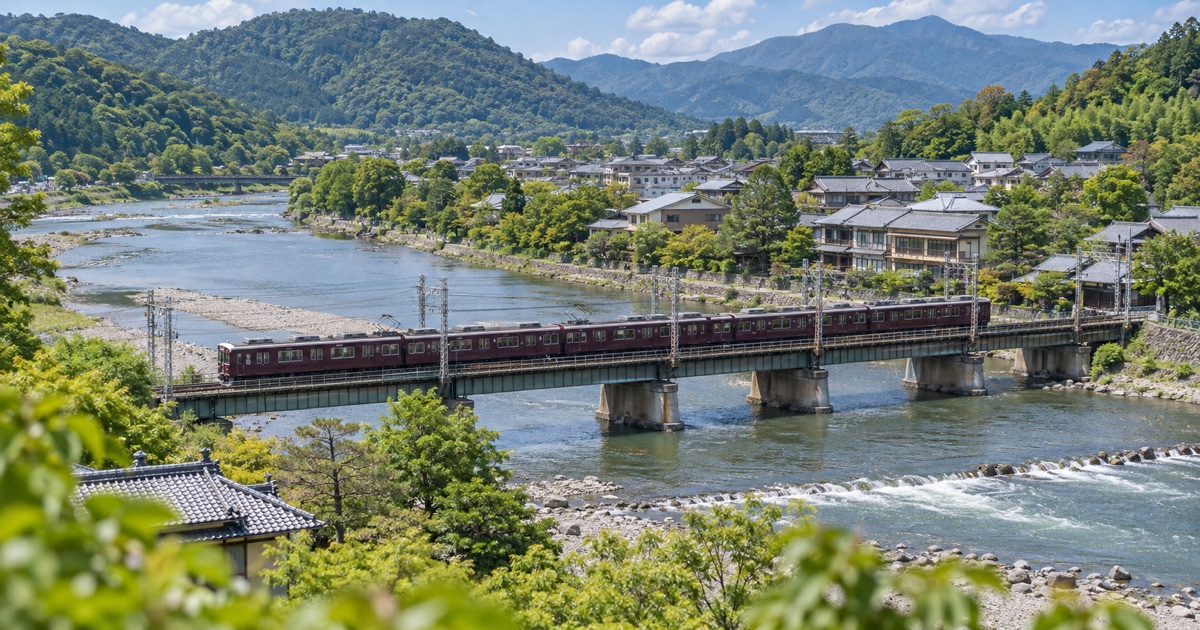
Your journey begins at Nankai Namba Station (なんば駅) in central Osaka. From here, take the Nankai Koya Line south toward Gokurakubashi Station (極楽橋駅).
You have two train choices:
- Limited Express Koya: This direct train requires a seat reservation and an extra express surcharge. It takes roughly 80 to 90 minutes to reach Gokurakubashi.
- Express / Rapid Express Trains: These standard commuter trains run frequently, do not require reservations, and cost less. You may need to transfer at Hashimoto Station (橋本駅) along the way. Travel time is around 100 to 110 minutes.
Note for rail pass holders: The nationwide Japan Rail (JR) Pass does not cover the Nankai Railway. If you choose to travel exclusively on JR lines, you can only reach Hashimoto Station via the JR Wakayama Line, after which you must still transfer to the private Nankai Line for the mountain section. For most travellers, starting directly on Nankai from Namba is much faster and simpler.
Step 2: The Koyasan Cable Car
All trains terminate at Gokurakubashi Station at the base of the mountain. From the train platform, follow the clear multilingual signs directly to the adjoining Koyasan Cable Car (高野山ケーブル).
The funicular railway climbs roughly 330 vertical metres through dense mountain forest in about five minutes. Timetables are coordinated so that the cable car departs shortly after connecting trains arrive.
Step 3: Local Bus into the Town Centre
The cable car arrives at Koyasan Station (高野山駅). Pedestrians are strictly prohibited from walking along the narrow, winding mountain road that connects the station to the town. You must take a Nankai Rinkan Bus (南海りんかんバス) from outside the station terminal.
Buses wait right outside the exit. Digital display boards and staff direct passengers to the correct boarding bays. Depending on your first stop, the ride into the town centre takes roughly 10 to 15 minutes.
Fares and schedules can change, so always check details before departure via the Japan National Tourism Organization or the official Nankai Electric Railway site.
A Realistic One-Day Koyasan Itinerary
To make the most of your daylight hours, aim to catch a train from Namba Station around 7:30 AM or 8:00 AM. This gets you up the mountain before mid-morning crowds arrive.
Morning: Okunoin Cemetery
Take the bus from Koyasan Station directly to the Ichinohashi-mae (一の橋前) bus stop. This is the traditional entrance to Okunoin (奥之院), Japan’s largest and most sacred cemetery.
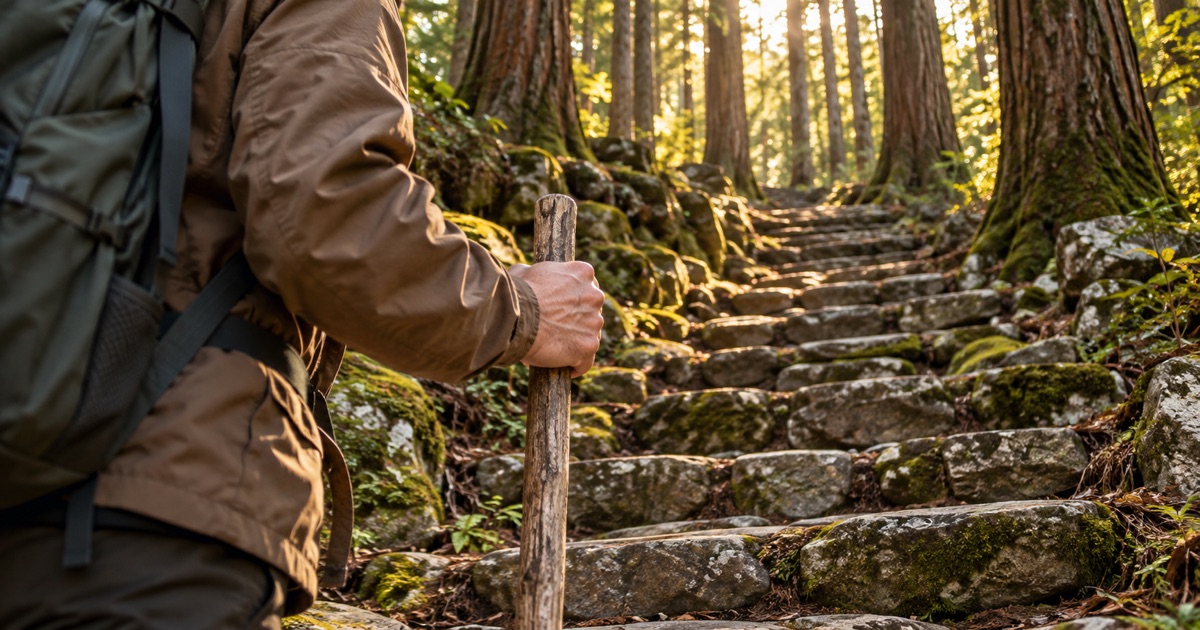
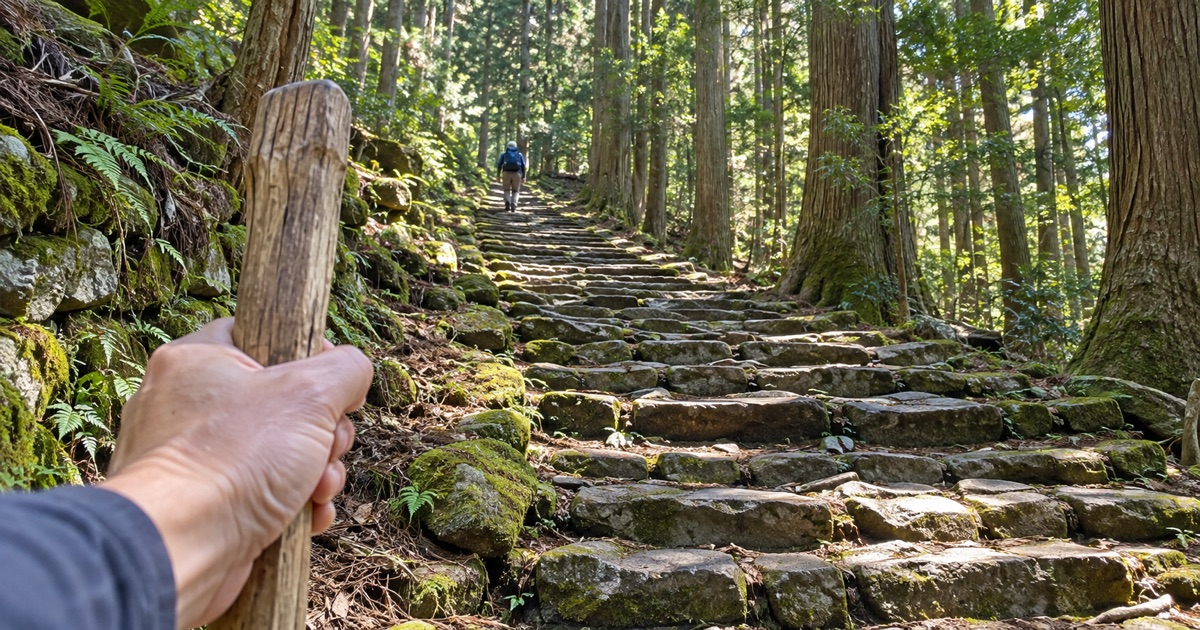
The stone-paved path stretches approximately two kilometres through a forest of towering, centuries-old Japanese cedar trees. Along the way stand more than 200,000 moss-covered stone stupas, memorial monuments, and family graves of historical samurai, monks, and ordinary citizens.
At the end of the forest path lies the Torodo (Lantern Hall), housing thousands of brass lanterns that remain continuously illuminated, and behind it, the Mausoleum of Kobo Daishi. Believers hold that Kukai is not deceased, but resting in eternal meditation, praying for world peace.
Etiquette reminder: Cross the Gobyo-bashi bridge quietly. Beyond this bridge, photography, video recording, smoking, eating, and drinking are strictly forbidden. Bow slightly before crossing the bridge as a sign of respect.
After paying your respects, take the shorter path to the Okunoin-mae (奥之院前) bus stop to board a bus back toward the town centre.
Midday: Buddhist Vegetarian Lunch
Head to the central village area around Senjuinbashi (千手院橋). Koyasan is renowned for shojin ryori (精進料理), traditional Buddhist vegetarian cuisine prepared without meat, fish, onions, or garlic. Several local restaurants and casual dining spots around the main intersection serve set lunches featuring seasonal mountain vegetables, sesame tofu (goma-dofu), and tempura.
Expect lunch sets to range roughly from 1,500 to 3,500 yen depending on the venue. If you prefer a quick meal, local shops also sell vegetarian bento boxes, soba noodles, and warm sweets.
Early Afternoon: Danjo Garan Complex
From the village centre, walk or take a short bus ride to the Danjo Garan (壇上伽藍), one of the two most sacred sites on the mountain alongside Okunoin. This is the central temple complex Kukai first broke ground on in the ninth century.
Key structures include:
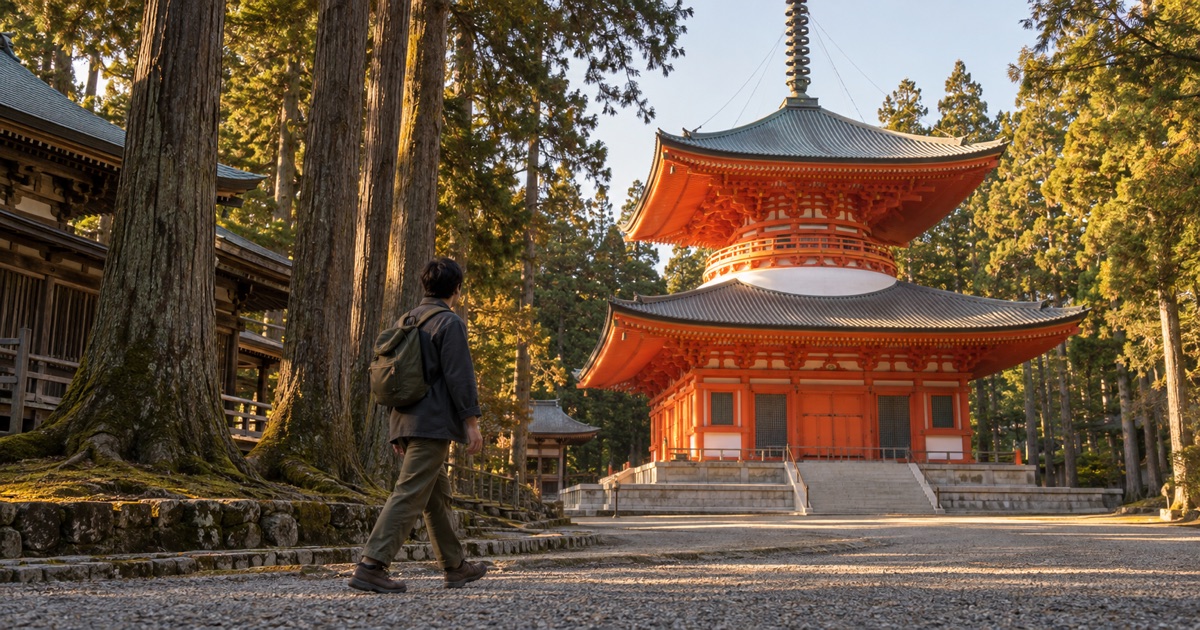
- Konpon Daito (根本大塔): A striking, two-tiered vermilion pagoda standing nearly 50 metres tall. Inside, a rare three-dimensional mandala consists of statues and painted pillars depicting cosmic deities.
- Kondo (金堂): The main ceremonial hall where major religious rituals take place.
A combined admission ticket is available for visitors entering the interiors of both buildings, though admiring the structures from the outside is free.
Late Afternoon: Kongobuji Temple
A short walk east brings you to Kongobuji (金剛峯寺), the head monastery of Shingon Buddhism.
Inside, visitors walk along polished wooden verandas flanking rooms decorated with intricate screen paintings of cranes, plum blossoms, and the life of Kukai. Behind the main hall sits the Banryutei (蟠龍庭), the largest rock garden in Japan. Its raked white gravel and 140 granite stones represent a pair of dragons emerging from a sea of clouds to protect the sanctuary.
Journey Back to Osaka
Plan to begin your descent by 4:00 PM or 5:00 PM. Mountain buses run less frequently as evening approaches, and temple halls generally stop admitting visitors around late afternoon.
Take the bus back to Koyasan Station, board the cable car down to Gokurakubashi, and transfer to your train bound for Nankai Namba Station. You will arrive back in central Osaka in time for dinner in the Dotonbori or Namba districts.

We are working to carry Japanese craft and everyday culture beyond Japan, by building Japan Towns with local partners.
Read the Japan Town plan →Practical Tips for First-Time Visitors
- Dress for the elevation: Koyasan sits roughly 800 metres above sea level. Temperatures are typically 5°C to 8°C cooler than downtown Osaka. In autumn, winter, and early spring, bring layers, a windproof coat, and gloves.
- Wear walking shoes: You will cover significant ground on foot, including stone paths, uneven steps, and mossy bridges. Leave flat fashion sneakers or heels at your hotel.
- Carry cash: While major ticket counters accept IC transit cards (like ICOCA or Suica) and credit cards, small souvenir vendors, food stalls, and temple donation boxes only accept Japanese yen in cash.
- Consider a Koyasan World Heritage Ticket: Nankai Railway offers a dedicated pass covering the round-trip train fare from Osaka, unlimited bus travel within Koyasan, and discounted entry to select temples. Check current pricing at Nankai ticket offices before your trip.
- Mind the last connections: Pay close attention to bus and cable car timetables when leaving the mountain. Missing the final scheduled connection down to Gokurakubashi can leave you stranded in an area with very limited evening transport. Plan your return with extra buffer time.
FAQ
- Q. Can I use the regular JR Pass to visit Koyasan?
- A. No, the direct and most convenient route uses the private Nankai Electric Railway line, which is not covered by the nationwide Japan Rail Pass.
- Q. How long does the entire trip take from central Osaka?
- A. Transit takes between 2 and 2.5 hours each way from Namba Station to the central temple area, depending on the train type you board.
- Q. Is Koyasan too rushed for a single day trip?
- A. A day trip allows you to explore major highlights like Okunoin Cemetery and Danjo Garan comfortably if you depart Osaka early in the morning.
Cite or share this article
Copy the link below. If you quote this article, please link to this page as the source.