Kumano Kodo Itinerary 5 Days: The Complete Hiking Guide
Key takeaways
- Tackle the classic Nakahechi route connecting ancient shrines from Takijiri-oji to Nachi Falls over five days.
- Depart smoothly by limited express train from major transit hubs like Shin-Osaka Station or Kyoto Station.
- Book village minshuku stays months ahead and carry ample cash, as local mountain transit rarely takes credit cards.
A five-day Kumano Kodo itinerary allows you to hike the legendary Nakahechi Route (中辺路) from Takijiri-oji across the Kii Peninsula to the Pacific coast. This timeline gives independent hikers enough room to walk between ancient shrines, soak in historic hot springs, and reach Nachi Falls without rushing.
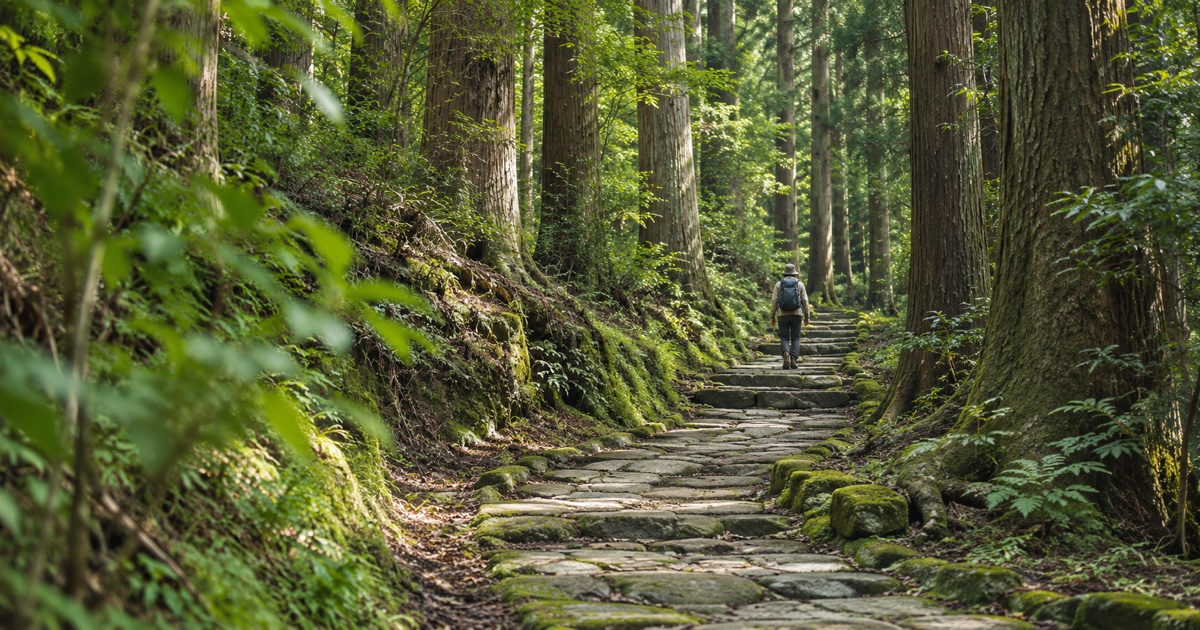
Centuries of pilgrims, emperors, and modern hikers have walked these cobblestone paths beneath towering cedar forests. This self-guided itinerary outlines the standard western-to-eastern crossing, starting directly from Osaka or Kyoto.
Overview: The 5-Day Nakahechi Route
The Nakahechi route is the most accessible Kumano Kodo path for international visitors. Trailheads feature dual-language signposts, regular local buses run parallel to several sections, and mountain villages offer authentic family-run guesthouses (minshuku).
- Day 1: Train from Osaka/Kyoto to Kii-Tanabe, bus to Takijiri-oji, hike to Takahara (approx. 4 km / 2.5 miles)
- Day 2: Hike from Takahara to Tsugizakura-oji and Nonaka (approx. 13 km / 8 miles)
- Day 3: Hike from Nonaka to Kumano Hongu Taisha, bus to Yunomine Onsen (approx. 15 km / 9.3 miles)
- Day 4: Bus or traditional boat to Kumano Hayatama Taisha in Shingu, train to Kii-Katsuura (rest/scenic day)
- Day 5: Hike the Daimon-zaka staircase to Kumano Nachi Taisha and Nachi Falls, return to Osaka or Kyoto (approx. 4 km / 2.5 miles)
For comprehensive railway schedules and national transit maps before your journey, consult the Japan National Tourism Organization.
Day 1: Shin-Osaka to Takijiri-oji and Takahara
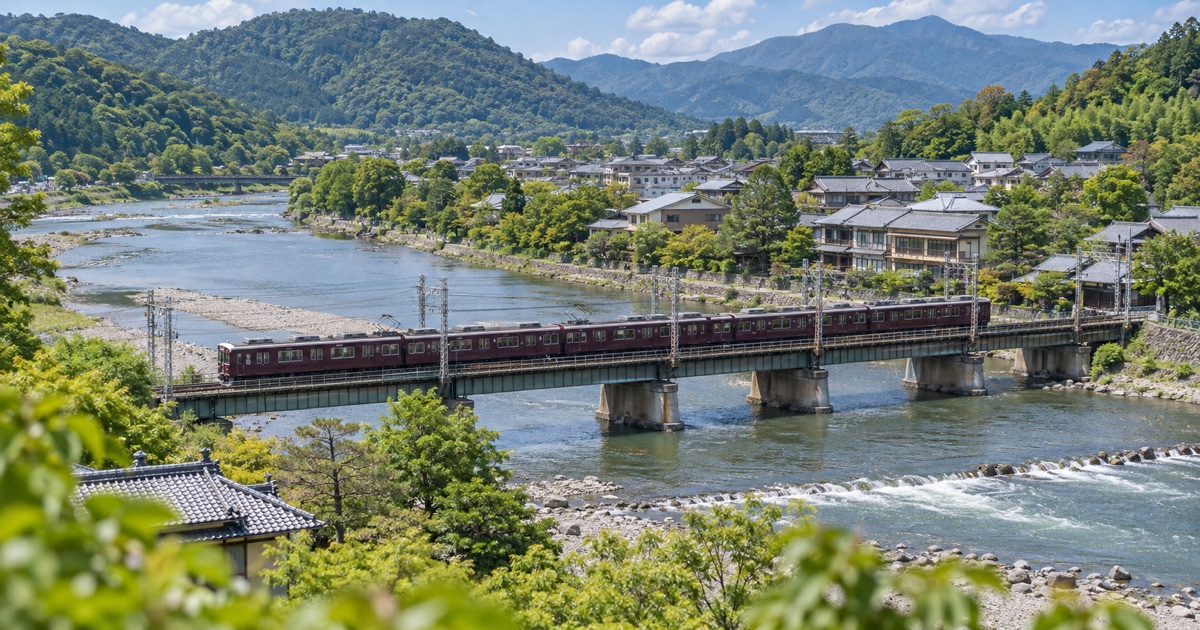
Begin your journey early at Shin-Osaka Station (新大阪駅) or Kyoto Station (京都駅). Board the JR Kuroshio Limited Express train running down the Wakayama coastline to Kii-Tanabe Station (紀伊田辺駅). The train ride takes roughly 2 to 2.5 hours from Osaka. Check rail passes and seat reservations via the official JR West website.
At Kii-Tanabe Station, stop by the Tanabe City Kumano Tourism Bureau next to the station exit. Pick up paper trail maps, ask about trail conditions, and stamp your pilgrimage booklet.
Next, catch a local Ryujin or Meiko bus bound for Hosshinmon-oji or Hongu, and get off at Takijiri (滝尻). The bus ride takes around 40 minutes.
Takijiri-oji (滝尻王子) marks the historic entrance to the sacred Kumano mountains. From here, the trail immediately climbs steeply over tree roots and rocks. Pace yourself on this initial ascent. After roughly 2 to 2.5 hours of steady uphill hiking, you will emerge at the ridge village of Takahara (高原), known as the "Village in the Mist." Settle into your accommodation and enjoy panoramic mountain views.

We are working to carry Japanese craft and everyday culture beyond Japan, by building Japan Towns with local partners.
Read the Japan Town plan →Day 2: Takahara to Tsugizakura-oji (Nonaka)
Start walking early to tackle a full day of varied mountain terrain. Today's path leads deeper into the mountains toward the settlement of Nonaka.
The trail winds along dirt tracks, old forest roads, and stone paths. You will pass Jyu-ichigou-oji and reach the scenic Jyunisama stone gods before descending into the village of Chikatsuyu (近露). Chikatsuyu makes an ideal lunch stop, featuring small rest areas along the clear Hiki River.
After Chikatsuyu, the trail climbs again toward Tsugizakura-oji (継桜王子). This shrine clearing contains ancient cedar trees measuring up to eight meters in circumference, alongside the famous Nonaka-no-Shimizu natural spring. Stay the night at a traditional minshuku near Tsugizakura or down in the Nonaka area.
- Distance: Around 13 km (8 miles)
- Walking time: Roughly 5.5 to 7 hours
- Terrain: Steep ascents, forest ridge lines, and paved village lanes
Day 3: Tsugizakura to Kumano Hongu Taisha and Yunomine Onsen
This leg leads to the spiritual heart of the Kumano Kodo: Kumano Hongu Taisha (熊野本宮大社).
Follow the forest trail past several historical oji shrines, including Hosshinmon-oji (発心門王子). The section from Hosshinmon-oji down to the grand shrine features gentle downhill walking through quiet mountain settlements and tea fields, making it one of the most pleasant stretches of the Nakahechi route.
As you descend into the Hongu valley, stop at the Fushiogami-oji viewpoint, where ancient travelers fell to their knees in prayer upon their first distant view of the grand shrine. Arrive at Kumano Hongu Taisha, an architectural masterpiece of unpainted cedar nestled in the forest. Just a short walk away stands Oyunohara (大斎原), the riverbank site where the shrine stood until a flood in 1889. The enormous torii gate here ranks among the tallest in the world.
After exploring the shrine complex, board a local bus for a 15-minute ride to Yunomine Onsen (湯の峰温泉). This atmospheric river valley is home to hot-spring bathhouses that pilgrims used for purification rituals for over a millennium.
- Distance: Around 15 km (9.3 miles)
- Walking time: Roughly 6 to 7.5 hours
- Highlight: Relaxing in natural thermal waters after days on the trail
Day 4: Yunomine Onsen to Kumano Hayatama Taisha (Shingu) and Kii-Katsuura
Day four connects the mountain temples to the sea. You can give your feet a partial rest while traveling to the second grand shrine, Kumano Hayatama Taisha (熊野速玉大社) in Shingu (新宮).
You have two primary travel choices from the Hongu area to Shingu:
- Local bus: The Kumano Gobo Nankai bus follows the Kumano River directly to Shingu in roughly 45 to 60 minutes.
- Traditional river boat: When operating, flat-bottom wooden tour boats run down the Kumano River, mimicking the waterway route used by ancient nobles.
In Shingu, visit Kumano Hayatama Taisha, recognized by its vermilion buildings and ancient nagi tree. If your energy permits, climb the steep, irregular stone staircase up to Kamikura-jinja (神倉神社), where a sacred boulder overlooks the Pacific Ocean.
In the afternoon, take a local JR train from Shingu Station to Kii-Katsuura Station (紀伊勝浦駅). Kii-Katsuura is a coastal port city famous for fresh tuna and waterfront hot-spring hotels.
Day 5: Daimon-zaka, Kumano Nachi Taisha, Nachi Falls, and Departure
The final day delivers the most recognized vista in the entire Kumano region.
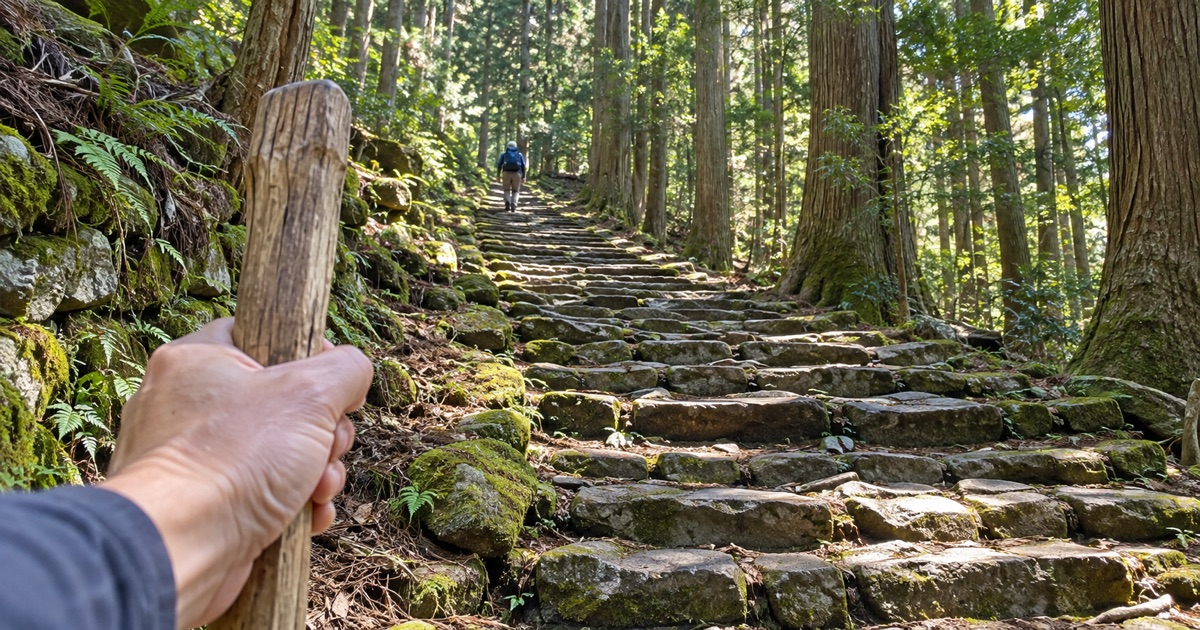
From Kii-Katsuura Station, catch a 20-minute local bus to the Daimon-zaka (大門坂) bus stop. Daimon-zaka is an ancient cobblestone stairway flanked by towering, moss-covered Japanese cedars. Walk up this atmospheric slope for about 30 to 45 minutes until you reach the Kumano Nachi Taisha (熊野那智大社) complex and Seiganto-ji temple (青岸渡寺).
From the temple courtyard, gaze across the valley at the iconic three-story pagoda framed against Nachi Falls (那智の滝). Dropping 133 meters in a single continuous stream, Nachi Falls is Japan’s tallest single-drop waterfall. Follow the trail down to the base of the waterfall to pay your respects at Hiro-jinja.
Catch the local bus back to Kii-Katsuura Station. From there, board the JR Kuroshio Limited Express back toward Osaka or Kyoto, concluding your 5-day pilgrimage.
- Walking distance: Around 4 to 5 km (2.5 to 3 miles)
- Return transit: Roughly 3.5 to 4 hours by limited express train to Shin-Osaka
What to Bring and Trail Preparation
Preparation makes the difference between an enjoyable pilgrimage and an exhausting ordeal. Mountain weather in the Kii Peninsula changes quickly, and rainfall levels are among the highest on mainland Japan.
Essential Gear
- Sturdy hiking shoes: Broken-in trail runners or mid-cut waterproof boots. Cobblestones become extremely slick when wet.
- Layered clothing: Moisture-wicking base layers, an insulating fleece, and a dedicated waterproof rain jacket with taped seams.
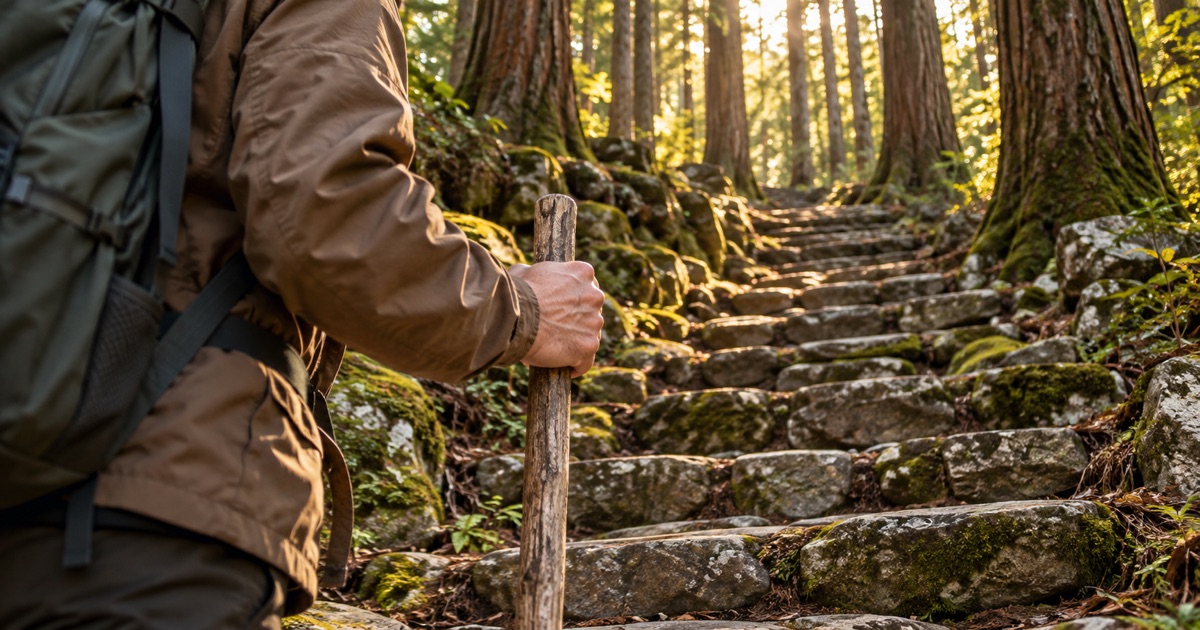
- Trekking poles: Highly recommended for saving your knees on steep stone stairs. Ensure poles have rubber tips to prevent damaging historic stone paths.
- Cash (Japanese Yen): Small village shops, local buses, and coin lockers rarely accept international credit cards. Carry enough cash to cover bus fares, trail lunches, and drinks.
Common Mistakes to Avoid
- Failing to reserve lodging in advance: Village minshuku along the trail offer limited capacity. Accommodations in Takahara, Chikatsuyu, and Yunomine often sell out months ahead. Never arrive on the trail without confirmed lodging.
- Underestimating daylight hours: Dense forest canopies reduce visibility well before sunset. Plan your hiking pace to arrive at your guesthouse before 5:00 PM.
- Skipping bus schedule checks: Local mountain buses run reliably, but departures can be hours apart. Always grab a paper timetable from the Kii-Tanabe tourism office on Day 1. Timetables shift seasonally, so verify times before boarding.
- Carrying a full-sized suitcase: Mountain buses and steep stone paths cannot accommodate large luggage. Forward your main luggage to your final hotel in Kii-Katsuura, Osaka, or Kyoto using Japan's luggage courier services (takkyubin), and hike with a 25- to 35-liter daypack.
FAQ
- Q. Which Kumano Kodo route is best for a 5-day itinerary?
- A. The Nakahechi route (中辺路) works best for a 5-day trip because it offers reliable public transit, clear trail signs, and village accommodations.
- Q. How do I get to the trailhead from Osaka?
- A. Take the JR Kuroshio Limited Express train from Shin-Osaka Station to Kii-Tanabe Station, then catch a local bus to the Takijiri-oji trailhead.
- Q. Can I hike the Kumano Kodo without luggage forwarding?
- A. Yes, you can carry your gear in a 30- to 40-liter backpack, or arrange daily luggage transfers between accommodations through local operators in Tanabe.
Cite or share this article
Copy the link below. If you quote this article, please link to this page as the source.